
Safírová okénka se hojně používají v optických, vakuových, tlakových, senzorových, laserových, polovodičových, chemických, leteckých a kosmických systémech a v systémech určených pro náročné podmínky. Ve srovnání s běžným sklem se safír vyznačuje vynikající tvrdostí, odolností proti opotřebení, chemickou stabilitou, tepelnou odolností a širokým spektrem optické propustnosti. Optické komponenty ze safíru propouštějí vlnové délky od ultrafialového až po infračervené záření a používají se jako pozorovací a snímací okénka v náročných podmínkách.
Safírové okénko však není nezničitelné. V reálných aplikacích může i nadále docházet k poruchám v důsledku nevhodné konstrukce, nesprávné montáže, vad na okrajích, tlakového přetížení, nesprávného čištění, nesouladu povlaků, znečištění, teplotního šoku nebo problémů při manipulaci. Porouchané safírové okénko může způsobit optické ztráty, úniky, výpadky systému, znečištění, bezpečnostní riziko nebo nákladné poškození zařízení.
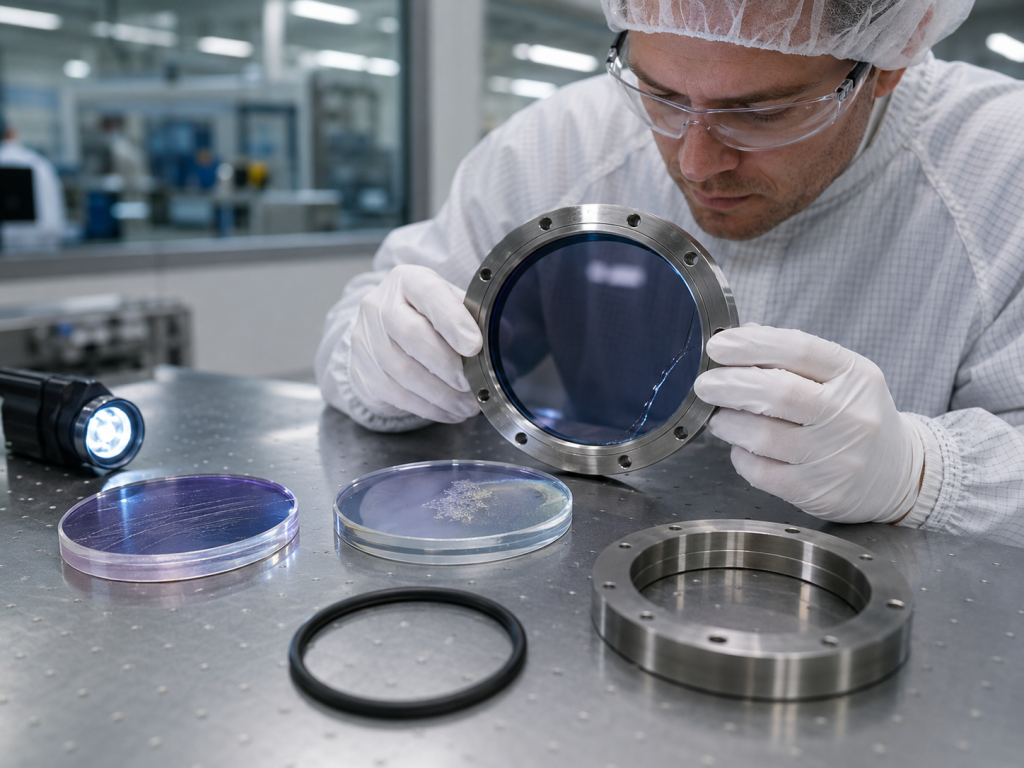
Tento článek popisuje běžné způsoby poruchy safírových oken, včetně prasklin, netěsností, škrábanců a poškození povlaku. Zároveň pomáhá kupujícím a technikům pochopit, jak identifikovat základní příčiny a jak snížit riziko budoucích poruch.
1. Proč selhávají okna ze safíru
Safír je sám o sobě pevný a odolný materiál, ale většina poruch není způsobena pouze tímto materiálem. Obvykle jsou způsobeny celým systémem kolem okna.
K selhání safírového okénka může dojít z následujících důvodů:
| Faktor selhání | Typický výsledek |
|---|---|
| Odštípnutí hrany | Vznik trhlin při působení tlaku nebo při upnutí |
| Nesprávná tloušťka | Zlomení nebo deformace způsobená tlakem |
| Nevhodná konstrukce upevnění | Nerovnoměrné namáhání, praskliny, úniky |
| Přílišné utažení | Lokální koncentrace napětí |
| Znečištěná těsnicí plocha | Únik nebo porucha těsnění |
| Nekompatibilní těsnění | Únik plynu, bobtnání, ztráta kompresního výkonu |
| Špatná ovladatelnost | Škrábance, odštěpky, poškození povrchové úpravy |
| Intenzivní čištění | Odlupování povlaku nebo zakalení povrchu |
| Ozařování vysoce výkonným laserem | Spáleniny způsobené povlakem nebo poškození způsobené laserem |
| Tepelný šok | Prasknutí nebo selhání těsnění |
| Nesoulad povrchových vrstev | Ztráta odrazem, delaminace, spektrální posun |
Optická okénka jsou navržena tak, aby propouštěla světlo a zároveň chránila optické systémy nebo senzory před vnějšími vlivy. To znamená, že safírové okénko je zároveň optickým prvkem i ochrannou bariérou. V náročných provozních podmínkách je třeba obě tyto funkce zohlednit společně.
2. Porucha v důsledku prasknutí
Praskliny patří k nejzávažnějším poruchám safírových oken. Mohou se projevit jako viditelná lomová čára, hvězdicovitá prasklina, prasklina na okraji, radiální prasklina, kruhová prasklina v blízkosti upevňovacího místa nebo úplné rozbití.
Časté příčiny vzniku trhlin
1. Nadměrné tlakové zatížení
Používá-li se safírové okénko jako tlakové okénko, závisí namáhání do značné míry na délce volného okraje, tloušťce, tlakovém rozdílu, opoře okrajů a bezpečnostním koeficientu. Větší okénko se stejnou tloušťkou je mnohem náchylnější k poškození než menší.
2. Odštěpky a mikrotrhliny na hranách
Safír jeice mimořádně tvrdý, ale zároveň se jedná o křehký krystal. Drobné odštěpky na hranách se mohou stát počátky trhlin, zejména při působení tlaku, vibrací nebo teplotních cyklů.
3. Přílišné utažení při montáži
Pokud je okénko utaženo příliš pevně, může kovové pouzdro nebo přídržka způsobit lokální namáhání. Nerovnoměrný utahovací moment nebo přímý kontakt kovu se safírem může vést k prasknutí.
4. Nevhodný návrh zkosení
Ostrá hrana se snáze odštípne. Správné zkosení nebo zkosení hran pomáhá omezit poškození hran a riziko při manipulaci. V pokynech k optickým specifikacím se uvádí, že zkosení pomáhá chránit optické hrany před odštípnutím.
5. Tepelný šok
Rychlá změna teploty může způsobit vznik vnitřního pnutí. To je obzvláště důležité u vysokoteplotních reaktorů, laserových systémů, spalovacích systémů, vakuových komor a zařízení pro testování plynů.
Jak analyzovat vznik trhlin
| Vzor prasklin | Možná příčina |
| Trhlina začíná u okraje | Poškození hrany, špatná zkosení, poškození při manipulaci |
| Trhlina v blízkosti šroubu nebo svorky | Přílišné utažení nebo nerovnoměrné montážní napětí |
| Radiální trhlina vycházející ze středu | Tlakové přetížení nebo náraz |
| Kruhová trhlina v blízkosti těsnicí linie | Problém s předpětím úchytu nebo stlačením těsnění |
| Jemná povrchová trhlina po zahřátí | Tepelný šok nebo namáhání povlaku |
| Náhlé poškození během montáže | Nesprávný utahovací moment nebo kontakt s tvrdým bodem |
Doporučení k prevenci
Aby se snížilo riziko prasknutí, měli by odběratelé specifikovat správnou tloušťku, kontrolované zkosení hran, kvalitu povrchu, rovinnost, rovnoběžnost a čistý průřez. Montážní konstrukce by měla zabránit nerovnoměrnému zatížení, ostrému kontaktu a nadměrnému točivému momentu. U tlakových oken by mělo být safírové okénko posuzováno jako součást tlakové přepážky, nikoli pouze jako optický disk.
3. Porucha způsobená únikem
U safírových oken používaných ve vakuových, vysokotlakých plynových, vodíkových a chemických reaktorech a v utěsněných optických sestavách dochází často k úniku. Samotný safír může zůstat nepoškozený, ale těsnění kolem něj může selhat.
Běžné příčiny úniku
1. Nedostatečná rovinnost těsnicí plochy
Pokud těsnicí povrch okna nebo kovového krytu není dostatečně rovný, těsnění se nemusí rovnoměrně stlačit. Rovinnost povrchu je důležitým optickým a mechanickým parametrem oken a udává, o kolik se rovný povrch odchyluje od ideální roviny.
2. Nesprávný materiál těsnění
O-kroužky, kovová těsnění, elastomery a lepidla musí být kompatibilní s provozním plynem, teplotou, tlakem a chemickým prostředím. U systémů s vodíkem nebo vysokotlakými plyny je výběr materiálu těsnění obzvláště důležitý.
3. Nečistoty na těsnicí ploše
Prach, částice, otisky prstů, zbytky leštidla nebo úlomky povlaku mohou vytvářet malé netěsnosti.
4. Nerovnoměrné stlačení
Pokud jsou šrouby utaženy nerovnoměrně, může jedna strana okna těsnit, zatímco druhá strana bude propouštět. Nerovnoměrný tlak může rovněž představovat riziko vzniku trhlin.
5. Nesoulad tepelné roztažnosti
Safírová a kovová pouzdra se při změnách teploty roztahují odlišně. V systémech s vysokými teplotami nebo v kryogenních systémech to může oslabit těsnění nebo způsobit napětí.
6. Vada povlaku nebo metalizace
U pájených nebo metalizovaných safírových sestav může k úniku vést špatná přilnavost metalizace, neúplné pájení nebo mikrodutiny.
Jak analyzovat úniky
| Místo úniku | Možná příčina |
| Mezi safírem a těsněním | Špatný povrch, znečištění, nesprávné těsnění |
| Kolem kovového krytu | Vada způsobená svařováním, tvrdým pájením nebo přírubou |
| Po teplotních cyklech | Nesoulad tepelné roztažnosti |
| Po cyklu tlakových změn | Únava těsnění nebo ztráta těsnosti |
| Po vyčištění | Chemické poškození materiálu těsnění |
| Pouze při vysokém tlaku | Nedostatečné stlačení nebo mikrostrž |
Doporučení k prevenci
V případě použití ve vakuu nebo pod tlakem by kupující měli uvést provozní tlak, zkušební tlak, požadovanou míru úniku, teplotní rozsah, typ plynu, způsob utěsnění a výkres pouzdra. Safírové okénko používané v utěsněné sestavě by mělo být navrženo společně s přírubou, těsněním, přídržným prvkem a rozložením šroubů.
4. Škrábance a povrchové vady
Safír jeice velmi odolný proti poškrábání, avšak k poškrábání může přesto dojít při broušení, leštění, čištění, montáži, přepravě nebo při kontaktu s tvrdými částicemi. Poškrábání nemusí vždy vést k mechanické poruše, může však snížit optický výkon a v kritických systémech se může stát místem koncentrace napětí.
Proč jsou škrábance důležité
Kvalita povrchu popisuje kosmetické vady, jako jsou škrábance a důlky, nazývané také „digs“. V mnoha optických aplikacích se k definování přijatelných povrchových vad používají specifikace škrábanců a důlků. Například specifikace 40-20 je často považována za standardní kvalitu pro mnoho optických aplikací, zatímco přesné laserové aplikace mohou vyžadovat přísnější úrovně, jako je 20-10 nebo 10-5.
Škrábance mohou způsobit:
- Zvýšené rozptylování
- Snížený přenos
- Špatná kvalita snímků
- Laserové horké body
- Vady povrchové úpravy
- Obtížnost čištění
- Vizuální odmítnutí ze strany zákazníků
- Vznik trhlin v závažných případech
Drsnost povrchu má rovněž vliv na optický rozptyl. Drsnější povrchy obecně způsobují větší rozptyl, a proto je pro optický výkon důležité regulovat drsnost povrchu.
Časté příčiny škrábanců
| Příčina | Popis |
| Nevhodný čisticí hadřík | Tvrdá vlákna nebo částice poškrábají povrch |
| Prach při utírání | Částice, které se táhnou po povrchu okna |
| Kontakt s kovovým nástrojem | Měřidla, pinzety nebo upínací přípravky se dotýkají optické oblasti |
| Špatné balení | Během přepravy se okna o sebe třou |
| Manipulace bez rukavic | Otisky prstů přitahují nečistoty a skvrny |
| Zbytky po agresivním leštění | Neúplné čištění po zpracování |
| Kontakt s tvrdou keramikou | Oděr povrchu při montáži |
Jak analyzovat škrábance
Škrábance je třeba zkontrolovat při kontrolovaném osvětlení a pomocí zvětšení. Důležité je jejich umístění. Škrábanec v optické oblasti může být závažnější než škrábanec mimo ni. Pro použití v laserových zařízeních nebo při snímkování může být nepřijatelná i malá vada. U jednoduchého ochranného okénka mohou být drobné kosmetické vady mimo optickou oblast přijatelné, pokud to výkres připouští.
Doporučení k prevenci
Odběratelé by měli jasně specifikovat kvalitu povrchu a čistý průměr. Dodavatelé by měli používat ochrannou fólii, čisticí ubrousky na čočky, čisté podnosy, nástroje pro bezkontaktní manipulaci a individuální balení. Během instalace by technici neměli otírat suché povrchy, aniž by nejprve odstranili prach.
5. Poškození povrchové úpravy
Mnoho safírových oken se používá bez povrchové úpravy, avšak safírová okna s antireflexní vrstvou jsou běžně používána v laserových, zobrazovacích, senzorových, UV, IR a optických měřicích systémech. Povrchové úpravy zlepšují propustnost v cílových vlnových délkách, ale zároveň představují další možný způsob selhání.
Druhy poškození povrchové úpravy
| Typ poškození | Možná příčina |
| Odlupování nebo delaminace | Špatná přilnavost, poškození při čištění, tepelné namáhání |
| Stopy po spálení | Příliš vysoký výkon laseru nebo lokální znečištění |
| Haze | Chemické působení, vlhkost, zbytky čisticích prostředků |
| Dírky | Vada v procesu nanášení povlaku nebo znečištění částicemi |
| Změna barvy | Nesprávná konstrukce povlaku nebo kolísání tloušťky |
| Škrábance na povrchové úpravě | Nesprávná manipulace nebo otírání |
| Snížený přenos | Znečištění, stárnutí, poškození povrchové úpravy |
Safír má relativně vysoký index lomu, proto může být antireflexní vrstva užitečná v případech, kdy je zapotřebí vyšší propustnost v určitém vlnovém rozsahu. Tato vrstva však musí být přizpůsobena konkrétní vlnové délce, úhlu dopadu, hustotě výkonu, teplotě a podmínkám čištění.
Poškození povlaku způsobené laserem
U vysoce výkonných laserových systémů může dojít k poškození povlaku, pokud optický povrch absorbuje příliš mnoho energie nebo obsahuje nečistoty. Nečistoty způsobené laserovým zářením mohou na optických površích vytvořit vysoce absorpční vrstvu, což vede ke ztrátě propustnosti a nakonec k trvalému poškození.
V oblasti laserové optiky je důležitým faktorem prahová hodnota poškození vyvolaného laserem (LIDT). Testování LIDT slouží k posouzení, jakou fluenci laseru nebo hustotu výkonu dokáže optická součástka vydržet, než dojde k viditelnému poškození.
Poškození povlaku způsobené čištěním
Některé povrchové úpravy jsou citlivé na agresivní způsoby čištění. Silná rozpouštědla, ultrazvukové čištění, drsné otírání, kyselé nebo zásadité roztoky a opakované čisticí cykly mohou povrchové úpravy poškodit, pokud nejsou pro tyto podmínky určeny.
Doporučení k prevenci
Kupující by měli jasně uvést požadavky na povrchovou úpravu:
- Pracovní vlnová délka nebo rozsah vlnových délek
- Úhel dopadu
- Typ laseru: kontinuální (CW) nebo pulzní
- Hustota výkonu nebo fluence
- Provozní teplota
- Způsob čištění
- Vystavení vlivům životního prostředí
- Požadovaná hodnota propustnosti nebo odrazivosti
- Zda je třeba povrchovou úpravu provést na obou stranách
Povlak by se neměl vybírat pouze na základě označení “AR povlak”. Měl by být navržen přímo pro konkrétní optický systém.
6. Postup analýzy poruch
Pokud dojde k poruše safírového okénka, nevyměňujte jej hned za stejný díl. Jednoduchá analýza poruchy může pomoci předejít opakovaným problémům.
Krok 1: Zaznamenejte stav poruchy
Získejte následující informace:
| Informace | Proč je to důležité |
| Žádost | Stanovuje optické a mechanické požadavky |
| Datum instalace | Pomáhá odhalit poruchy v rané fázi nebo dlouhodobé poruchy |
| Tlak a teplota | Označuje mechanické nebo tepelné zatížení |
| Vystavení působení plynů nebo chemických látek | Pomáhá analyzovat kompatibilitu těsnění a povlaků |
| Čisticí proces | To by mohlo vysvětlovat škrábance nebo poškození povrchové úpravy |
| Způsob montáže | Může odhalit příčinu přetížení nebo úniku |
| Místo poruchy | Pomáhá odhalit příčinu problému |
| Fotografie před odstraněním | Zachovává důkazy |
| Výkres a protokol o kontrole | Potvrzuje původní specifikaci |
Krok 2: Proveďte vizuální kontrolu okna
Zkontrolujte, zda se na povrchu nevyskytují praskliny, odštěpky, škrábance, skvrny, zákal, změna barvy povrchové úpravy, poškození hran a stopy po těsnění. Místo poruchy je často důležitější než typ poruchy.
Krok 3: Zkontrolujte okraj
U safírových oken je kvalita okrajů zásadní. Mnoho prasklin vzniká právě na okraji, zejména pokud jsou na nich odštěpky, ostré rohy nebo špatně zkosené hrany.
Krok 4: Zkontrolujte montážní značky
Zkontrolujte, zda nejsou vidět stopy po nerovnoměrném přilnutí těsnění, stopy po kontaktu s kovem, místní prohlubně nebo známky nadměrného stlačení. Tyto stopy mohou prozradit, zda bylo okno namontováno správně.
Krok 5: Zkontrolujte povrchovou úpravu
U safírových oken s povlakem porovnejte poškozenou oblast s dráhou světla, směrem čištění a kontaktní plochou. Stopy po spálení povlaku v blízkosti laserového bodu mohou naznačovat problémy s optickým výkonem nebo znečištěním.
Krok 6: Porovnání s výkresem
Výkres by měl definovat požadavky na kvalitu povrchu, rovinnost, rovnoběžnost, světlou aperturu, tloušťku, toleranci, zkosení, povrchovou úpravu a kontrolu. Je-li výkres neúplný, může být příčinou spíše nejednoznačnost specifikace než chyba při výrobě.
7. Jak mohou kupující snížit riziko neúspěchu
Uveďte úplné podmínky použití
Dodavatel nemůže správně posoudit safírové okénko pouze na základě jeho průměru a tloušťky. Odběratelé by měli uvést tlak, teplotu, typ plynu, optickou vlnovou délku, způsob čištění, konstrukci upevnění, typ těsnění a také to, zda bude daný díl používán v laserovém, vakuovém, chemickém nebo vysokotlakém prostředí.
Definice čistého otvoru
Čistá apertura představuje funkční optickou plochu okénka. Vady uvnitř čisté apertury jsou obvykle závažnější než vady mimo ni. Čistá apertura by měla být na výkresu jasně vyznačena.
Zadejte úpravu hran
U safírových oken vystavených vysokému tlaku nebo časté manipulaci se důrazně doporučují zkosené nebo zaoblené hrany. Ostrá hrana sice může mírně snížit náklady, ale zvyšuje riziko poruchy.
Přizpůsobte povrchovou úpravu konkrétnímu použití
Povlak by měl být navržen s ohledem na vlnovou délku, úhel dopadu, teplotu, výkon laseru a způsob čištění. Běžný antireflexní povlak nemusí být vhodný pro vysoce výkonné lasery nebo v prostředí s agresivními chemikáliemi.
Zlepšení balení a manipulace
I safírová okénka s vysokou tvrdostí vyžadují pečlivé balení. Hotová okénka by se neměla o sebe třít. Rukavice, čisté podnosy, papír na čištění čoček a individuální balení mohou omezit vznik škrábanců a znečištění.
8. Doporučené položky kontroly
| Kontrolní položka | Účel |
| Průměr / velikost | Potvrzuje správné usazení sestavy |
| Tloušťka | Podporuje konstrukci strojních zařízení |
| Čistá apertura | Potvrzuje využitelnou optickou plochu |
| Kvalita povrchu | Omezuje vznik škrábanců a rýh |
| Plochost | Zajišťuje těsnost a optickou výkonnost |
| Paralelismus | Snižuje odchylku paprsku |
| Čipy Edge | Zabraňuje riziku prasknutí |
| Velikost zkosení | Zlepšuje ovladatelnost a pevnost |
| Přenos povlaku | Potvrzuje optický výkon |
| Přilnavost nátěru | Snižuje riziko odlupování |
| Vizuální kontrola | Zjišťuje skvrny, zákal, odštěpky a vady |
| Zkouška těsnosti | Nezbytné pro utěsněné sestavy |
| Kontrola balení | Zabraňuje poškození při přepravě |
Závěr
Safírová okénka jsou spolehlivé optické komponenty určené pro náročné podmínky, avšak k poruchám může přesto dojít, pokud není celý systém správně navržen a zacházeno s ním nesprávně. K prasknutí často dochází v důsledku tlakového přetížení, vad na okrajích, teplotního šoku nebo montážního namáhání. Úniky jsou obvykle způsobeny problémy s těsnicími plochami, nesprávným výběrem těsnění, znečištěním nebo konstrukcí pouzdra. Škrábance často souvisejí s manipulací, čištěním nebo balením. Poškození povlaku může být důsledkem nesprávného výběru povlaku, působení laserového záření, znečištění nebo agresivního čištění.
Pro kupující je klíčové poučení jednoduché: safírové okénko by nemělo být specifikováno pouze podle rozměrů. Výkres a poptávka by měly zahrnovat optické požadavky, mechanické zatížení, pracovní prostředí, způsob montáže, úpravu hran, stav povrchové úpravy a normu pro kontrolu kvality. Díky lepším specifikacím a analýze poruch mohou safírová okénka poskytovat stabilní dlouhodobý výkon v optických, tlakových, vakuových, laserových, chemických a průmyslových systémech.
ČASTO KLADENÉ DOTAZY
1. Proč praskne safírové okénko, i když je safír velmi tvrdý?
Safír je tvrdý a odolný proti opotřebení, ale přesto je křehký. K prasknutí může dojít v důsledku odštípnutí hran, přílišného sevření, tlakového přetížení, teplotního šoku, nevhodného provedení zkosení nebo nerovnoměrného namáhání při upevnění.
2. Mohou škrábance na safírovém skle ovlivnit výkon?
Ano. Škrábance mohou zvýšit rozptyl, snížit propustnost, ovlivnit kvalitu zobrazení, poškodit povrchové vrstvy a představovat riziko při použití v laserových nebo tlakových aplikacích. Závažnost závisí na velikosti škrábance, jeho umístění a konkrétní aplikaci.
3. Co způsobuje netěsnost u sestav se safírovými okénky?
Únik je obvykle způsoben nedostatečným stlačením těsnění, znečištěnými těsnicími plochami, problémy s rovinností, nesprávným materiálem těsnění, teplotními cykly, tlakovými cykly nebo vadami v pájených či pokovených sestavách.
4. Proč dochází k poškození antireflexní vrstvy na safírových okénkách?
AR povlak může být poškozen vysokým výkonem laseru, znečištěním, agresivním čištěním, tepelným namáháním, vlhkostí, špatnou přilnavostí nebo nesouladem mezi návrhem povlaku a skutečnými provozními podmínkami.
5. Jaké informace by měli kupující poskytnout, aby se vyhnuli poruše safírového okénka?
Zákazníci by měli uvést rozměry, tloušťku, toleranci, tlak, teplotu, vystavení působení plynů či chemikálií, optickou vlnovou délku, případně výkon laseru, čistou aperturu, kvalitu povrchu, rovinnost, rovnoběžnost, úpravu hran, požadavky na povrchovou úpravu, způsob utěsnění a postup čištění.