
Okna szafirowe znajdują szerokie zastosowanie w systemach optycznych, próżniowych, ciśnieniowych, czujnikowych, laserowych, półprzewodnikowych, chemicznych, lotniczych oraz w systemach przeznaczonych do pracy w trudnych warunkach. W porównaniu ze zwykłym szkłem szafir charakteryzuje się doskonałą twardością, odpornością na zużycie, stabilnością chemiczną, odpornością termiczną oraz szerokim zakresem przepuszczalności optycznej. Elementy optyczne z szafiru przepuszczają promieniowanie o długościach fal od ultrafioletu do podczerwieni i są wykorzystywane jako okna obserwacyjne oraz okna czujnikowe w wymagających warunkach.
Jednak szafirowe okienko nie jest odporne na uszkodzenia. W rzeczywistych zastosowaniach nadal mogą wystąpić awarie spowodowane niewłaściwą konstrukcją, nieprawidłowym montażem, wadami krawędzi, przeciążeniem ciśnieniowym, niewłaściwym czyszczeniem, niedopasowaniem powłoki, zanieczyszczeniem, szokiem termicznym lub problemami związanymi z obsługą. Uszkodzona szyba szafirowa może powodować straty optyczne, wycieki, przestoje systemu, zanieczyszczenie, zagrożenie bezpieczeństwa lub kosztowne uszkodzenia sprzętu.
W niniejszym artykule omówiono typowe rodzaje uszkodzeń okienek szafirowych, w tym pęknięcia, nieszczelności, zadrapania oraz uszkodzenia powłoki. Pomaga on również nabywcom i inżynierom zrozumieć, jak zidentyfikować przyczyny źródłowe tych uszkodzeń oraz jak ograniczyć ryzyko ich wystąpienia w przyszłości.
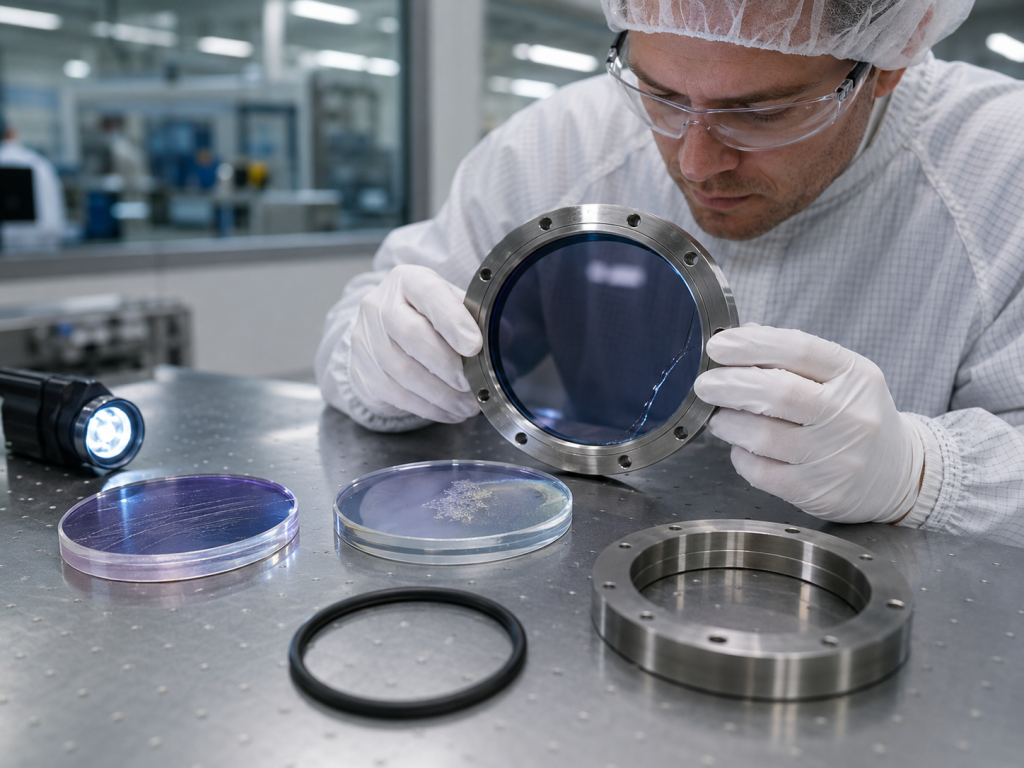
1. Dlaczego okna z szafiru ulegają uszkodzeniom
Szafir sam w sobie jest materiałem mocnym i wytrzymałym, ale większość uszkodzeń nie wynika wyłącznie z właściwości tego materiału. Zazwyczaj wynikają one z działania całego systemu otaczającego okno.
Szafirowe okienko może ulec uszkodzeniu z następujących przyczyn:
| Czynnik niepowodzenia | Typowy wynik |
|---|---|
| Odpryskiwanie krawędzi | Powstawanie pęknięć pod ciśnieniem lub w wyniku zaciśnięcia |
| Nieprawidłowa grubość | Pęknięcie lub odkształcenie spowodowane ciśnieniem |
| Niewłaściwa konstrukcja mocowania | Nierównomierne obciążenie, pęknięcia, wycieki |
| Zbyt mocne dokręcenie | Lokalna koncentracja naprężeń |
| Zabrudzona powierzchnia uszczelniająca | Wyciek lub uszkodzenie uszczelnienia |
| Nieprawidłowa uszczelka | Wyciek gazu, pęcznienie, utrata ciśnienia |
| Słaba obsługa | Zadrapania, odpryski, uszkodzenia powłoki |
| Intensywne czyszczenie | Odpryskiwanie powłoki lub zamglenie powierzchni |
| Ekspozycja na działanie lasera o dużej mocy | Oparzenie powłoki lub uszkodzenie spowodowane działaniem lasera |
| Szok termiczny | Pęknięcie lub uszkodzenie uszczelnienia |
| Niezgodność powłok | Straty wynikające z odbicia, rozwarstwienie, przesunięcie widmowe |
Okienka optyczne są zaprojektowane tak, aby przepuszczać światło, jednocześnie chroniąc układy optyczne lub czujniki przed wpływem środowiska zewnętrznego. Oznacza to, że okienko szafirowe pełni zarówno funkcję elementu optycznego, jak i bariery ochronnej. W trudnych warunkach eksploatacyjnych należy uwzględnić obie te funkcje łącznie.
2. Pęknięcie
Pęknięcia należą do najpoważniejszych uszkodzeń szafirowych okienek. Mogą one przybierać postać widocznej linii pęknięcia, pęknięcia gwiaździstego, pęknięcia krawędziowego, pęknięcia promieniowego, okrągłego pęknięcia w pobliżu miejsca mocowania lub całkowitego złamania.
Najczęstsze przyczyny pękania
1. Nadmierne obciążenie ciśnieniowe
Gdy okienko szafirowe jest wykorzystywane jako okienko ciśnieniowe, naprężenie zależy w znacznym stopniu od długości swobodnej krawędzi, grubości, różnicy ciśnień, podparcia krawędzi oraz współczynnika bezpieczeństwa. Większe okienko o tej samej grubości jest znacznie bardziej podatne na uszkodzenia niż mniejsze.
2. Odpryski krawędziowe i mikropęknięcia
Szafir jest niezwykle twardy, ale jest to również kruchy kryształ. Niewielkie odpryski na krawędziach mogą stać się punktami początkowymi pęknięć, zwłaszcza pod wpływem nacisku, wibracji lub cykli termicznych.
3. Zbyt mocne dokręcenie podczas montażu
Jeśli okienko zostanie zbyt mocno zaciśnięte, metalowa obudowa lub element ustalający mogą powodować miejscowe naprężenia. Nierównomierny moment dokręcania lub bezpośredni kontakt metalu z szafirem może doprowadzić do pęknięć.
4. Niewłaściwa konstrukcja fazy
Ostre krawędzie łatwiej ulegają odpryskom. Odpowiednie fazowanie lub skosowanie pomaga ograniczyć uszkodzenia krawędzi i zmniejszyć ryzyko związane z obsługą. W wytycznych dotyczących parametrów optycznych zaznaczono, że fazowanie pomaga chronić krawędzie optyczne przed odpryskami.
5. Szok termiczny
Gwałtowna zmiana temperatury może powodować naprężenia wewnętrzne. Ma to szczególne znaczenie w przypadku reaktorów wysokotemperaturowych, układów laserowych, układów spalania, komór próżniowych oraz urządzeń do badania gazów.
Jak analizować pęknięcia
| Wzór pęknięć | Możliwa przyczyna |
| Pęknięcie zaczyna się od krawędzi | Uszkodzenie krawędzi, nieprawidłowe fazowanie, uszkodzenia powstałe podczas transportu |
| Pęknięcie w pobliżu śruby lub zacisku | Zbyt mocne dokręcenie lub nierównomierny nacisk montażowy |
| Pęknięcie promieniowe wychodzące ze środka | Przeciążenie ciśnieniowe lub uderzenie |
| Pęknięcie pierścieniowe w pobliżu linii uszczelnienia | Napięcie elementu ustalającego lub problem ze ściśnięciem uszczelki |
| Drobne pęknięcia powierzchniowe powstałe po podgrzaniu | Szok termiczny lub naprężenie powłoki |
| Nagłe pęknięcie podczas montażu | Nieprawidłowy moment obrotowy lub kontakt z twardym punktem |
Wskazówki dotyczące profilaktyki
Aby zmniejszyć ryzyko pękania, nabywcy powinni określić odpowiednią grubość, kontrolowaną fazę krawędzi, jakość powierzchni, płaskość, równoległość oraz średnicę otworu. Konstrukcja montażowa powinna zapobiegać nierównomiernemu obciążeniu, ostrym uderzeniom oraz nadmiernemu momentowi obrotowemu. W przypadku okien ciśnieniowych okno szafirowe należy oceniać jako część przegrody ciśnieniowej, a nie wyłącznie jako element optyczny.
3. Awaria spowodowana wyciekiem
W szafirowych okienkach stosowanych w reaktorach próżniowych, gazowych wysokociśnieniowych, wodorowych i chemicznych oraz w hermetycznych zespołach optycznych często dochodzi do nieszczelności. Sam szafir może pozostać nienaruszony, ale uszczelnienie wokół niego może ulec uszkodzeniu.
Najczęstsze przyczyny wycieków
1. Niewystarczająca płaskość powierzchni uszczelniającej
Jeśli powierzchnia uszczelniająca okna lub metalowej obudowy nie jest wystarczająco płaska, uszczelka może nie ulegać równomiernemu ściśnięciu. Płaskość powierzchni jest ważną specyfikacją optyczną i mechaniczną okien; określa ona stopień odchylenia płaskiej powierzchni od płaszczyzny idealnej.
2. Niewłaściwy materiał uszczelki
O-ringi, uszczelki metalowe, elastomery i kleje muszą być kompatybilne z gazem roboczym, temperaturą, ciśnieniem oraz środowiskiem chemicznym. W przypadku instalacji wodorowych lub instalacji gazowych działających pod wysokim ciśnieniem dobór materiału uszczelniającego ma szczególne znaczenie.
3. Zanieczyszczenia na powierzchni uszczelniającej
Kurz, cząsteczki, odciski palców, pozostałości po polerowaniu lub resztki powłoki mogą tworzyć niewielkie ścieżki wycieku.
4. Nierównomierny stopień ściśnięcia
Jeśli śruby zostaną dokręcone nierównomiernie, jedna strona okna może być szczelna, podczas gdy druga będzie nieszczelna. Nierównomierny nacisk może również stwarzać ryzyko pęknięć.
5. Niezgodność rozszerzalności cieplnej
Obudowy szafirowe i metalowe rozszerzają się w różny sposób pod wpływem zmian temperatury. W układach wysokotemperaturowych lub kriogenicznych może to osłabić uszczelnienie lub spowodować naprężenia.
6. Wada powłoki lub metalizacji
W przypadku zespołów z szafirem lutowanym lub metalizowanym do nieszczelności mogą prowadzić słaba przyczepność metalizacji, niepełne lutowanie lub mikropuste przestrzenie.
Jak analizować wycieki
| Lokalizacja wycieku | Możliwa przyczyna |
| Pomiędzy szafirem a uszczelką | Zła powierzchnia, zanieczyszczenia, nieprawidłowa uszczelka |
| Wokół metalowej obudowy | Spawanie, lutowanie twarde lub wada kołnierza |
| Po cyklu termicznym | Niezgodność rozszerzalności cieplnej |
| Po cyklu ciśnieniowym | Zmęczenie uszczelki lub utrata szczelności |
| Po wyczyszczeniu | Uszkodzenia chemiczne materiału uszczelniającego |
| Tylko pod wysokim ciśnieniem | Niewystarczająca kompresja lub mikroszczelina |
Wskazówki dotyczące profilaktyki
W przypadku zastosowań próżniowych lub ciśnieniowych nabywcy powinni podać ciśnienie robocze, ciśnienie próbne, wymagania dotyczące szybkości wycieku, zakres temperatur, rodzaj gazu, metodę uszczelnienia oraz rysunek obudowy. Okienko szafirowe stosowane w uszczelnionym zespole powinno być zaprojektowane łącznie z kołnierzem, uszczelką, elementem mocującym oraz rozstawem śrub.
4. Rysy i wady powierzchniowe
Szafir jest bardzo odporny na zarysowania, jednak zarysowania mogą się pojawić podczas szlifowania, polerowania, czyszczenia, montażu, transportu lub w wyniku kontaktu z twardymi cząstkami. Zarysowania nie zawsze powodują uszkodzenia mechaniczne, ale mogą pogorszyć właściwości optyczne i stać się punktami koncentracji naprężeń w systemach o krytycznym znaczeniu.
Dlaczego zadrapania mają znaczenie
Jakość powierzchni odnosi się do wad estetycznych, takich jak rysy i wgłębienia, zwane również wgnieceniami. W wielu zastosowaniach optycznych stosuje się specyfikacje dotyczące rys i wgłębień w celu określenia dopuszczalnych wad powierzchniowych. Na przykład parametr 40-20 jest często uznawany za standardową jakość w wielu zastosowaniach optycznych, podczas gdy precyzyjne zastosowania laserowe mogą wymagać bardziej rygorystycznych poziomów, takich jak 20-10 lub 10-5.
Zadrapania mogą powodować:
- Zwiększone rozpraszanie
- Ograniczone przenoszenie
- Niska jakość obrazu
- Punkty przegrzania spowodowane działaniem lasera
- Wady powłoki
- Stopień trudności czyszczenia
- Wizualna niechęć ze strony klientów
- Powstawanie pęknięć w poważnych przypadkach
Chropowatość powierzchni ma również wpływ na rozpraszanie światła. Im bardziej chropowata powierzchnia, tym większe rozpraszanie, dlatego kontrolowanie chropowatości powierzchni ma kluczowe znaczenie dla parametrów optycznych.
Najczęstsze przyczyny zadrapań
| Przyczyna | Opis |
| Niewłaściwa ściereczka do czyszczenia | Twarde włókna lub cząsteczki rysują powierzchnię |
| Pył powstający podczas wycierania | Cząsteczki przesuwające się po powierzchni okna |
| Kontakt narzędzia metalowego | Suwmiarki, pęsety lub uchwyty stykają się z obszarem optycznym |
| Niewłaściwe opakowanie | Podczas transportu okna ocierają się o siebie |
| Obsługa bez rękawiczek | Odciski palców przyciągają cząsteczki i plamy |
| Trudne do usunięcia pozostałości po intensywnym polerowaniu | Niedokładne czyszczenie po przetworzeniu |
| Kontakt z twardą ceramiką | Ocieranie powierzchni podczas montażu |
Jak analizować rysy
Rysy należy sprawdzać przy kontrolowanym oświetleniu i powiększeniu. Istotne znaczenie ma ich lokalizacja. Rysa w polu optycznym może być poważniejsza niż rysa poza obszarem optycznym. W przypadku zastosowań laserowych lub obrazowania nawet niewielka wada może być niedopuszczalna. W przypadku zwykłej szyby ochronnej drobne wady kosmetyczne poza polem optycznym mogą być dopuszczalne, o ile dopuszcza to rysunek techniczny.
Wskazówki dotyczące profilaktyki
Nabywcy powinni jasno określić wymagania dotyczące jakości powierzchni i apertury. Dostawcy powinni stosować folię ochronną, chusteczki do soczewek, czyste tacki, narzędzia do obsługi bezkontaktowej oraz opakowania jednostkowe. Podczas montażu inżynierowie powinni unikać wycierania suchych powierzchni bez uprzedniego usunięcia kurzu.
5. Uszkodzenia powłoki
Wiele okien szafirowych stosuje się bez powłoki, jednak okna szafirowe z powłoką antyrefleksyjną (AR) są powszechnie stosowane w systemach laserowych, obrazowania, czujnikowych, UV, IR oraz w systemach pomiarów optycznych. Powłoki poprawiają przepuszczalność w docelowych długościach fal, ale wprowadzają również kolejne potencjalne źródło awarii.
Rodzaje uszkodzeń powłok
| Rodzaj uszkodzenia | Możliwa przyczyna |
| Łuszczenie się lub rozwarstwianie | Słaba przyczepność, uszkodzenia spowodowane czyszczeniem, naprężenia termiczne |
| Ślady przypalenia | Zbyt duża moc lasera lub lokalne zanieczyszczenie |
| Mgła | Atak chemiczny, wilgoć, pozostałości po czyszczeniu |
| Otwory igłowe | Wada procesu powlekania lub zanieczyszczenie cząstkami |
| Zmiana koloru | Niewłaściwa konstrukcja powłoki lub wahania grubości |
| Zarysowania na powłoce | Niewłaściwe obchodzenie się z produktem lub wycieranie |
| Ograniczone przenoszenie | Zanieczyszczenie, starzenie się, uszkodzenie powłoki |
Szafir charakteryzuje się stosunkowo wysokim współczynnikiem załamania światła, dlatego powłoka antyrefleksyjna (AR) może okazać się przydatna, gdy wymagana jest wyższa przepuszczalność w określonym zakresie długości fal. Powłoka ta musi jednak być dostosowana do rzeczywistej długości fali, kąta padania, gęstości mocy, temperatury oraz warunków czyszczenia.
Uszkodzenia powłok wywołane działaniem lasera
W systemach laserowych dużej mocy może dojść do uszkodzenia powłoki, gdy powierzchnia optyczna pochłania zbyt dużo energii lub zawiera zanieczyszczenia. Zanieczyszczenia wywołane działaniem lasera mogą tworzyć warstwę o wysokim współczynniku pochłaniania na powierzchniach optycznych, co prowadzi do utraty przepuszczalności, a w konsekwencji do trwałego uszkodzenia.
W przypadku optyki laserowej ważnym czynnikiem jest próg uszkodzeń wywołanych promieniowaniem laserowym (LIDT). Badania LIDT służą do oceny, jaką fluencję lasera lub gęstość mocy może wytrzymać element optyczny, zanim pojawią się widoczne uszkodzenia.
Uszkodzenia powłoki spowodowane czyszczeniem
Niektóre powłoki są wrażliwe na agresywne metody czyszczenia. Silne rozpuszczalniki, czyszczenie ultradźwiękowe, szorowanie, roztwory kwasowe lub zasadowe oraz powtarzające się cykle czyszczenia mogą spowodować uszkodzenie powłok, jeśli nie zostały one zaprojektowane z myślą o takich warunkach.
Wskazówki dotyczące profilaktyki
Kupujący powinni jasno określić wymagania dotyczące powłoki:
- Długość fali roboczej lub zakres długości fal
- Kąt padania
- Typ lasera: ciągły (CW) lub impulsowy
- Gęstość mocy lub fluencja
- Temperatura pracy
- Metoda czyszczenia
- Narażenie środowiskowe
- Wymagana wartość przepuszczalności lub odbicia
- Czy obie strony wymagają powłoki
Powłoki nie należy wybierać wyłącznie na podstawie nazwy “powłoka antyrefleksyjna”. Powinna ona być dostosowana do konkretnego układu optycznego.
6. Schemat postępowania w przypadku analizy awarii
W przypadku uszkodzenia szafirowego okienka nie należy od razu wymieniać go na identyczny element. Prosta analiza przyczyny usterki może pomóc w zapobieganiu powtórzeniu się problemów.
Krok 1: Odnotuj okoliczności awarii
Zbierz następujące informacje:
| Informacje | Dlaczego to ma znaczenie |
| Zastosowanie | Określa wymagania optyczne i mechaniczne |
| Data instalacji | Pomaga wykryć awarie we wczesnym stadium lub awarie długotrwałe |
| Ciśnienie i temperatura | Wskazuje obciążenie mechaniczne lub termiczne |
| Narażenie na działanie gazów lub substancji chemicznych | Pomaga w analizie zgodności uszczelnień i powłok |
| Proces czyszczenia | Może to wyjaśniać obecność zadrapań lub uszkodzeń powłoki |
| Sposób montażu | Może wskazywać na przyczynę związaną ze naprężeniem lub nieszczelnością |
| Miejsce usterki | Pomaga zidentyfikować pierwotną przyczynę |
| Zdjęcia przed usunięciem | Zabezpiecza dowody |
| Rysunek i protokół kontroli | Potwierdza pierwotną specyfikację |
Krok 2: Dokonaj oględzin okna
Należy sprawdzić, czy nie ma pęknięć, odprysków, zadrapań, plam, zamglenia, przebarwień powłoki, uszkodzeń krawędzi oraz śladów po uszczelnieniu. Miejsce uszkodzenia jest często ważniejsze niż rodzaj uszkodzenia.
Krok 3: Sprawdź krawędź
W przypadku okien szafirowych jakość krawędzi ma kluczowe znaczenie. Wiele pęknięć powstaje właśnie na krawędzi, zwłaszcza gdy występują odpryski, ostre narożniki lub nieprawidłowo wykonane fazowania.
Krok 4: Sprawdź oznaczenia montażowe
Należy zwrócić uwagę na nierówne ślady po uszczelce, ślady styku z metalem, miejscowe wgniecenia lub oznaki nadmiernego ściśnięcia. Ślady te mogą wskazywać, czy okno zostało zamontowane prawidłowo.
Krok 5: Sprawdź powłokę
W przypadku okien szafirowych z powłoką należy porównać uszkodzony obszar z torem światła, kierunkiem czyszczenia oraz powierzchnią styku. Ślady przypalenia powłoki w pobliżu plamki lasera mogą wskazywać na problemy związane z mocą optyczną lub zanieczyszczeniem.
Krok 6: Porównaj z rysunkiem
Rysunek powinien określać wymagania dotyczące jakości powierzchni, płaskości, równoległości, apertury, grubości, tolerancji, fazowania, powłoki oraz kontroli. Jeśli rysunek jest niekompletny, przyczyną tego stanu rzeczy może być niejasność specyfikacji, a nie błąd produkcyjny.
7. Jak nabywcy mogą zmniejszyć ryzyko niepowodzenia
Podaj pełne warunki zastosowania
Dostawca nie jest w stanie prawidłowo ocenić okienka szafirowego, opierając się wyłącznie na jego średnicy i grubości. Nabywcy powinni podać ciśnienie, temperaturę, rodzaj gazu, długość fali optycznej, metodę czyszczenia, konstrukcję mocowania, rodzaj uszczelnienia oraz informację, czy element będzie używany w środowiskach laserowych, próżniowych, chemicznych czy wysokociśnieniowych.
Zdefiniuj otwór przejściowy
Otwór optyczny to funkcjonalna powierzchnia optyczna okna. Wady występujące wewnątrz otworu optycznego są zazwyczaj bardziej istotne niż wady poza nim. Otwór optyczny powinien być wyraźnie zaznaczony na rysunku.
Określ sposób wykończenia krawędzi
W przypadku okienek szafirowych poddawanych działaniu wysokiego ciśnienia lub częstym manipulacjom zdecydowanie zaleca się stosowanie krawędzi sfazowanych lub ściętych. Ostra krawędź może nieznacznie obniżyć koszty, ale zwiększa ryzyko uszkodzenia.
Dopasuj powłokę do rzeczywistego zastosowania
Powłoka powinna być dostosowana do długości fali, kąta padania, temperatury, mocy lasera oraz procesu czyszczenia. Ogólna powłoka antyrefleksyjna (AR) może nie nadawać się do laserów o dużej mocy lub w środowiskach o agresywnych warunkach chemicznych.
Ulepszenie opakowań i obsługi
Nawet okienka szafirowe o dużej twardości wymagają starannego pakowania. Gotowe okienka nie powinny ocierać się o siebie. Rękawiczki, czyste tacki, papier do czyszczenia soczewek oraz indywidualne opakowania pozwalają ograniczyć ryzyko zarysowań i zanieczyszczeń.
8. Zalecane elementy kontroli
| Pozycja kontroli | Cel |
| Średnica / rozmiar | Potwierdza dopasowanie elementów |
| Grubość | Wspiera projektowanie konstrukcji mechanicznych |
| Średnica apertury | Potwierdza powierzchnię optyczną nadającą się do użytku |
| Jakość powierzchni | Ogranicza powstawanie rys i wgnieceń |
| Płaskość | Zapewnia szczelność i właściwości optyczne |
| Równoległość | Ogranicza odchylenie wiązki |
| Układy Edge | Zapobiega ryzyku pękania |
| Wielkość fazy | Poprawia właściwości jezdne i wytrzymałość |
| Przepuszczalność powłoki | Potwierdza parametry optyczne |
| Przyczepność powłoki | Zmniejsza ryzyko łuszczenia się skóry |
| Kontrola wzrokowa | Wykrywa plamy, zamglenie, odpryski i wady |
| Test szczelności | Wymagane w przypadku zespołów hermetycznych |
| Kontrola opakowań | Zapobiega uszkodzeniom podczas transportu |
Wnioski
Okienka szafirowe są niezawodnymi elementami optycznymi przeznaczonymi do pracy w trudnych warunkach, jednak nadal mogą wystąpić awarie, jeśli cały system nie zostanie odpowiednio zaprojektowany i obsługiwany. Pęknięcia często wynikają z przeciążenia ciśnieniowego, wad krawędziowych, szoku termicznego lub naprężeń montażowych. Nieszczelności wynikają zazwyczaj z problemów z powierzchnią uszczelniającą, niedopasowania uszczelki, zanieczyszczenia lub konstrukcji obudowy. Zarysowania są często związane z obsługą, czyszczeniem lub pakowaniem. Uszkodzenia powłoki mogą wynikać z niewłaściwego doboru powłoki, ekspozycji na promieniowanie laserowe, zanieczyszczenia lub agresywnego czyszczenia.
Dla nabywców kluczowa lekcja jest prosta: okienka szafirowe nie powinny być wybierane wyłącznie na podstawie rozmiaru. Rysunek techniczny i zapytanie ofertowe powinny zawierać wymagania optyczne, obciążenia mechaniczne, warunki pracy, sposób montażu, obróbkę krawędzi, rodzaj powłoki oraz normę kontroli jakości. Dzięki dokładniejszej specyfikacji i analizie awarii okienka szafirowe mogą zapewnić stabilną, długotrwałą wydajność w systemach optycznych, ciśnieniowych, próżniowych, laserowych, chemicznych i przemysłowych.
FAQ
1. Dlaczego szafirowe okienko pęka, mimo że szafir jest bardzo twardy?
Szafir jest twardy i odporny na zużycie, ale mimo to jest kruchy. Pęknięcia mogą powstawać w wyniku odprysków na krawędziach, nadmiernego dokręcenia, przeciążenia ciśnieniowego, szoku termicznego, nieodpowiedniego projektu fazowania lub nierównomiernego rozkładu naprężeń montażowych.
2. Czy zadrapania na szafirowym okienku mogą wpływać na działanie urządzenia?
Tak. Rysy mogą zwiększać rozpraszanie, zmniejszać przepuszczalność, wpływać na jakość obrazu, uszkadzać powłoki oraz stwarzać zagrożenie w zastosowaniach laserowych lub związanych z ciśnieniem. Stopień zagrożenia zależy od wielkości rysy, jej położenia oraz zastosowania.
3. Co powoduje nieszczelność w zespołach okien szafirowych?
Wycieki są zazwyczaj spowodowane słabym dociskiem uszczelki, zanieczyszczeniem powierzchni uszczelniających, problemami z płaskością, niewłaściwym materiałem uszczelniającym, cyklami termicznymi, cyklami ciśnieniowymi lub wadami w zespołach lutowanych lub metalizowanych.
4. Dlaczego powłoka antyrefleksyjna na szafirowych okienkach ulega uszkodzeniu?
Powłoka antyrefleksyjna może ulec uszkodzeniu w wyniku działania lasera o dużej mocy, zanieczyszczeń, agresywnego czyszczenia, naprężeń termicznych, wilgoci, słabej przyczepności lub niedopasowania projektu powłoki do rzeczywistych warunków pracy.
5. Jakie informacje powinni podać nabywcy, aby uniknąć uszkodzenia szafirowego okienka?
Kupujący powinni podać wymiary, grubość, tolerancję, ciśnienie, temperaturę, rodzaj gazu lub substancji chemicznej, na którą element będzie narażony, długość fali optycznej, moc lasera (jeśli dotyczy), aperturę czystą, jakość powierzchni, płaskość, równoległość, sposób obróbki krawędzi, wymagania dotyczące powłoki, metodę uszczelnienia oraz proces czyszczenia.