
1. Introduction
In modern optical engineering, especially in extreme environments such as aerospace, underwater exploration, defense systems, and high-speed sensing, traditional optical glass is increasingly being replaced by synthetic sapphire domes. This shift is not simply a material substitution, but a structural upgrade driven by demands for higher hardness, thermal stability, and environmental resistance.
Sapphire domes—made from single-crystal aluminum oxide (Al₂O₃)—offer a combination of optical transparency and mechanical robustness that conventional optical glasses cannot match.
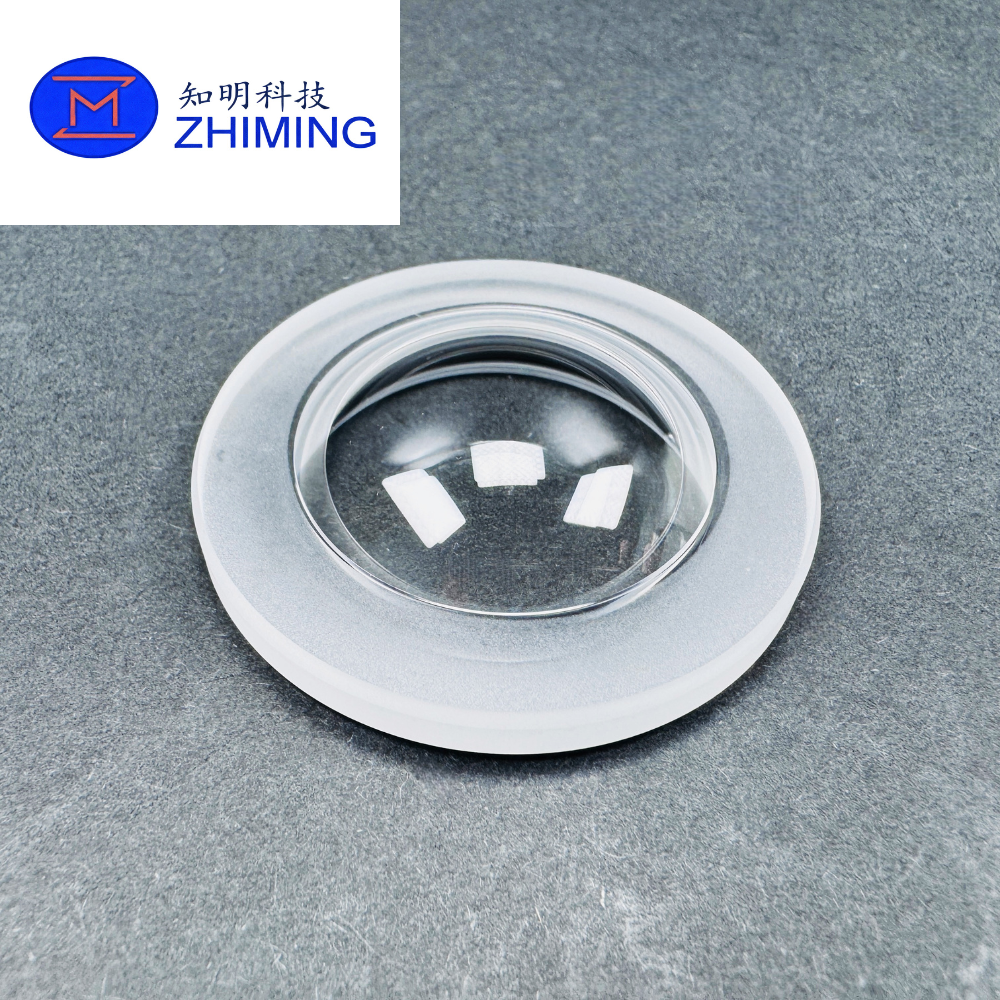
2. Material Fundamentals: What Makes Sapphire Different?
Synthetic sapphire is a single-crystal form of corundum (α-Al₂O₃). Unlike glass, which is amorphous, sapphire has a highly ordered crystal lattice.
Key intrinsic properties:
- Mohs hardness: 9 (second only to diamond)
- High Young’s modulus (~345 GPa)
- Melting point: ~2050°C
- Excellent chemical inertness
- Wide optical transmission range (UV to mid-IR, ~0.15–5.5 μm depending on quality)
These characteristics make sapphire exceptionally resistant to scratching, erosion, and thermal deformation.
3. Optical Performance Advantages
While glass (such as BK7 or fused silica) performs well in standard environments, sapphire excels under harsh optical conditions:
3.1 High Surface Hardness = Stable Optical Quality
Surface degradation is one of the biggest causes of optical performance loss in traditional domes. Sapphire’s hardness prevents micro-scratches that scatter light and reduce resolution.
3.2 Broad Spectral Transmission
Sapphire supports transmission from ultraviolet to infrared regions, making it suitable for multi-spectral sensors and night-vision systems.
3.3 Low Long-Term Optical Drift
Because sapphire is chemically stable and non-porous, it does not suffer from surface weathering or moisture-induced refractive index changes.
4. Mechanical and Environmental Superiority
4.1 Extreme Pressure Resistance
Sapphire domes are widely used in:
- Deep-sea camera housings
- Submersible sensors
- High-pressure fluid monitoring systems
Their compressive strength and rigidity allow them to withstand hydrostatic pressure far beyond typical optical glass limits.
4.2 High-Temperature Stability
Unlike many optical glasses that soften or deform under thermal stress, sapphire maintains structural integrity at elevated temperatures, making it suitable for:
- Jet engine inspection windows
- Hypersonic vehicle sensors
- High-temperature industrial monitoring
4.3 Chemical Corrosion Resistance
Sapphire is resistant to:
- Acids (except HF)
- Alkalis
- Saline environments
This makes it ideal for marine and chemical processing applications.
5. Why Glass Is Being Replaced
Traditional optical glasses still dominate cost-sensitive applications, but they suffer from key limitations:
| Property | Optical Glass | Sapphire Dome |
|---|---|---|
| Hardness | Moderate | Extremely high |
| Scratch resistance | Low–medium | Very high |
| Pressure resistance | Limited | Excellent |
| Thermal stability | Moderate | Excellent |
| Chemical durability | Moderate | Very high |
| Cost | Low | High |
The replacement trend is driven by one central factor: failure prevention in extreme environments is more valuable than initial cost savings.
6. Manufacturing Challenges of Sapphire Domes
Despite its advantages, sapphire is not easy to produce or process.
6.1 Crystal Growth
Sapphire single crystals are typically grown using:
- Kyropoulos (KY) method
- Czochralski method
- Heat Exchanger Method (HEM)
These processes are slow and energy-intensive, contributing to high material cost.
6.2 Machining Difficulty
Due to extreme hardness:
- Conventional cutting tools cannot be used effectively
- Diamond grinding and laser processing are required
- Polishing must achieve sub-nanometer surface roughness for optical-grade performance
6.3 Shape Complexity
Spherical or dome geometries require multi-axis precision machining, increasing production time and cost.
7. Key Application Areas
Sapphire optical domes are now standard or emerging in:
- Aerospace navigation and sensor windows
- Missile guidance systems
- Underwater imaging and sonar housings
- High-end industrial inspection cameras
- Scientific instruments exposed to plasma or radiation
- Spacecraft observation ports
In each case, durability and signal integrity are more critical than material cost.
8. Limitations and Trade-Offs
Despite strong advantages, sapphire is not universally superior:
- High manufacturing cost
- Brittle fracture behavior (no plastic deformation before failure)
- Difficulty in large-scale complex shaping
- Anisotropic optical properties (birefringence in certain crystal orientations)
These factors mean sapphire is typically used only where performance justifies the cost.
9. Future Development Trends
The industry is moving toward:
- Larger diameter sapphire boules for bigger domes
- Advanced laser-assisted machining for reduced cost
- Anti-reflective nano-coatings to improve optical efficiency
- Hybrid dome structures combining sapphire with engineered coatings or composites
As manufacturing efficiency improves, sapphire is expected to expand from niche defense and aerospace use into broader industrial and high-end commercial optics.
10. Conclusion
Sapphire optical domes are replacing traditional glass in high-hardness optics because they fundamentally solve three critical engineering problems:
- Surface degradation under mechanical wear
- Structural failure under extreme pressure and temperature
- Optical instability in harsh chemical and environmental conditions
While cost and processing complexity remain challenges, sapphire represents a shift toward durability-first optical engineering, where system reliability outweighs material economy.
FAQ (Frequently Asked Questions)
Why not use fused silica or quartz instead of sapphire for optical domes?
Fused silica and quartz offer excellent optical transparency and lower cost, but they are significantly weaker in terms of hardness and impact resistance. In abrasive, high-pressure, or high-velocity environments, their surfaces are more likely to scratch or degrade, which directly affects optical performance. Sapphire maintains optical stability much longer under mechanical wear, making it more suitable for extreme conditions.
Does sapphire optical performance vary depending on crystal orientation?
Yes. Sapphire is a single-crystal material and exhibits slight birefringence, meaning its refractive index can vary depending on crystal orientation. For high-precision optical domes, manufacturers carefully control the orientation of the crystal axis during growth and machining to minimize optical distortion and ensure consistent transmission performance.
Are sapphire optical domes cost-effective in industrial applications?
From a material cost perspective, sapphire is more expensive than traditional optical glass. However, in high-reliability systems—such as aerospace sensors, underwater imaging, or defense optics—the total lifecycle cost is often lower. This is because sapphire domes significantly reduce failure rates, maintenance needs, and replacement frequency in harsh environments.