
In the fields of industrial optics, semiconductor manufacturing, laser systems, and high-end equipment, engineers and buyers increasingly ask the same question: Can sapphire glass replace quartz glass?
This question is becoming more common for practical reasons. While quartz glass has long been valued for its excellent thermal stability and optical performance, some users encounter limitations in demanding environments. Components exposed to abrasion, high-power lasers, or long-term operation may require frequent replacement due to surface wear or performance degradation, increasing maintenance costs and downtime.
Synthetic sapphire, on the other hand, offers exceptional hardness, higher thermal conductivity, and stronger resistance to laser damage. As a result, it is gradually entering application areas traditionally dominated by quartz.
However, can sapphire completely replace quartz? The answer is more complex than a simple yes or no. Material selection depends heavily on operating conditions.
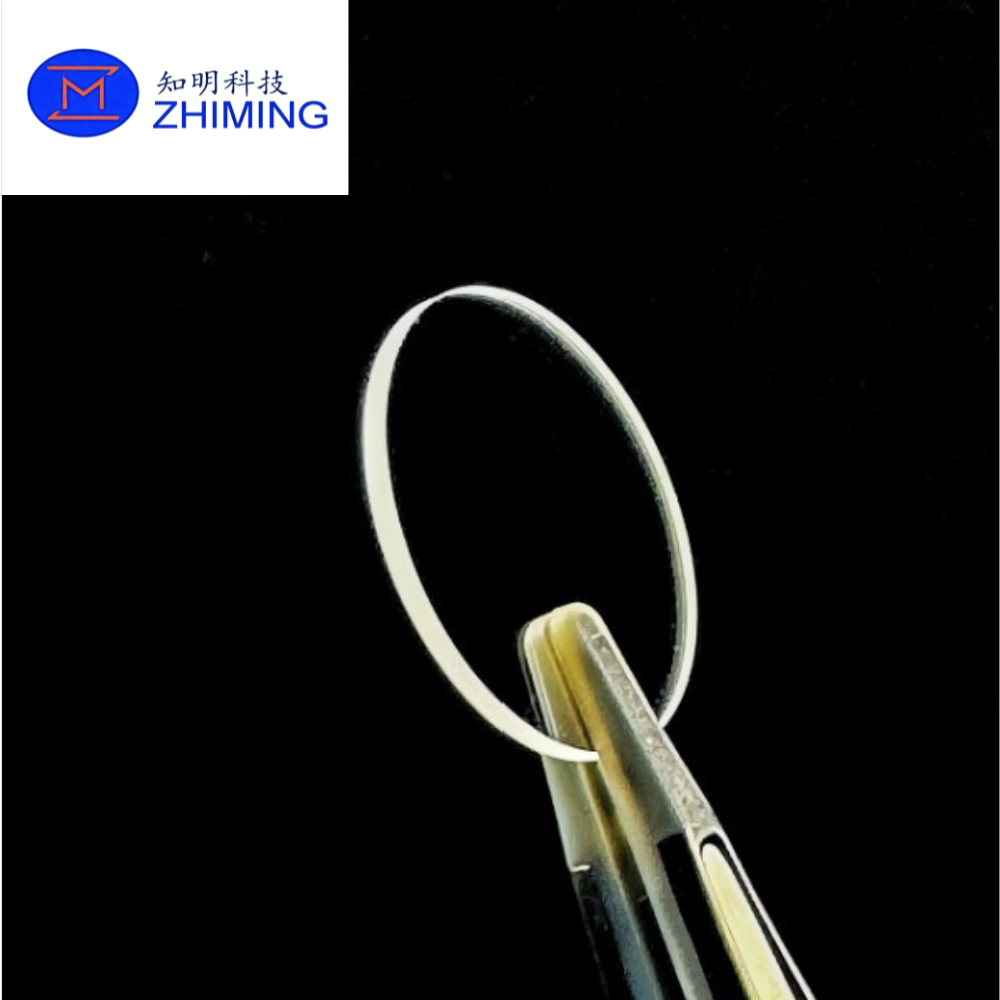
Understanding the Difference: Sapphire and Quartz Are Fundamentally Different Materials
Although both are often referred to as “glass,” sapphire and quartz differ significantly in composition and structure.
Sapphire glass is actually a synthetic single crystal material primarily composed of aluminum oxide (Al₂O₃). Industrial sapphire has the same crystal structure as natural sapphire and is commonly produced using methods such as the Kyropoulos process or Heat Exchange Method (HEM).
Quartz glass, by contrast, is a high-purity amorphous material made of silicon dioxide (SiO₂).
In simple terms:
- Sapphire = single crystal material
- Quartz = amorphous material
This structural difference explains why their properties differ so greatly.
Main Characteristics of Sapphire
- Mohs hardness of 9, second only to diamond
- Excellent wear resistance
- High thermal conductivity
- Strong chemical stability
- Good dielectric properties
- High laser damage threshold
Main Characteristics of Quartz Glass
- Extremely low thermal expansion coefficient
- Outstanding thermal shock resistance
- Excellent deep UV transmission
- Ultra-high purity
- Easier machining
- Lower manufacturing cost
Key Performance Comparison
The following engineering parameters help explain why more industries are considering sapphire as an alternative.
| Property | Sapphire Glass | Quartz Glass |
|---|---|---|
| Composition | Al₂O₃ | SiO₂ |
| Structure | Single crystal | Amorphous |
| Mohs Hardness | 9 | 7 |
| Thermal Conductivity (W/m·K) | 25–40 | 1.4 |
| Melting Point (°C) | 2050 | 1710 |
| Working Temperature (°C) | ~1800 | ~1100 |
| UV Transmission Range | Above 200nm | Down to 185nm |
| Laser Damage Resistance | High | Moderate |
| Thermal Shock Resistance | Moderate | Excellent |
| Machining Difficulty | High | Medium |
| Relative Cost | High | Lower |
The comparison reveals an important fact:
Quartz is not an inferior material. It simply excels in different performance categories.
If the application requires scratch resistance, durability, high-power laser capability, and long service life, sapphire has significant advantages. If deep UV transmission, rapid temperature cycling, and cost efficiency are priorities, quartz remains difficult to replace.
The real engineering challenge is not material replacement—it is material matching.
Industries Where Sapphire Is Replacing Quartz
1. High-Power Laser Systems
Industrial laser cutting, laser welding, and defense laser equipment expose optical windows to extremely high energy densities.
Quartz windows under these conditions may gradually experience:
- Surface ablation
- Micro-cracking
- Optical degradation
Due to its higher laser damage threshold and superior heat dissipation capability, sapphire increasingly serves as a preferred material for laser windows.
Its advantages are especially noticeable in:
- UV laser systems
- Pulsed lasers
- High-energy laser equipment
2. Semiconductor Vacuum Equipment Windows
Semiconductor tools frequently use optical windows in:
- Vacuum chambers
- Plasma monitoring systems
- PVD and CVD equipment
These environments expose materials to:
- High vacuum conditions
- Energetic particle bombardment
- Corrosive gases
Long-term exposure may shorten quartz component life.
Sapphire offers:
- Greater mechanical strength
- Better pressure resistance
- Enhanced chemical durability
For long-running semiconductor systems, sapphire can reduce maintenance cycles and equipment downtime.
3. Infrared and Optical Windows
Aerospace and defense applications often require windows capable of:
- High optical transmission
- Resistance to particle impact
- Extreme temperature tolerance
- Long operational life
Typical examples include:
- Flame detector windows
- Missile domes
- Aircraft optical windows
- Night vision systems
Quartz provides good transparency but lower wear resistance.
Under harsh environments involving sand, airflow, and mechanical erosion, sapphire windows often demonstrate significantly longer service life.
4. Consumer Electronics
One of sapphire’s most successful commercial applications is camera lens protection.
Smartphone camera covers frequently face:
- Friction from keys or metal objects
- Surface scratching
- Long-term wear
With a Mohs hardness of 9, sapphire provides outstanding scratch resistance.
Today it is widely used in:
- Camera lens covers
- Fingerprint sensor windows
- Premium smartwatch crystals
5. Medical Devices and Biosensors
Medical applications require more than optical transparency. Materials must also provide:
- Biocompatibility
- Long-term stability
- Corrosion resistance
For example:
Sapphire surgical blades can achieve ultra-sharp edge precision at the micron level.
Implantable sensors increasingly use sapphire packaging because of its durability and reliability in biological environments.
Why Sapphire Cannot Fully Replace Quartz
Despite its advantages, sapphire still cannot entirely replace quartz.
Cost Considerations
Sapphire crystal growth requires lengthy manufacturing cycles and difficult machining processes.
Costs increase significantly for larger dimensions such as:
- 4-inch windows
- 6-inch substrates
- 8-inch optical components
Quartz remains more economical for large-scale production.
Deep UV Performance
Quartz transmits wavelengths down to approximately 185nm.
Sapphire transmission generally cuts off near 200nm.
Applications such as:
- UV lithography
- UV analytical instruments
- Deep ultraviolet optics
still strongly depend on quartz.
Thermal Shock Resistance
Quartz possesses an extremely low thermal expansion coefficient.
This allows it to withstand rapid heating and cooling cycles.
For example, quartz can survive sudden temperature changes that may induce stress or cracking in sapphire.
In thermal cycling environments, quartz often remains the more reliable option.
Future Direction: Material Collaboration Rather Than Material Replacement
For years, engineers asked:
“Can sapphire replace quartz?”
The more practical question today may be:
“Which material best matches the application?”
Many advanced systems now adopt hybrid approaches:
- Sapphire windows in high-stress regions
- Quartz in secondary optical zones
- Different materials optimized for different wavelength ranges
The future is shifting from material competition toward material collaboration.
As large-diameter sapphire manufacturing and precision machining continue improving, sapphire will likely enter more high-end applications. However, quartz will continue maintaining a strong position because of its unique strengths and mature supply chain.
In engineering, the best material is rarely the one with the highest numbers on a datasheet—it is the one that delivers the best match for the job.