
1. Hypersonic Flight and Aerospace Re-Entry Environments
In hypersonic aircraft, missiles, and re-entry vehicles, external sensor windows are exposed to extreme aerodynamic heating, plasma formation, and high-velocity particle impact. Conventional optical glass rapidly degrades under these conditions due to thermal softening and surface erosion.
Sapphire optical windows maintain structural integrity at high temperatures and resist particle-induced surface damage, ensuring stable optical transmission for guidance, navigation, and targeting systems.
2. Deep-Sea and High-Pressure Underwater Systems
Underwater environments introduce continuous hydrostatic pressure, saltwater corrosion, and biofouling risks. Optical domes used in submersibles, ROVs, and underwater cameras must withstand both pressure and long-term chemical exposure.
Sapphire’s high compressive strength and chemical inertness make it ideal for deep-sea imaging systems where glass domes may crack, fog, or degrade over time.
3. Desert, Sandstorm, and High-Abrasion Environments
In desert surveillance, mining operations, and outdoor defense systems, optical windows are constantly exposed to high-velocity sand and dust particles.
This abrasive environment causes rapid micro-scratching on conventional glass surfaces, leading to reduced image clarity. Sapphire’s extreme hardness (Mohs 9) significantly reduces surface wear, preserving long-term optical performance even under continuous particle bombardment.
4. Space and Orbital Observation Systems
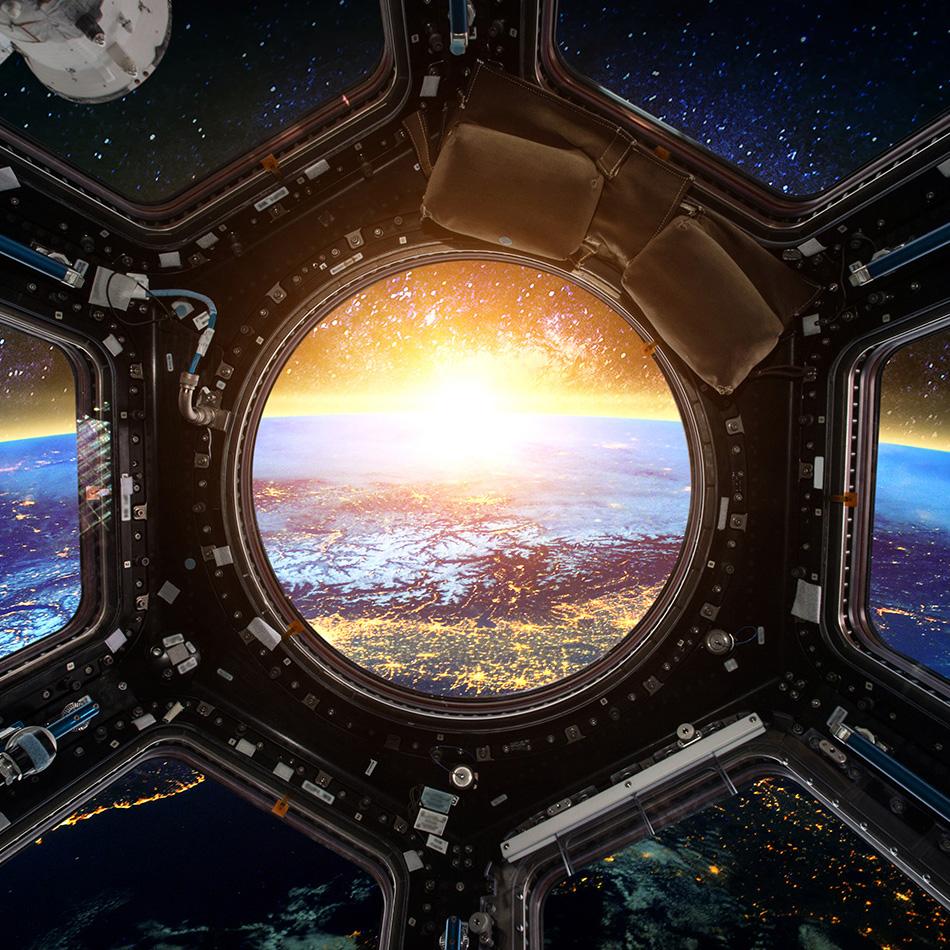
Spacecraft, satellites, and space telescopes operate under vacuum conditions combined with radiation exposure, micrometeoroid impacts, and extreme thermal cycling.
Sapphire optical windows provide radiation resistance, high thermal stability, and durability against micro-debris impacts, making them suitable for optical sensors used in Earth observation, star tracking, and deep-space monitoring.
5. High-Temperature Industrial and Combustion Monitoring
Industrial furnaces, turbine engines, and chemical reactors require real-time optical monitoring under extreme heat and corrosive gases.
Standard optical glass may deform or devitrify under prolonged high temperatures. Sapphire windows, however, retain structural and optical stability, enabling reliable inspection of combustion processes, plasma reactions, and high-temperature manufacturing environments.
Conclusion
Sapphire optical windows are not chosen for general-purpose optics, but for environments where heat, pressure, abrasion, radiation, and chemical exposure exceed the limits of traditional glass materials. Their adoption is driven by system reliability rather than cost efficiency.
FAQ
What makes sapphire optical windows more scratch-resistant than other materials?
Sapphire is a single-crystal form of aluminum oxide (Al₂O₃) with a Mohs hardness of 9, second only to diamond. This extremely high hardness significantly reduces surface wear caused by dust, sand, ice particles, and mechanical contact. Unlike glass, which can develop micro-scratches easily, sapphire maintains a smooth optical surface for much longer periods in abrasive environments.
Can sapphire optical windows be used in both infrared and visible light applications?
Yes. Sapphire has a wide optical transmission range, typically from ultraviolet (UV) to mid-infrared (around 0.15–5.5 μm depending on purity and thickness). This makes it suitable for multi-spectral systems, including visible imaging, IR tracking, and combined sensor platforms used in aerospace and defense applications.
Are sapphire optical windows prone to cracking under extreme impact?
Although sapphire is extremely hard, it is also a brittle material, meaning it does not deform plastically before fracture. Under severe impact beyond its mechanical limits, it can crack or shatter. However, in engineered systems, proper thickness design, dome geometry, and mounting structures significantly improve impact resistance and distribute stress effectively.