
Kiedy inżynierowie projektują układy optyczne, materiał, z którego wykonane są okienka, nie jest jedynie przezroczystą osłoną. Ma on wpływ na przepuszczalność światła, jakość obrazu, stabilność termiczną, wytrzymałość mechaniczną, niezawodność uszczelnienia, koszt oraz długoterminową wydajność. Szafir, szkło BK7 i szkło K9 to powszechnie stosowane materiały optyczne, jednak nadają się one do różnych warunków pracy.
Materiały BK7 i K9 znajdują szerokie zastosowanie w soczewkach, pryzmatach, lustrach, okienkach ochronnych, optyce fotograficznej, przyrządach oraz ogólnie w układach optycznych działających w zakresie światła widzialnego. Szafir wybiera się zazwyczaj wtedy, gdy element optyczny musi wytrzymać trudne warunki, takie jak wysoka temperatura, ciśnienie, ścieranie, działanie substancji chemicznych, próżnia, plazma, ekspozycja na warunki zewnętrzne lub wielokrotne czyszczenie.
W niniejszym artykule porównano szafir, szkło BK7 i szkło K9 z punktu widzenia projektowania układów optycznych, co ma pomóc nabywcom i inżynierom w wyborze odpowiedniego materiału do różnych zastosowań.
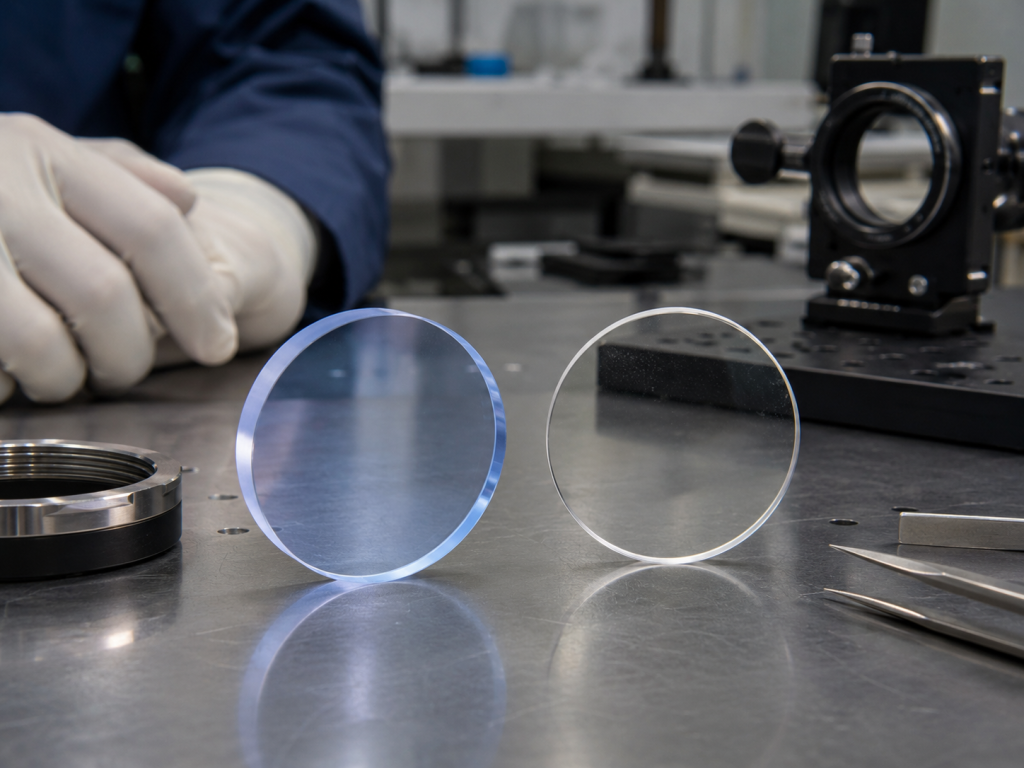
1. Czym jest szafir?
Szafir stosowany w okienkach optycznych to syntetyczny monokryształ tlenku glinu, Al₂O₃. Nie jest to zwykłe szkło. Szafir jest materiałem krystalicznym charakteryzującym się doskonałą twardością, odpornością na zużycie, odpornością chemiczną, stabilnością w wysokich temperaturach oraz szerokim zakresem przepuszczalności optycznej od promieniowania ultrafioletowego do podczerwonego. Firma Kyocera opisuje szafirowe elementy optyczne jako charakteryzujące się wysoką przepuszczalnością w szerokim zakresie długości fal, od ultrafioletu do podczerwieni, a jednocześnie odporne na korozję i zużycie.
Ze względu na te właściwości szafir jest często wykorzystywany do:
- Okna ochronne do urządzeń optycznych
- Wysokociśnieniowe rzutnie
- Okna komory próżniowej
- Osłony czujników
- Okna laserowe
- Szyby do kamer przeznaczonych do pracy w trudnych warunkach
- Okna w urządzeniach półprzewodnikowych
- Okna do obserwacji procesów chemicznych i plazmowych
- Osłony optyczne dla przemysłu lotniczego i obronnego
- Odporne na zużycie okienka skanera lub okienka kontrolne
Główną zaletą szafiru jest nie tylko jego przezroczystość. Jego wartość wynika z połączenia właściwości optycznych z wytrzymałością mechaniczną i odpornością na czynniki środowiskowe.
2. Czym jest szkło BK7?
BK7 to borokrzemianowe szkło optyczne typu „crown”. Szkło N-BK7 firmy SCHOTT jest jednym z najczęściej stosowanych standardowych szkieł optycznych, ponieważ charakteryzuje się stabilnymi właściwościami optycznymi, dobrą przepuszczalnością wewnętrzną w zakresie widzialnym i bliskiej podczerwieni oraz niezawodną dostępnością w optyce precyzyjnej. W karcie charakterystyki materiału N-BK7 firmy SCHOTT podano współczynnik załamania światła oraz wartości przepuszczalności wewnętrznej dla wielu długości fal, co sprawia, że jest ona przydatna do obliczeń związanych z projektowaniem układów optycznych.
BK7 jest powszechnie stosowany do:
- Obiektywy
- Pryzmaty
- Okna optyczne
- Lustra
- Rozdzielacze wiązki
- Systemy obrazowania
- Przyrządy laboratoryjne
- Elementy aparatów fotograficznych i teleskopów
- Ogólne układy optyczne działające w zakresie światła widzialnego
W porównaniu z szafirem materiał BK7 jest łatwiejszy w obróbce, łatwiejszy do polerowania, bardziej opłacalny i powszechnie dostępny w wielu rozmiarach. Nie zapewnia jednak takiej samej twardości, odporności termicznej ani trwałości w trudnych warunkach, jak szafir.
3. Czym jest szkło K9?
Szkło K9 jest powszechnie stosowane w Chinach jako szkło optyczne typu crown, podobne do BK7. W wielu rozmowach dotyczących zaopatrzenia szkło K9 lub H-K9L traktowane jest jako materiał równoważny BK7, zwłaszcza w przypadku soczewek, pryzmatów, okien i ogólnych elementów optycznych. W karcie katalogowej H-K9L firmy CDGM podano nd = 1,516800 oraz νd = 64,20, które są bardzo zbliżone do typowych parametrów optycznych szkła N-BK7.
Nabywcy powinni jednak zachować ostrożność w odniesieniu do terminu “K9”. W przypadku międzynarodowych zamówień na produkty optyczne lepiej jest potwierdzić dokładną klasę szkła, na przykład H-K9L, N-BK7, lub inny równoważny gatunek, zamiast podawać jedynie “szkło K9”. Dane CDGM dotyczące szkła optycznego wyjaśniają, że kod H-K9L 517642 odpowiada wartościom współczynnika załamania światła i liczby Abbego, co pomaga projektantom optycznym w dokładniejszej identyfikacji materiału.
W prostych słowach:
- BK7 zwykle odnosi się do dobrze znanej rodziny szkła borokrzemowego typu „crown”.
- N-BK7 często odnosi się konkretnie do wersji firmy SCHOTT niezawierającej ołowiu ani arsenu.
- K9 / H-K9L zwykle odnosi się do chińskiego gatunku szkła optycznego typu „crown”, podobnego do BK7.
- W przypadku systemów precyzyjnych nabywcy powinni sprawdzić dokładną specyfikację techniczną, a nie tylko ogólną nazwę.
4. Szybkie porównanie: szafir a szkło BK7/K9
| Własność | Szafir | Szkło BK7 / K9 |
|---|---|---|
| Rodzaj materiału | Monokryształ Al₂O₃ | Szkło optyczne typu „crown” |
| Główna zaleta | Twardość, trwałość, stabilność termiczna | Wysoka jakość optyczna, niższy koszt, łatwa obróbka |
| Zakres optyczny | Od promieniowania UV do podczerwieni, w zależności od klasy i grubości | Widoczne głównie w bliskiej podczerwieni |
| Twardość | Bardzo wysoki | Umiarkowany |
| Odporność na zarysowania | Doskonały | Niższy niż szafir |
| Opór termiczny | Doskonały | Ograniczone w porównaniu z szafirem |
| Odporność chemiczna | Doskonały | Nadaje się do standardowych warunków optycznych |
| Stopień trudności przetwarzania | Wysoki | Niższy |
| Koszt | Wyższy | Niższy |
| Najlepiej nadaje się do | Trudne warunki eksploatacyjne, ciśnienie, zużycie, wysoka temperatura | Ogólne układy optyczne, soczewki, pryzmaty, optyka laboratoryjna |
| Kwestie projektowe | Dwójłomność, koszt, trudność obróbki | Niższa trwałość, gorsze właściwości termiczne |
5. Różnice w transmisji optycznej
W przypadku wielu układów optycznych działających w zakresie światła widzialnego szkło BK7 lub K9 często w zupełności wystarcza. Firma Edmund Optics zwraca uwagę, że standardowe szkła optyczne zapewniają wysoką przepuszczalność w całym spektrum światła widzialnego, a także w zakresach bliskiego ultrafioletu i bliskiej podczerwieni. Dlatego właśnie szkła BK7/K9 są szeroko stosowane w aparatach fotograficznych, teleskopach, mikroskopach, optyce laboratoryjnej oraz jako ogólne szyby ochronne.
Szafir jest bardziej odpowiedni w sytuacjach, gdy okienko optyczne musi obejmować szerszy zakres długości fal lub pracować w trudniejszych warunkach. Okienka optyczne z szafiru są powszechnie stosowane w zastosowaniach od ultrafioletu po podczerwień, zwłaszcza gdy okienko musi być również odporne na zużycie, korozję, ciśnienie lub wysokie temperatury.
W przypadku prostych zastosowań związanych z obrazowaniem w zakresie światła widzialnego szkło BK7/K9 jest zazwyczaj bardziej ekonomicznym rozwiązaniem. W przypadku systemów wykorzystujących promieniowanie UV lub podczerwone, systemów o dużej mocy, wysokotemperaturowych lub przeznaczonych do pracy w trudnych warunkach szafir może okazać się lepszym wyborem w perspektywie długoterminowej.
6. Współczynnik załamania światła i konstrukcja optyczna
Współczynnik załamania światła wpływa na sposób, w jaki światło ulega załamaniu podczas wchodzenia do materiału i wychodzenia z niego. Firma Edmund Optics wyjaśnia, że współczynnik załamania światła jest kluczowym parametrem szkła optycznego i zazwyczaj podaje się go przy długości fali 587,6 nm w projektowaniu szkła optycznego.
Modele BK7 i H-K9L mają bardzo zbliżone wartości współczynnika załamania światła w okolicach 1.5168 w zakresie linii d, co sprawia, że są to materiały dobrze znane projektantom optycznym. Zarówno w arkuszach danych SCHOTT N-BK7, jak i CDGM H-K9L podano wartości współczynnika załamania światła oraz dyspersji, niezbędne do obliczeń optycznych.
Szafir ma wyższy współczynnik załamania światła niż BK7/K9, więc w przypadku okien bez powłoki odbicie fresnelowskie na każdej powierzchni jest większe. W układach, w których ważna jest przepuszczalność, okna szafirowe często zyskują dzięki powłoce antyrefleksyjnej zaprojektowanej dla określonego zakresu długości fal.
Z punktu widzenia nabywców kwestia praktyczna jest prosta: przejście z BK7/K9 na szafir może wymagać przeprojektowania układu optycznego, zwłaszcza jeśli okienko stanowi część ścieżki obrazowania, ścieżki lasera lub precyzyjnego systemu czujników.
7. Dwójłomność: kluczowa różnica
BK7 i K9 to szkła optyczne izotropowe, co oznacza, że zasadniczo nie wykazują dwójłomności związanej z kierunkiem kryształu. Szafir jest inny. Jest to materiał monokrystaliczny, a jego właściwości optyczne mogą zależeć od orientacji kryształu.
W przypadku zwykłych okien ochronnych może to nie stanowić większego problemu. Jednak w przypadku systemów laserowych, optyki wrażliwej na polaryzację, precyzyjnego obrazowania lub interferometrii należy wziąć pod uwagę orientację szafiru. Firma Thorlabs podaje, że jej okienka szafirowe są cięte w osi Z, tak aby oś c była równoległa do osi optycznej, co pomaga wyeliminować efekty dwójłomności w świetle przechodzącym.
Właśnie dlatego nabywcy nie powinni ograniczać się wyłącznie do pytania o “szafirowe okienko”. Być może będą musieli również sprecyzować:
- Losowa orientacja
- Szafir cięty metodą C / metodą Z
- Kierunek osi optycznej
- Wymóg dotyczący dwójłomności
- Długość fali lasera
- Czułość polaryzacyjna
- Wymagania dotyczące fali czołowej
W przypadku zwykłej ochrony BK7/K9 może być prostszym rozwiązaniem. W trudnych warunkach szafir jest wytrzymalszy, ale w przypadku precyzyjnych układów optycznych może być konieczna kontrola orientacji.
8. Twardość i odporność na zarysowania
Największą różnicą mechaniczną między szafirem a szkłem BK7/K9 jest twardość. Szafir jest znacznie twardszy i bardziej odporny na zarysowania niż zwykłe szkło optyczne. Dzięki temu nadaje się do zastosowania w odsłoniętych okienkach, które mogą mieć kontakt z kurzem, cząstkami, metalowymi narzędziami, ściereczkami do czyszczenia, piaskiem, pozostałościami plazmy lub w trudnych warunkach zewnętrznych.
Materiał BK7/K9 zapewnia doskonałe właściwości optyczne, ale jest bardziej podatny na zarysowania. W przypadku czystego przyrządu optycznego może to nie stanowić problemu. Jednak w warunkach fabrycznych, w skanerze, czujniku, komorze wysokociśnieniowej, reaktorze chemicznym lub w systemie pracującym na zewnątrz uszkodzenia powierzchni mogą z czasem zmniejszyć przepuszczalność i zwiększyć rozpraszanie.
Wybierz szafir, jeśli okno może być skierowane w stronę:
- Częste wycieranie lub czyszczenie
- Cząstki ścierne
- Kontakt mechaniczny
- Trudne warunki przemysłowe
- Ekspozycja na czynniki zewnętrzne
- Cząstki poruszające się z dużą prędkością lub rozpryski
- Wymagania dotyczące długotrwałego użytkowania
Należy wybrać BK7/K9, gdy okienko jest osłonięte wewnątrz przyrządu optycznego, a koszt lub dostępność optyczna mają większe znaczenie niż odporność na ścieranie.
9. Stabilność termiczna i zastosowanie w wysokich temperaturach
Szafir znacznie lepiej nadaje się do produkcji okien optycznych przeznaczonych do pracy w wysokich temperaturach niż szkło BK7/K9. Szafir znajduje zastosowanie w trudnych warunkach eksploatacyjnych, ponieważ łączy w sobie wysoką przepuszczalność optyczną z doskonałymi właściwościami termicznymi, mechanicznymi i chemicznymi.
Materiały BK7 i K9 lepiej sprawdzają się w układach optycznych pracujących w normalnych temperaturach. Nie są one jednak najlepszym wyborem w przypadku pieców wysokotemperaturowych, monitorowania procesów spalania, urządzeń plazmowych ani zastosowań wymagających cykli termicznych. Jeśli system wymaga szybkiego nagrzewania i chłodzenia, nabywcy powinni również wziąć pod uwagę rozszerzalność cieplną, naprężenia montażowe oraz konstrukcję uszczelnień.
W przypadku środowisk, w których występują wysokie temperatury, wybór materiału nie powinien opierać się wyłącznie na jego przezroczystości. Należy dokonać oceny całego zestawu okiennego, w tym:
- Grubość szyby
- Średnica apertury
- Sposób montażu
- Materiał uszczelki
- Niezgodność rozszerzalności cieplnej
- Jakość powierzchni
- Fazowanie krawędzi
- Szybkość cyklu temperaturowego
Szafir wykazuje większą wytrzymałość w trudnych warunkach termicznych, jednak nieodpowiednia konstrukcja mocowania może nadal powodować naprężenia i pęknięcia.
10. Odporność chemiczna i środowiskowa
W zastosowaniach chemicznych, próżniowych, plazmowych, morskich, medycznych, półprzewodnikowych lub zewnętrznych odporność na czynniki środowiskowe może okazać się ważniejsza niż podstawowa przepuszczalność optyczna.
Szafir charakteryzuje się wysoką odpornością na korozję i zużycie, dlatego często stosuje się go do produkcji okien czujnikowych i obserwacyjnych w wymagających środowiskach przemysłowych. Szkło BK7/K9 sprawdza się dobrze w zwykłych układach optycznych, ale jest mniej odpowiednie w przypadku silnego oddziaływania substancji chemicznych, erozji cząsteczkowej, oddziaływania plazmy lub wielokrotnego czyszczenia środkami agresywnymi.
Warto rozważyć zastosowanie szafiru w następujących przypadkach:
- Okienka obserwacyjne reaktorów chemicznych
- Okna komory próżniowej
- Obserwacja procesów plazmowych
- Instalacje gazowe wysokociśnieniowe
- Zewnętrzne czujniki optyczne
- Środowiska medyczne lub związane ze sterylizacją
- Sprzęt półprzewodnikowy
- Agresywne procesy czyszczenia
Model BK7/K9 lepiej nadaje się do:
- Laboratoryjne stanowiska optyczne
- Optyka aparatu fotograficznego
- Soczewki ogólnego przeznaczenia i pryzmaty
- Zabezpieczone okienka optyczne
- Niskokosztowe systemy wykorzystujące światło widzialne
- Sprzęt edukacyjny i kontrolny
11. Trudności związane z przetwarzaniem i koszty
Szkło BK7/K9 łatwiej poddaje się cięciu, szlifowaniu, polerowaniu, powlekaniu oraz obróbce w celu uzyskania soczewek lub pryzmatów. Dzięki temu nadaje się do stosowania w systemach optycznych, w których liczy się oszczędność, oraz do tworzenia skomplikowanych kształtów optycznych.
Szafir jest znacznie twardszy i trudniejszy w obróbce. Cięcie, szlifowanie, docieranie, polerowanie, wiercenie, fazowanie i powlekanie szafiru zazwyczaj wymaga więcej czasu, bardziej zaawansowanego sprzętu oraz ściślejszej kontroli procesu. Dlatego też okienka szafirowe są zazwyczaj droższe niż okienka szklane typu BK7/K9.
Koszt należy oceniać na podstawie całkowitej wydajności systemu, a nie wyłącznie na podstawie ceny jednostkowej. Jeśli materiały BK7/K9 wymagają częstej wymiany z powodu zarysowań, uszkodzeń termicznych lub oddziaływania substancji chemicznych, szafir może obniżyć długoterminowe koszty konserwacji. Jeśli jednak zastosowaniem jest czysty przyrząd optyczny przeznaczony do użytku w pomieszczeniach, materiały BK7/K9 mogą stanowić bardziej rozsądny wybór.
12. Który materiał wybrać?
Kiedy warto wybrać model Sapphire:
- Okno jest narażone na ścieranie lub częste czyszczenie.
- System wykorzystuje wysokie temperatury lub cykle termiczne.
- Okno to jest stosowane w środowiskach pod ciśnieniem, próżniowych, gazowych lub chemicznych.
- Aplikacja wymaga dostępu optycznego w zakresie od promieniowania UV do podczerwieni.
- Okno musi być odporne na zarysowania, aby mogło służyć przez długi czas.
- Ten element optyczny stanowi część czujnika przeznaczonego do pracy w trudnych warunkach.
- Okno to znajduje zastosowanie w przemyśle półprzewodnikowym, lotniczym, obronnym, laserowym oraz w urządzeniach przemysłowych.
- Wymiana jest trudna, a przestoje są kosztowne.
Kiedy warto wybrać szkło BK7/K9:
- System działa głównie w zakresie światła widzialnego.
- Element optyczny jest zabezpieczony wewnątrz przyrządu.
- Kontrola kosztów jest ważna.
- Część ta to soczewka, pryzmat, podłoże lustra lub zwykła szyba.
- Otoczenie jest czyste i stabilne.
- Nie są wymagane wysoka twardość ani odporność na wysokie temperatury.
- Szybkie tworzenie prototypów i łatwa produkcja mają duże znaczenie.
13. Typowe przykłady zastosowań
| Zastosowanie | Lepszy dobór materiałów | Powód |
| Element obiektywu aparatu fotograficznego | BK7/K9 | Dobra wydajność optyczna i kontrola kosztów |
| Laboratoryjna szyba optyczna | BK7/K9 | Łatwe do pozyskania i przetworzenia |
| Okienko ochronne przed promieniowaniem laserowym w trudnych warunkach środowiskowych | Szafir | Większa twardość i trwałość |
| Okienko obserwacyjne pieca | Szafir | Lepsza odporność na wysokie temperatury |
| Okienko obserwacyjne komory próżniowej | Szafir | Lepsze właściwości mechaniczne i chemiczne |
| Osłona czujnika zewnętrznego | Szafir | Lepsza odporność na zarysowania i czynniki atmosferyczne |
| Niedrogie okienko do kontroli wzrokowej | BK7/K9 | Ekonomiczne i wystarczające |
| Zakres procesowy półprzewodników | Szafir | Lepsza odporność na działanie plazmy, wysoką temperaturę i środki czyszczące |
| Pryzmat ogólny | BK7/K9 | Łatwiejsze przetwarzanie i stabilna konstrukcja optyczna |
| Okienko optyczne do gazów wysokociśnieniowych | Szafir | Większa wytrzymałość mechaniczna i większy margines bezpieczeństwa |
14. Lista kontrolna dla kupującego przed złożeniem zamówienia
Przed wyborem szkła szafirowego, BK7 lub K9 nabywcy powinni upewnić się, że:
| Wymaganie | Dlaczego to ma znaczenie |
| Zakres długości fal | Określa przepuszczalność optyczną oraz projekt powłoki |
| Temperatura robocza | Określa wymagania dotyczące stabilności termicznej |
| Narażenie na działanie substancji chemicznych | Określa wymagania dotyczące odporności na korozję |
| Ciśnienie lub próżnia | Określa grubość i konstrukcję uszczelnienia |
| Ryzyko ścierania | Określa wymagania dotyczące twardości |
| Dokładność optyczna | Określa płaskość, równoległość oraz wymagania dotyczące frontu falowego |
| Czułość polaryzacyjna | Istotne dla orientacji szafiru |
| Jakość powierzchni | Wpływa na rozpraszanie, obrazowanie oraz bezpieczeństwo laserowe |
| Powłoka | Poprawia przepustowość przy docelowej długości fali |
| Ilość i budżet | Ma wpływ na wybór materiału i sposobu obróbki |
| Stopień trudności wymiany | Pomaga porównać koszt początkowy z kosztem w całym okresie eksploatacji |
Wnioski
Szafir, szkło BK7 i K9 to przydatne materiały optyczne, ale nie są one zamienne w każdym układzie optycznym.
Szkła BK7 i K9 stanowią doskonały wybór do ogólnych układów optycznych, zwłaszcza gdy istotne znaczenie mają koszt, dostępność, przepuszczalność światła widzialnego oraz łatwość obróbki. Znajdują one szerokie zastosowanie w produkcji soczewek, pryzmatów, okien oraz laboratoryjnych elementów optycznych.
Szafir jest lepszym wyborem, gdy okno optyczne musi wytrzymać trudne warunki eksploatacyjne. Jego wysoka twardość, odporność na zarysowania, stabilność chemiczna, odporność termiczna oraz szerokie pasmo przepuszczalności optycznej sprawiają, że nadaje się on do zastosowań w układach ciśnieniowych, okienkach próżniowych, czujnikach przemysłowych, urządzeniach półprzewodnikowych, okienkach laserowych oraz elementach optycznych do zastosowań zewnętrznych.
Dla nabywców najlepszy wybór zależy od konkretnego zastosowania. Jeśli okienko ma jedynie przepuszczać światło widzialne w czystym i chronionym środowisku, często wystarczy BK7/K9. Jeśli natomiast okienko musi chronić układ przed ciepłem, ciśnieniem, ścieraniem, substancjami chemicznymi, plazmą lub wielokrotnym czyszczeniem, szafir jest zazwyczaj bezpieczniejszym materiałem w perspektywie długoterminowej.
FAQ
1. Czy szkło K9 to to samo co BK7?
Szkło K9 lub H-K9L jest często stosowane jako odpowiednik szkła optycznego typu BK7, zwłaszcza w chińskim przemyśle optycznym. Nabywcy powinni jednak zweryfikować dokładną klasę i specyfikację techniczną, ponieważ termin “K9” może być używany w szerokim znaczeniu podczas negocjacji dotyczących dostaw.
2. Czy szafir jest lepszy od szkła BK7?
Szafir jest lepszym wyborem pod względem twardości, odporności na zarysowania, zastosowań w wysokich temperaturach, odporności chemicznej oraz w trudnych warunkach środowiskowych. BK7 jest lepszym rozwiązaniem w przypadku ogólnych układów optycznych, w których liczy się koszt, soczewek, pryzmatów oraz zastosowań w zakresie światła widzialnego wymagających ochrony.
3. Czy szafir charakteryzuje się lepszą przepuszczalnością optyczną niż BK7?
Zależy to od długości fali i zastosowania. BK7 sprawdza się bardzo dobrze w wielu układach wykorzystujących światło widzialne. Szafir jest bardziej odpowiedni, gdy wymagany jest szerszy zakres od promieniowania UV do podczerwieni lub odporność na trudne warunki środowiskowe.
4. Dlaczego szafir jest droższy od szkła BK7/K9?
Szafir jest znacznie twardszy i trudniejszy do cięcia, szlifowania, polerowania, wiercenia oraz powlekania. Zarówno koszt samego materiału, jak i koszt obróbki są wyższe niż w przypadku zwykłego szkła optycznego typu „crown”.
5. Czy BK7/K9 może zastąpić okienka szafirowe?
Materiał BK7/K9 może zastąpić szafir jedynie wtedy, gdy dane zastosowanie nie wymaga wysokiej twardości, odporności na wysokie temperatury, odporności chemicznej, odporności na ciśnienie ani trwałości w trudnych warunkach środowiskowych. W przypadku wymagających systemów przemysłowych szafir jest zazwyczaj bezpieczniejszym wyborem.