Author: zmsh

Industry News

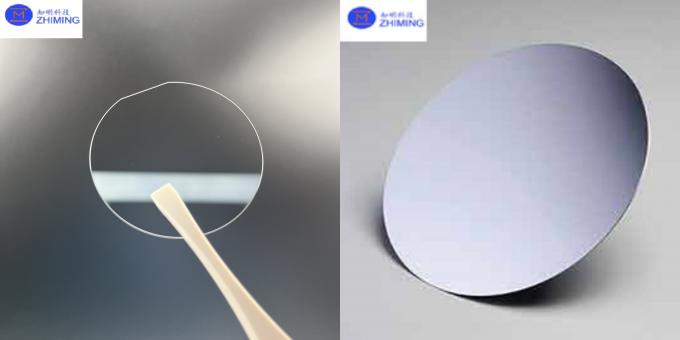
Silicon Wafers vs Sapphire Wafers: A Materials Science Comparison for Modern Electronics

In advanced electronics and optoelectronic manufacturing, material selection directly determines device performance, reliability, and cost structure. Among the most widely discussed substrate materials are silicon wafers and sapphire substrates. Although both are used in semiconductor-related industries, their roles are fundamentally different. Silicon dominates traditional integrated circuits, while sapphire is increasingly used in optoelectronics, high-frequency devices,
Industry News

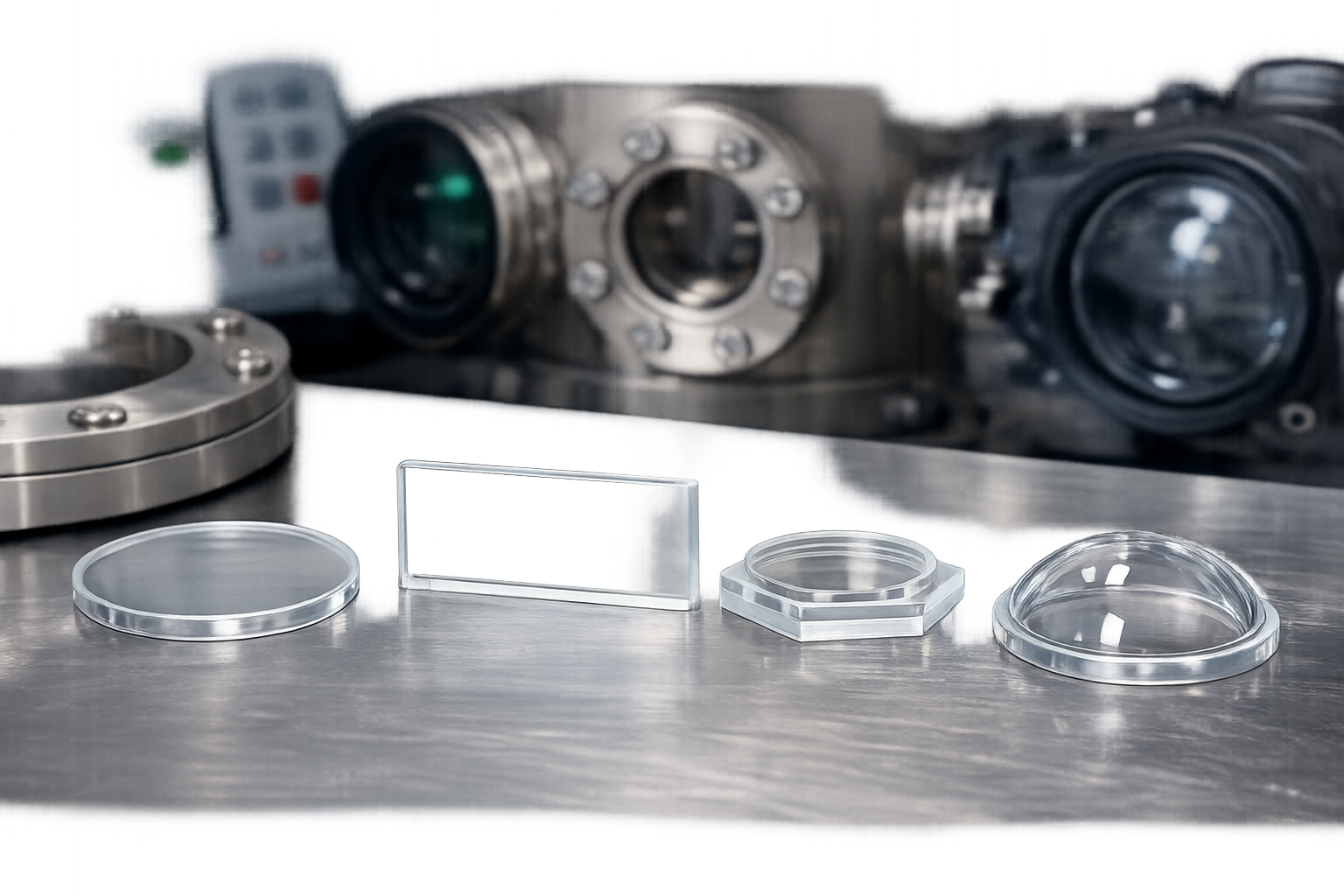
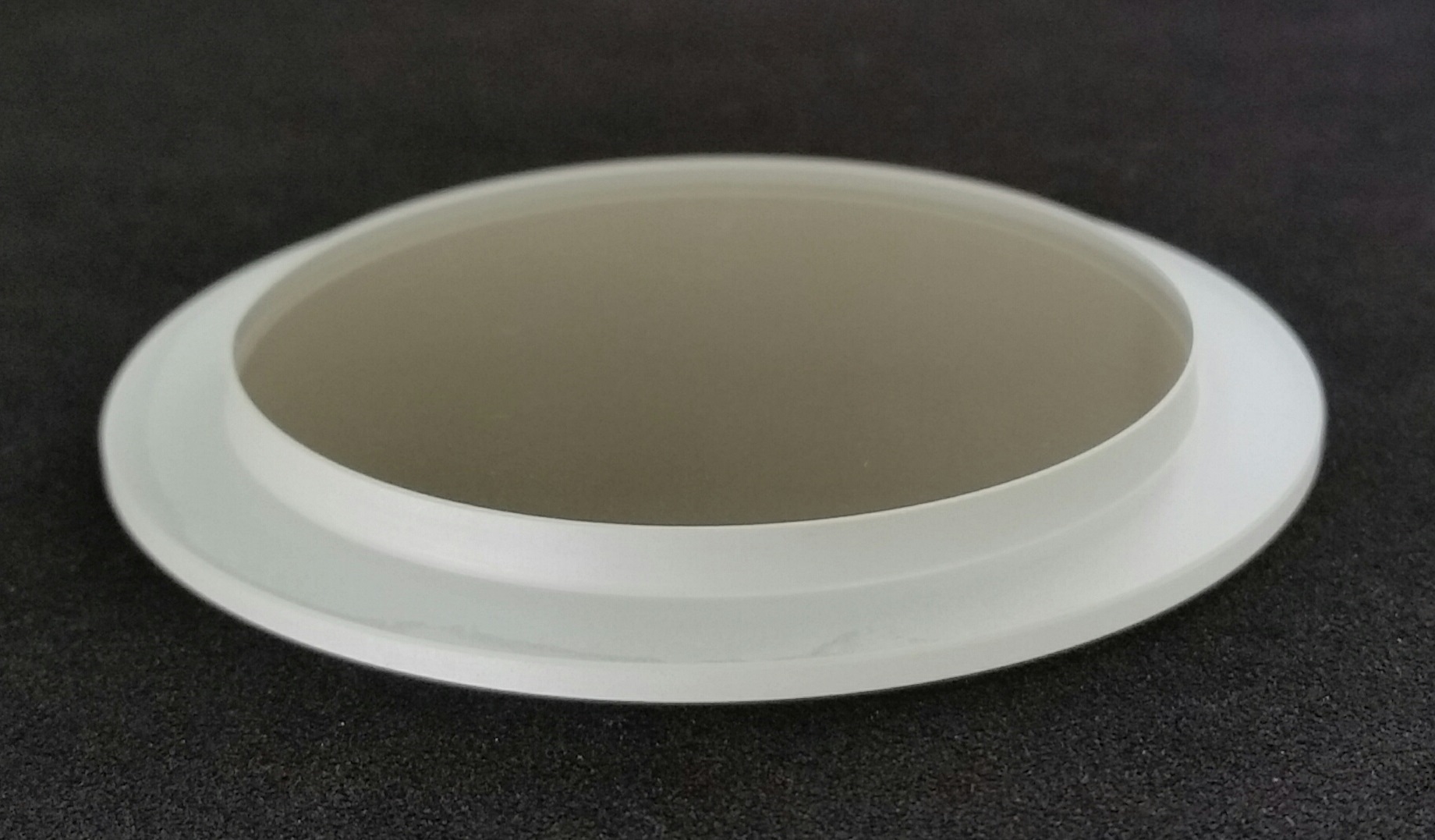
Custom Sapphire Window Shapes: Round, Rectangular, Stepped and Domed Designs

Synthetic sapphire windows have become one of the most reliable optical materials for demanding industrial, aerospace, and scientific environments. Thanks to their exceptional hardness, thermal stability, and chemical resistance, sapphire optical components are widely used where conventional glass fails. Beyond material performance, shape customization plays a critical role in real-world applications. Different optical systems require

Industry News

Hermetic Sealing in Sapphire Windows: Why It Matters in Harsh Environments

In advanced optical and industrial systems, sapphire windows are widely used because of their exceptional hardness, optical clarity, and resistance to extreme conditions. However, in many real-world applications, the performance of a sapphire window does not depend only on the sapphire material itself—but also on how well it is sealed into its housing. This is

Industry News

Top 5 Challenging Environments That Require Scratch-Resistant Sapphire Optical Windows

1. Hypersonic Flight and Aerospace Re-Entry Environments In hypersonic aircraft, missiles, and re-entry vehicles, external sensor windows are exposed to extreme aerodynamic heating, plasma formation, and high-velocity particle impact. Conventional optical glass rapidly degrades under these conditions due to thermal softening and surface erosion. Sapphire optical windows maintain structural integrity at high temperatures and resist

Product Knowledge

Why Sapphire Domes Are Replacing Traditional Glasses in High-Hardness Optics

1. Introduction In modern optical engineering, especially in extreme environments such as aerospace, underwater exploration, defense systems, and high-speed sensing, traditional optical glass is increasingly being replaced by synthetic sapphire domes. This shift is not simply a material substitution, but a structural upgrade driven by demands for higher hardness, thermal stability, and environmental resistance. Sapphire

Company News

Can Sapphire Glass Replace Quartz Glass? A Deep Look Across Industries and Applications

In the fields of industrial optics, semiconductor manufacturing, laser systems, and high-end equipment, engineers and buyers increasingly ask the same question: Can sapphire glass replace quartz glass? This question is becoming more common for practical reasons. While quartz glass has long been valued for its excellent thermal stability and optical performance, some users encounter limitations

Industry News

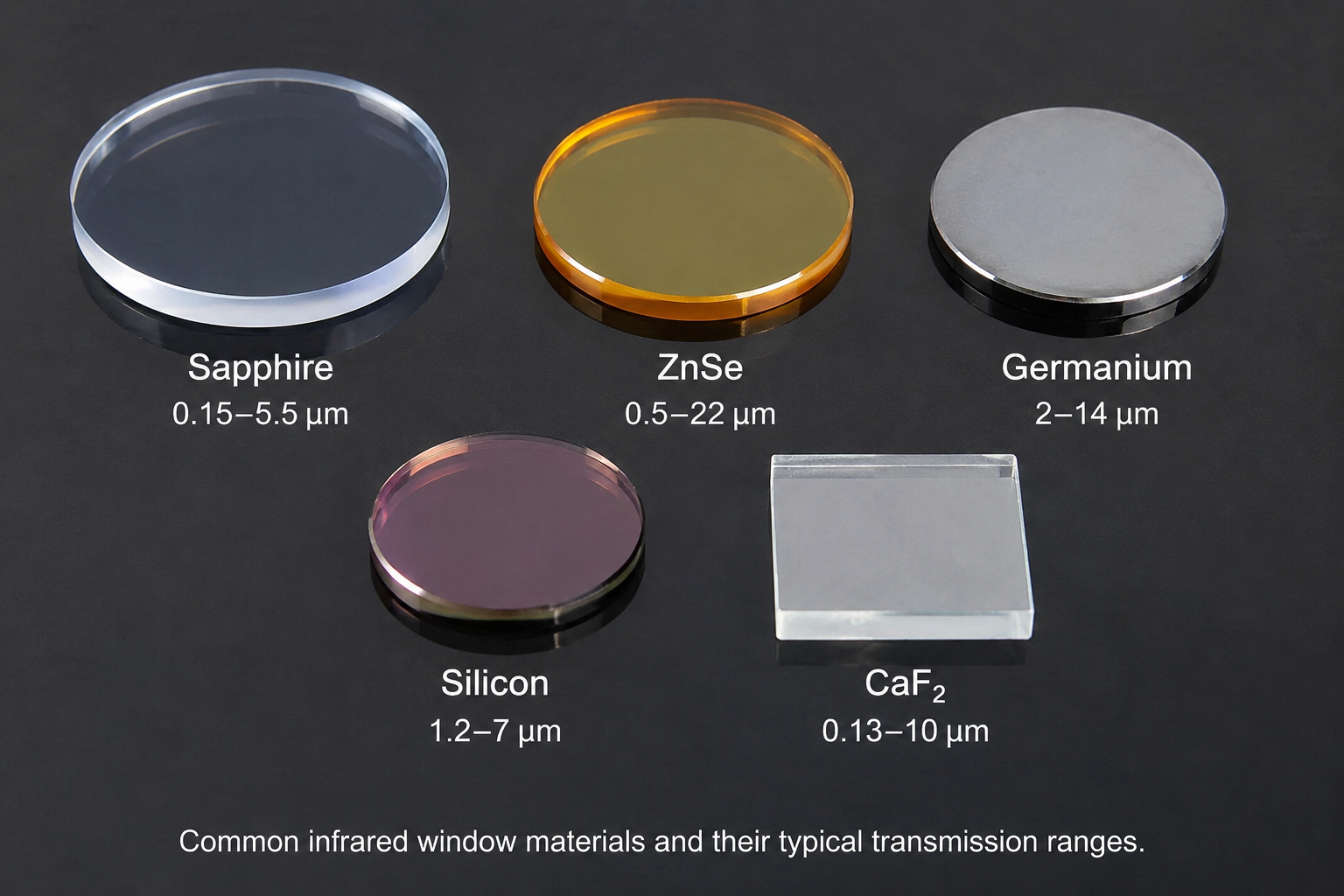
Sapphire Optical Windows vs. Other Infrared Window Materials: A Scientific Overview of Performance and Engineering Trade-Offs

Optical windows are essential components in infrared and laser systems. Their primary function is not only to transmit light but also to provide environmental sealing, mechanical protection, and isolation from harsh operating conditions. In modern applications—including thermal imaging, aerospace systems, laser processing, semiconductor equipment, and defense optics—the choice of window material increasingly depends on a

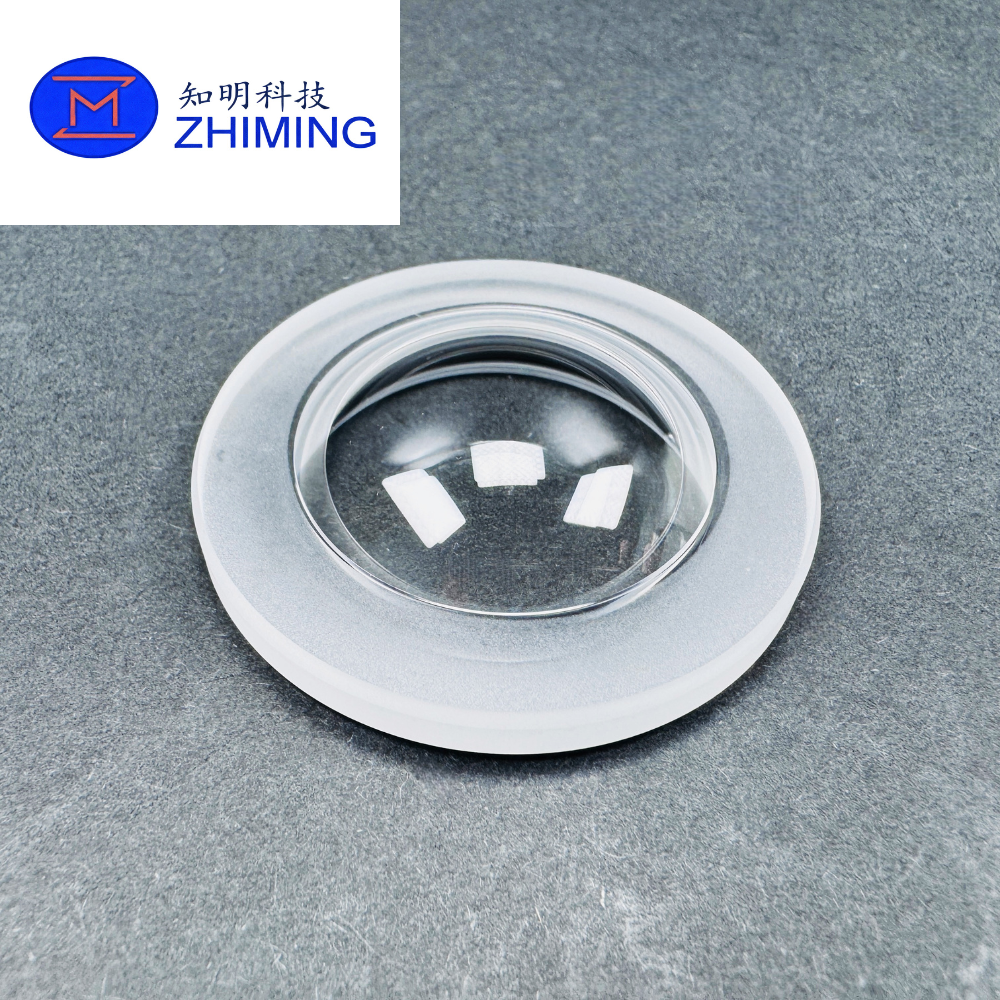
Sapphire Domes and Optical Components: Manufacturing and Custom Solutions

Sapphire domes and optical components are widely used in advanced optical, aerospace, defense, and industrial systems where high durability, excellent optical transmission, and resistance to extreme environments are required. As one of the hardest known transparent materials, synthetic sapphire (single-crystal Al₂O₃) provides a unique combination of mechanical strength, chemical stability, and broad optical transparency ranging

Industry News

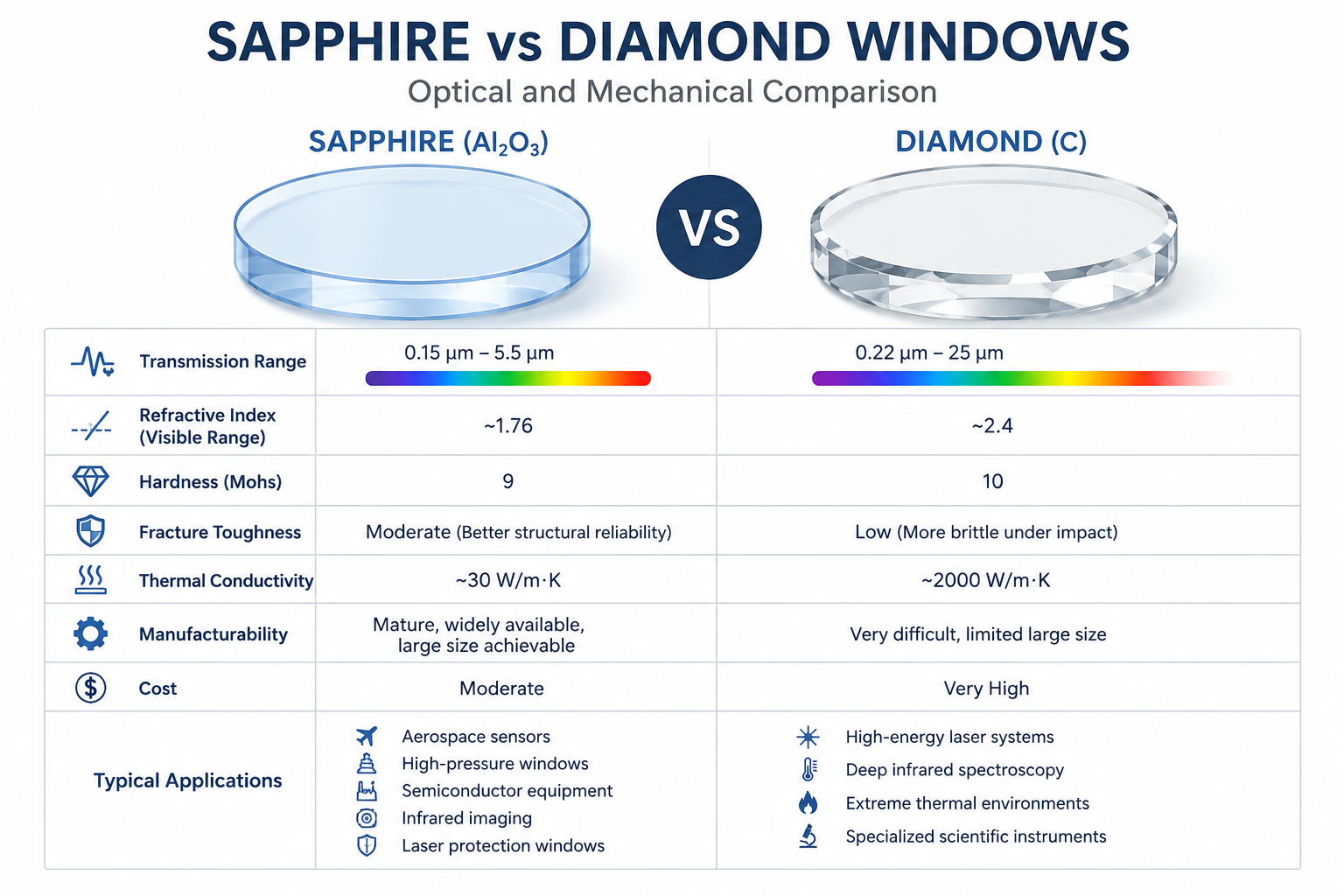
Sapphire vs Diamond Windows: Optical and Mechanical Comparison

Optical windows used in extreme environments—such as aerospace systems, high-pressure chambers, laser equipment, and infrared imaging—must maintain both high optical performance and exceptional mechanical durability. Among advanced materials, sapphire and diamond are often considered the top-tier options. Although both are extremely hard and chemically stable, their optical and mechanical behaviors differ significantly in real-world engineering

Sapphire Optical Dome vs Flat Sapphire Optical Window: A Technical Comparison

1. Introduction Sapphire (single-crystal Al₂O₃) is widely used in advanced optical systems due to its exceptional combination of properties: Because of these properties, sapphire is commonly used in both: However, the optical and mechanical behavior of these two geometries differs significantly, especially under high-pressure, wide-angle, or harsh environmental conditions. 2. Sapphire Flat Optical Window A