
1. Introduction
Sapphire optical windows are widely recognized in advanced engineering and optical industries for their exceptional combination of mechanical strength, optical transparency, and environmental resistance. As a single-crystal form of aluminum oxide (Al₂O₃), sapphire offers superior hardness (Mohs 9), excellent thermal stability, and broad transmission from the ultraviolet (UV) to mid-infrared (IR) range.
Due to these properties, sapphire windows are extensively used in semiconductor equipment, laser systems, infrared sensing, and harsh industrial environments. To effectively select the appropriate component, sapphire optical windows can be systematically classified based on geometry, surface quality, functional performance, and application requirements.
2. Classification by Geometry and Structural Design
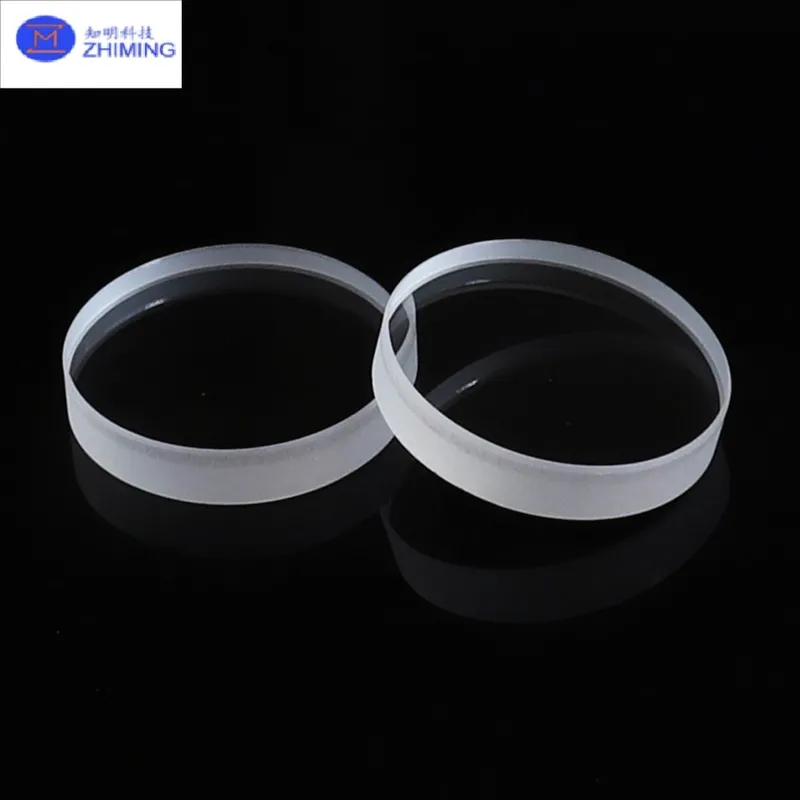
2.1 Round Sapphire Windows
Round windows represent the most widely adopted configuration due to their uniform stress distribution and ease of sealing. They are commonly used in optical instruments, sensors, and vacuum systems where mechanical reliability is critical.
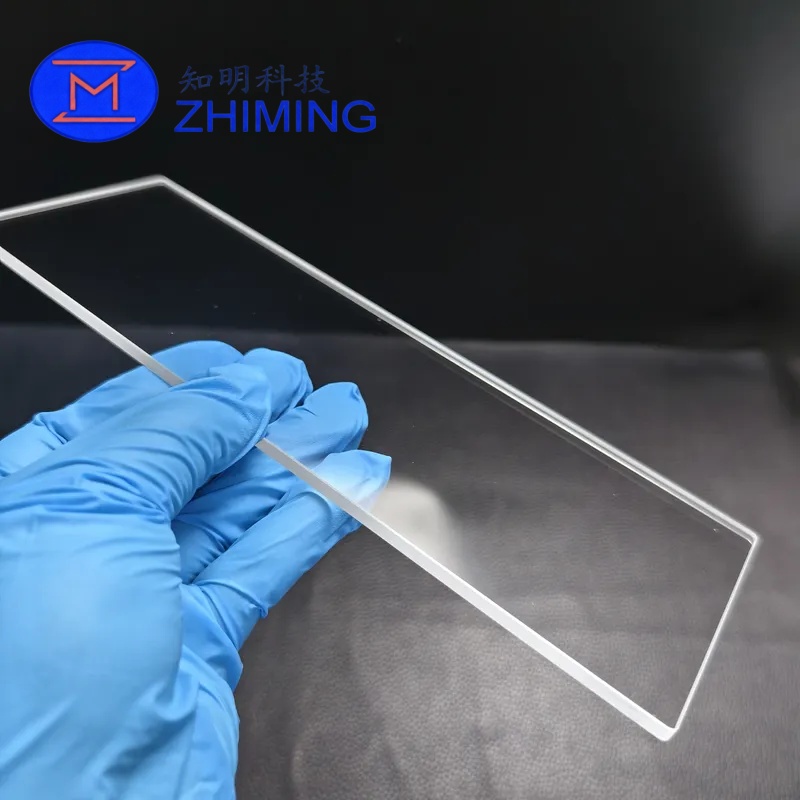
2.2 Square and Rectangular Windows
Square and rectangular sapphire windows are typically designed for modular integration into compact systems. These geometries are frequently applied in imaging devices, inspection systems, and industrial equipment.
2.3 Custom-Engineered Shapes
Custom sapphire windows can be manufactured with complex geometries, including drilled holes, bevels, chamfers, and irregular contours. These designs are tailored to meet specific mechanical and optical integration requirements in advanced systems.

3. Classification by Surface Quality and Finishing
3.1 Double-Side Polished (DSP)
Double-side polished sapphire windows provide optical-grade surfaces on both sides, ensuring minimal scattering and high transmission. They are suitable for precision optical systems where wavefront quality is critical.
3.2 Single-Side Polished (SSP)
Single-side polished windows feature one optical surface and one ground surface, offering a cost-effective solution for applications requiring moderate optical performance.
3.3 Ground or Matte Finish
Ground sapphire windows exhibit a diffused surface and are typically used in protective or non-imaging applications, where transparency is not the primary requirement.
4. Classification by Functional Performance
4.1 Optical-Grade Sapphire Windows
These windows are engineered for high transmission, low absorption, and minimal optical distortion, making them suitable for imaging systems, laser optics, and analytical instruments.
4.2 Infrared (IR) Sapphire Windows
Sapphire demonstrates strong transmission in the near-IR and mid-IR regions, enabling its use in thermal imaging systems, infrared sensors, and surveillance equipment.
4.3 High-Temperature and High-Pressure Windows
Thanks to its thermal stability and mechanical robustness, sapphire is ideal for extreme environments such as furnaces, combustion chambers, and high-pressure vessels.
4.4 Coated Sapphire Windows
Advanced coatings can be applied to sapphire substrates to enhance performance:
- Anti-reflective (AR) coatings for improved transmission
- Reflective coatings for optical control
- Protective coatings for extended durability
5. Classification by Application Sector
5.1 Laser and Photonics Systems
Sapphire windows are widely used in high-power laser systems due to their high damage threshold and thermal conductivity.
5.2 Infrared and Sensing Technologies
In IR imaging and sensing applications, sapphire windows serve as durable protective barriers without significantly compromising signal transmission.
5.3 Semiconductor and Vacuum Systems
Sapphire is commonly used as a viewport material in vacuum chambers and wafer processing equipment, where contamination resistance and mechanical integrity are essential.
5.4 Industrial and Harsh Environment Applications
In industries involving corrosive chemicals, high temperatures, or abrasive particles, sapphire windows provide long-term reliability and reduced maintenance costs.
6. Classification by Size and Precision Specifications
6.1 Standard Dimensions
- Diameter range: typically from 5 mm to 200 mm
- Thickness range: approximately 0.3 mm to 10 mm
6.2 High-Precision Optical Windows
High-end sapphire windows are manufactured with strict tolerances:
- Surface accuracy up to λ/10 or better
- Controlled parallelism and flatness
- Low surface roughness for minimal scattering
6.3 Large-Aperture Sapphire Windows
Large-diameter sapphire windows are used in advanced optical systems and require high material quality and precision processing techniques, posing significant manufacturing challenges.
7. Conclusion
Sapphire optical windows can be classified across multiple technical dimensions, including geometry, surface quality, functional performance, and application domain. In practical engineering scenarios, these factors must be carefully evaluated to ensure optimal system performance.
With increasing demand in high-tech industries, custom sapphire windows continue to play a crucial role in enabling reliable operation under extreme conditions while maintaining superior optical performance.