
1. Introduction
Optical domes are critical components in advanced optical and optoelectronic systems, designed to provide environmental protection while maintaining high optical performance. Unlike flat windows, domes offer aerodynamic advantages and wide-angle optical transmission, making them essential in demanding environments.
Custom precision optical domes are engineered to meet highly specific requirements in terms of geometry, material properties, and optical performance, particularly in aerospace, defense, infrared imaging, and high-end sensing applications.
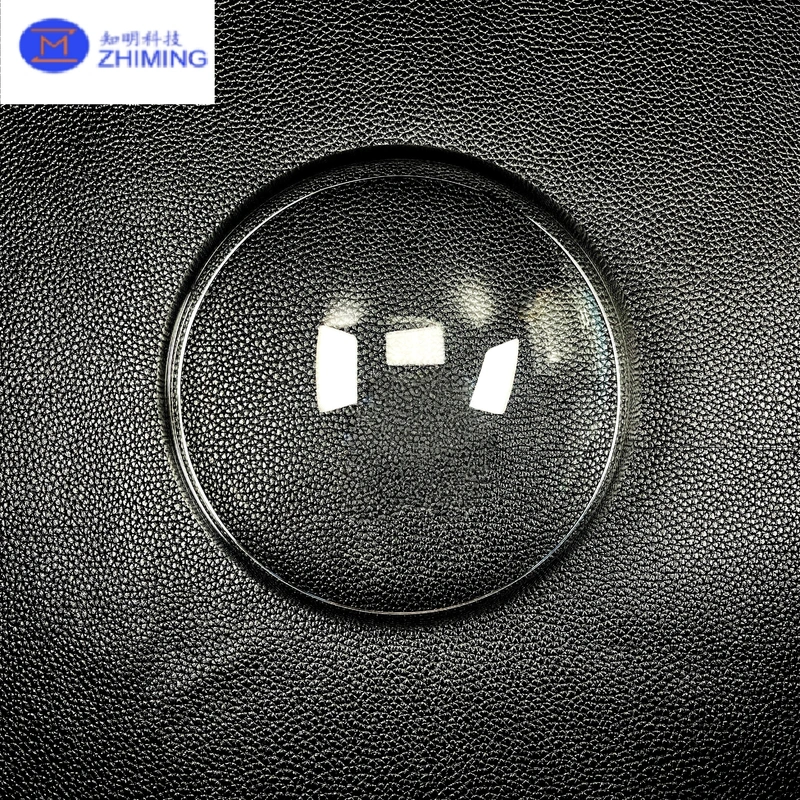
2. What is an Optical Dome?
6
An optical dome is a curved transparent enclosure, typically hemispherical or multi-radius in shape, used to:
- Protect internal optical systems (sensors, cameras, detectors)
- Minimize optical distortion across wide viewing angles
- Reduce aerodynamic drag in high-speed applications
Compared to flat optical windows, domes provide superior angular performance and structural robustness.
3. Key Design Principles
Designing a custom optical dome involves a balance between optical physics, material science, and mechanical engineering.
3.1 Optical Performance Requirements
- High transmittance across target wavelengths (UV, visible, IR)
- Low birefringence and minimal wavefront distortion
- Controlled refractive index for imaging accuracy
3.2 Geometrical Precision
- Hemispherical, hyper-hemispherical, or custom aspheric profiles
- Tight tolerances on:
- Radius of curvature
- Wall thickness uniformity
- Surface figure accuracy (λ/10 or better in high-end systems)
3.3 Surface Quality
Surface finishing is critical:
- Scratch-Dig standards (e.g., 40-20, 20-10)
- Surface roughness (Ra < 10 nm for precision optics)
- High-quality polishing to reduce scattering losses
4. Materials for Optical Domes
Material selection directly determines performance under extreme conditions.
4.1 Sapphire (Al₂O₃)
Sapphire is one of the most widely used materials for high-performance optical domes due to:
- Excellent transmission from UV to mid-infrared
- Extremely high hardness (Mohs 9)
- Superior thermal and chemical stability
👉 Ideal for:
- Infrared seekers
- Harsh environments (sand, high temperature, pressure)
4.2 Fused Silica
- High transparency in UV and visible ranges
- Low thermal expansion
- Excellent optical homogeneity
👉 Common in:
- Laser systems
- Scientific instruments
4.3 Silicon and Germanium
- High transmission in infrared wavelengths
| Material | Wavelength Range | Key Use |
|---|---|---|
| Silicon | 1–7 µm | Near-IR optics |
| Germanium | 2–14 µm | Thermal imaging |
👉 Widely used in:
- Thermal cameras
- IR sensing systems
5. Manufacturing Process
7
The fabrication of custom precision optical domes involves multiple high-precision steps:
5.1 Material Preparation
- Crystal growth (e.g., sapphire boule)
- Cutting and pre-shaping
5.2 CNC Machining & Grinding
- Rough shaping of dome geometry
- Control of thickness and curvature
5.3 Precision Polishing
- Achieving optical-grade surface finish
- Reducing subsurface damage
5.4 Coating (Optional)
- Anti-reflective (AR) coatings
- IR-enhancing coatings
- Protective coatings for durability
6. Key Technical Challenges
Custom optical dome production faces several engineering challenges:
- Thickness uniformity vs structural strength
- Minimizing optical aberrations in curved geometry
- Thermal stress resistance under rapid temperature changes
- Maintaining precision at larger diameters
These challenges require advanced process control and material expertise.
7. Advanced Applications
7.1 Aerospace and Defense
- Missile guidance systems
- Infrared tracking and targeting
- High-speed aircraft sensors
7.2 Infrared Imaging Systems
- Thermal cameras
- Night vision devices
- Surveillance systems
7.3 Industrial and Scientific Systems
- Laser protection domes
- Harsh-environment sensors
- Deep-sea and high-pressure optical systems
8. Customization Capabilities
Custom precision optical domes can be tailored based on:
- Diameter (from small mm-scale to large apertures)
- Shape (hemispherical, ellipsoidal, custom profiles)
- Material selection (sapphire, fused silica, IR materials)
- Optical coatings
- Surface quality and tolerance levels
👉 This flexibility makes them suitable for highly specialized B2B applications.
9. Conclusion
Custom precision optical domes represent a convergence of advanced materials, precision engineering, and optical science. Their ability to deliver both mechanical protection and high optical performance makes them indispensable in modern high-tech systems.
With ongoing advancements in materials such as sapphire and infrared crystals, along with improved manufacturing technologies, optical domes will continue to play a vital role in next-generation sensing, imaging, and aerospace applications.