Author: zmsh

เปรียบเทียบหน้าต่างแซฟไฟร์กับควอตซ์: คู่มือวิศวกรรมสำหรับระบบออปติคัลประสิทธิภาพสูง

1. Introduction In high-performance optical, industrial, and scientific systems, material selection for optical windows directly determines system reliability, thermal stability, and service life. Among commonly used materials, sapphire (single-crystal Al₂O₃) and fused quartz (SiO₂) are two of the most widely specified options. Although both are considered high-grade optical materials, they differ significantly in: This guide

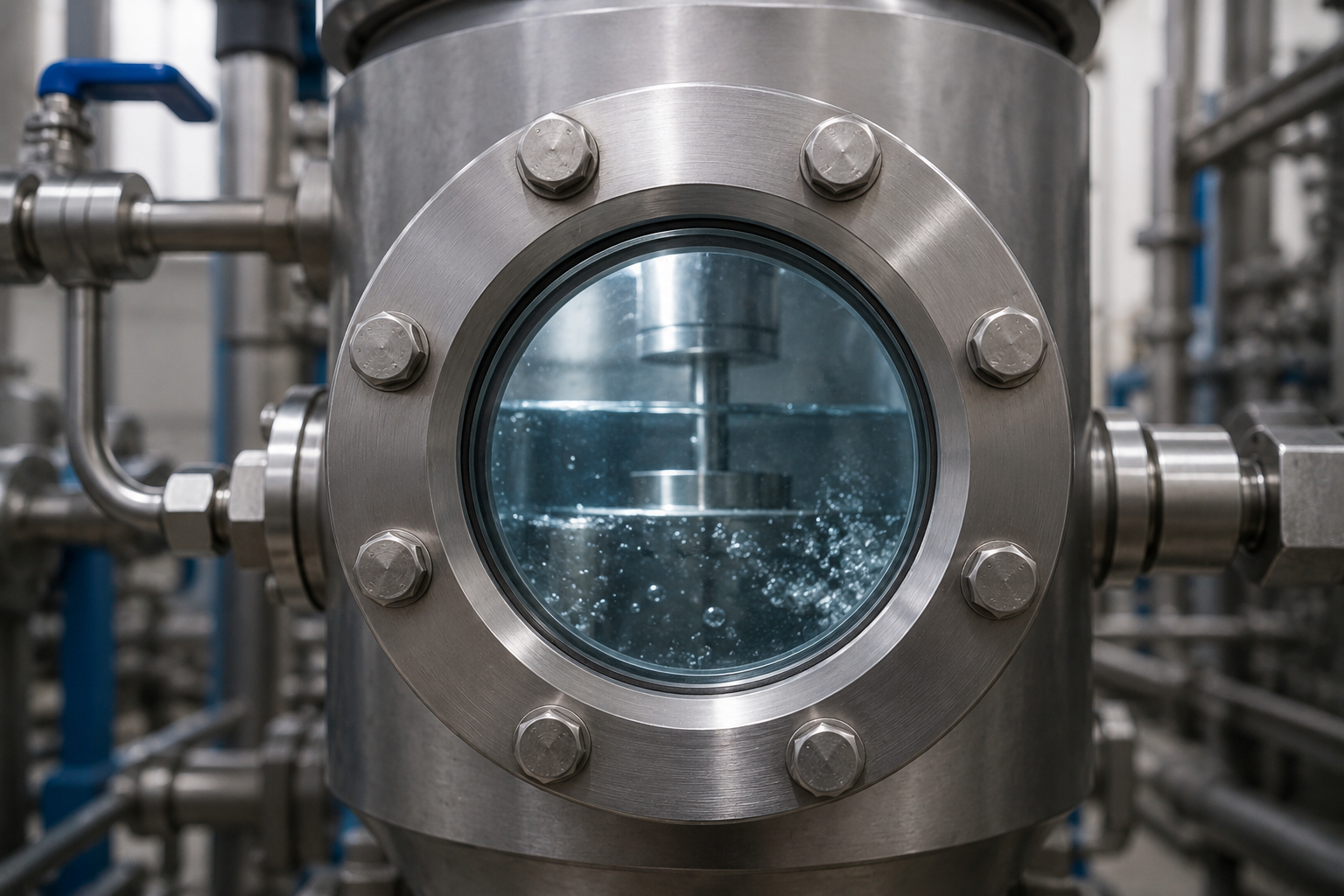
หน้าต่างแซฟไฟร์สำหรับใช้งานอุตสาหกรรม ทนแรงดันสูงและอุณหภูมิสูง

1. Introduction In modern industrial environments, optical components are no longer limited to laboratories or low-stress systems. Instead, they are increasingly required to operate in extreme conditions involving high pressure, elevated temperature, corrosive media, and intense radiation. Conventional materials such as standard glass or even fused quartz often fail under such conditions due to thermal

ข่าวอุตสาหกรรม

ขีดจำกัดความดันของหน้าต่างแซฟไฟร์: PSI, ความหนา, ปัจจัยความปลอดภัย

1. What You Really Need to Know If you are selecting a sapphire window for high-pressure use, the decision comes down to 3 engineering variables: 👉 Core rule (must remember): Pressure capacity ∝ (Thickness² / Diameter²) This means: 2. Engineering Parameter Table Clear Diameter (mm) Pressure (PSI) Pressure (MPa) Recommended Thickness (mm) Safety Factor 10

ข่าวอุตสาหกรรม

รังสีชนิดใดที่สามารถผ่านหน้าต่างแซฟไฟร์ได้?

Sapphire (single-crystal Al₂O₃) is widely used in optical systems, aerospace instruments, high-pressure viewports, and laser equipment due to its exceptional combination of mechanical strength and optical transparency. One of its most important properties is its ability to transmit a broad range of electromagnetic radiation. This article provides a scientifically grounded explanation of which types of

ข่าวอุตสาหกรรม

หน้าต่างแซฟไฟร์สามารถทำบางได้เพียงใด?

Sapphire (single-crystal Al₂O₃) is widely used in optical, high-pressure, aerospace, and laser systems due to its exceptional hardness, thermal stability, and broad optical transmission range. One frequently asked engineering question is: how thin can a sapphire window be manufactured while still maintaining structural and optical performance? 1. Material Background: Why Sapphire Enables Thin Windows Sapphire

ข่าวอุตสาหกรรม

ภาพรวมที่ครอบคลุมของส่วนประกอบแซฟไฟร์และการประยุกต์ใช้ในอุตสาหกรรม

Sapphire material is a synthetic single-crystal form of corundum (Al₂O₃) that has become one of the most important advanced engineering materials in high-end industrial applications. It is widely recognized for its exceptional hardness (Mohs hardness 9, second only to diamond), excellent wear resistance, high thermal conductivity, strong chemical inertness, and broad optical transmission range from

ข่าวอุตสาหกรรม

Sapphire vs Fused Silica: Application Substitution in High-Performance Optical Systems

Synthetic sapphire is a single-crystal form of aluminum oxide (Al₂O₃), known for its extreme hardness and mechanical robustness. Key characteristics include: From an engineering perspective, sapphire behaves more like a structural optical material, where mechanical integrity is often as important as optical transmission. Fused Silica: Optical Purity and Thermal Stability Fused silica is an amorphous

ข่าวอุตสาหกรรม

Sapphire Optical Windows for Industrial DIC and Laser Interferometry Systems

Sapphire optical windows (single-crystal Al₂O₃) are widely used in advanced optical measurement systems such as Digital Image Correlation (DIC) and laser interferometry. Their exceptional hardness, high optical transmission range, thermal stability, and resistance to harsh industrial environments make them a preferred choice for high-precision metrology applications. This article provides a scientific overview of material properties,

ข่าวอุตสาหกรรม

หน้าต่างแซฟไฟร์ที่ปรับแต่งตามความต้องการสำหรับระบบออปติคอลของอากาศยานไร้คนขับและการป้องกันเซ็นเซอร์

Unmanned aerial vehicles (UAVs) are increasingly deployed in environments characterized by high mechanical stress, airborne particulates, humidity, and rapid temperature variation. These conditions impose strict requirements on optical interfaces that protect onboard sensors while preserving imaging and signal transmission performance. Customized sapphire windows, made from single-crystal aluminum oxide (Al₂O₃), have become a widely adopted solution

ความรู้เกี่ยวกับผลิตภัณฑ์

วัสดุหน้าต่างออปติคัล: จากควอตซ์ถึงแซฟไฟร์และซิลิคอนคาร์ไบด์สำหรับสภาพแวดล้อมสุดขั้ว

1. Introduction Optical window materials are critical components in modern optical and photonic systems, including laser engineering, infrared imaging, aerospace instrumentation, semiconductor equipment, and industrial inspection systems. Their primary role is not only to transmit light with minimal loss, but also to physically isolate sensitive internal environments from extreme external conditions such as high temperature,