
Selecting the right sapphire window manufacturer is a critical decision for industries such as optics, aerospace, defense, and industrial equipment. Sapphire windows are not commodity products—their performance depends heavily on material quality, processing capability, and quality control standards.
This guide provides a structured framework to evaluate suppliers across regions, manufacturing capabilities, and tolerance standards, helping you make an informed and reliable decision.
1. Global Supplier Comparison: China vs Europe vs USA

China: High Efficiency and Cost Advantage
China has become a major production hub for sapphire optical components, supported by a complete industrial chain—from crystal growth to precision machining and coating.
Advantages
- Competitive pricing for large-volume orders
- Strong customization capabilities
- Shorter lead times due to integrated supply chains
Considerations
- Quality consistency varies between manufacturers
- Requires careful supplier qualification and inspection
Suitable for
- Industrial applications
- OEM/ODM projects
- Cost-sensitive procurement
Europe: Precision and Standardization
European manufacturers are known for strict adherence to optical standards and advanced finishing technologies.
Advantages
- High surface quality and precision
- Mature quality management systems
- Strong experience in aerospace and scientific optics
Considerations
- Higher costs
- Longer production cycles
Suitable for
- High-end optical systems
- Aerospace and defense applications
- Research-grade instruments
USA: Engineering and Customization Expertise
Manufacturers in the United States focus on advanced engineering capabilities and custom optical solutions.
Advantages
- Strong R&D and technical support
- Advanced metrology and testing
- Tight tolerance control
Considerations
- Premium pricing
- Less suitable for high-volume, low-cost production
Suitable for
- Semiconductor equipment
- Military and high-reliability systems
- Complex custom designs
2. Manufacturing Capability: Beyond CNC Machining
10
Why CNC Alone Is Not Enough
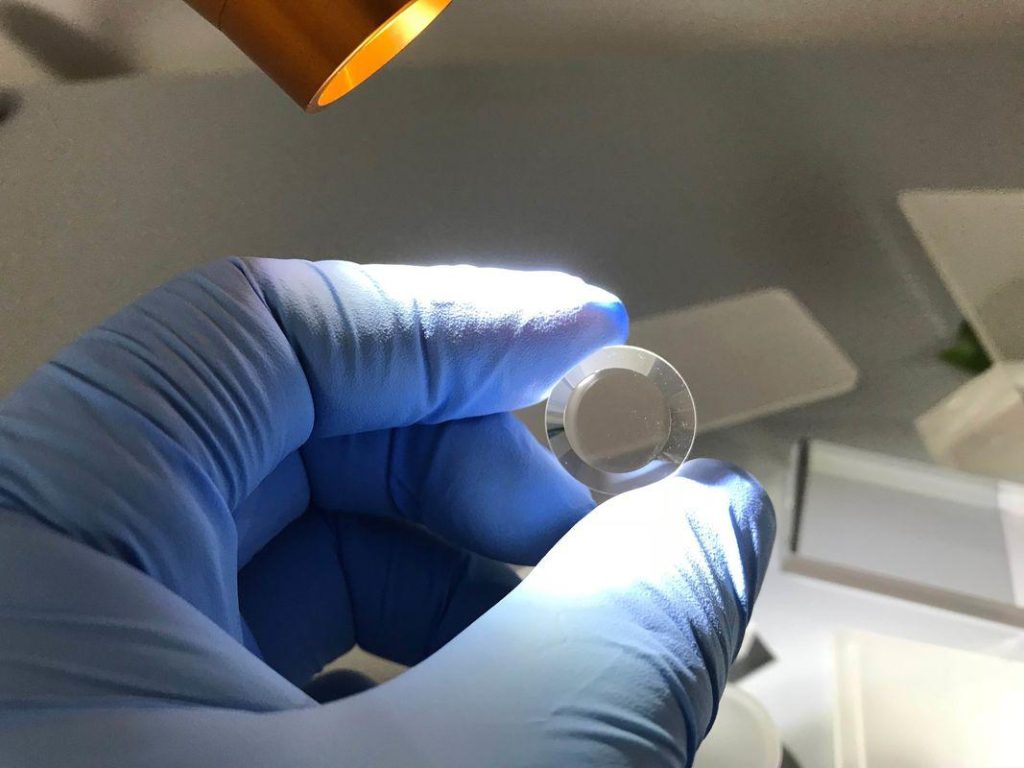
Sapphire is an extremely hard material (Mohs hardness 9), which makes conventional CNC machining insufficient for achieving optical-grade surfaces.
A qualified manufacturer should demonstrate capabilities across the full process chain:
Key Processing Steps
1. Cutting and Shaping
- Diamond wire cutting or CNC profiling
- Control of basic dimensions and geometry
2. Grinding and Lapping
- Removal of subsurface damage
- Preparation for optical polishing
3. Optical Polishing
- Achieving high surface finish and flatness
- Techniques may include conventional polishing or CMP (Chemical Mechanical Polishing)
4. Coating (Optional)
- Anti-reflective (AR) coatings
- Infrared or UV enhancement coatings
Key Evaluation Criteria
When assessing a supplier, verify whether they can provide:
- Surface roughness (e.g., Ra < 1 nm for high-end optics)
- Surface accuracy (e.g., λ/10 or better)
- Parallelism and flatness control
- In-house polishing vs outsourced processes
3. Tolerance Standards and Quality Control
6
Common Optical Specifications
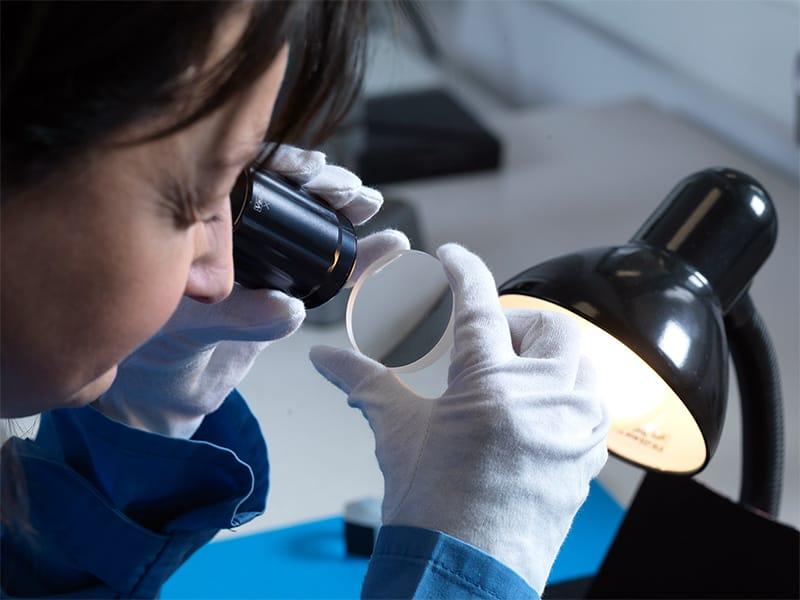
A reliable sapphire window manufacturer should clearly define and meet the following parameters:
Surface Quality (Scratch-Dig)
- Typical standards: 60/40, 40/20, 20/10
- High-end applications: 10/5
Flatness
- Measured in wavelengths (λ)
- Common: λ/4 to λ/10
Parallelism
- Critical for optical transmission
- Typically < 3 arcmin or tighter
Surface Roughness
- Optical grade: < 5 nm
- High-performance optics: < 1 nm
Quality Assurance System
Look for manufacturers that implement:
- Interferometer testing
- Spectrophotometer measurement
- Cleanroom production environments
- ISO 9001 or equivalent certification
Consistency in quality is often more important than achieving the highest specification once.
4. Supplier vs Manufacturer vs Factory: What’s the Difference?
Understanding supplier roles can help avoid miscommunication and hidden risks.
Factory
- Direct producer
- Better pricing and process control
- Requires technical communication capability
Manufacturer (Integrated)
- Combines production + engineering
- Provides design support and customization
- Preferred for complex projects
Supplier / Trading Company
- Easier communication and sourcing
- May lack direct control over production quality
5. Practical Selection Checklist
Before finalizing a supplier, confirm the following:
- Do they provide full-process capability (cutting → polishing → coating)?
- Can they share inspection reports (flatness, roughness, scratch-dig)?
- Do they have experience in your industry?
- Are tolerances clearly defined in the quotation?
- Can they provide samples for validation?
Conclusion
Choosing the right sapphire window manufacturer requires balancing cost, precision, and reliability.
- China offers scalability and cost advantages
- Europe provides precision and standardization
- The USA excels in engineering and advanced applications
Ultimately, the best choice depends on your application requirements, tolerance demands, and long-term quality expectations.