醫療雷射系統的藍寶石視窗:符合嚴格的生物相容性標準
1.引言 醫用雷射系統已成為現代醫療保健不可或缺的工具,可在眼科、皮膚科、牙科和微創手術等領域進行高度精確的程序。這些系統仰賴可控制的雷射能量傳送至生物組織,在這些組織中,即使是輕微的光學扭曲或污染都可能對臨床結果造成重大影響。在這些系統中,

1.引言 醫用雷射系統已成為現代醫療保健不可或缺的工具,可在眼科、皮膚科、牙科和微創手術等領域進行高度精確的程序。這些系統仰賴可控制的雷射能量傳送至生物組織,在這些組織中,即使是輕微的光學扭曲或污染都可能對臨床結果造成重大影響。在這些系統中,

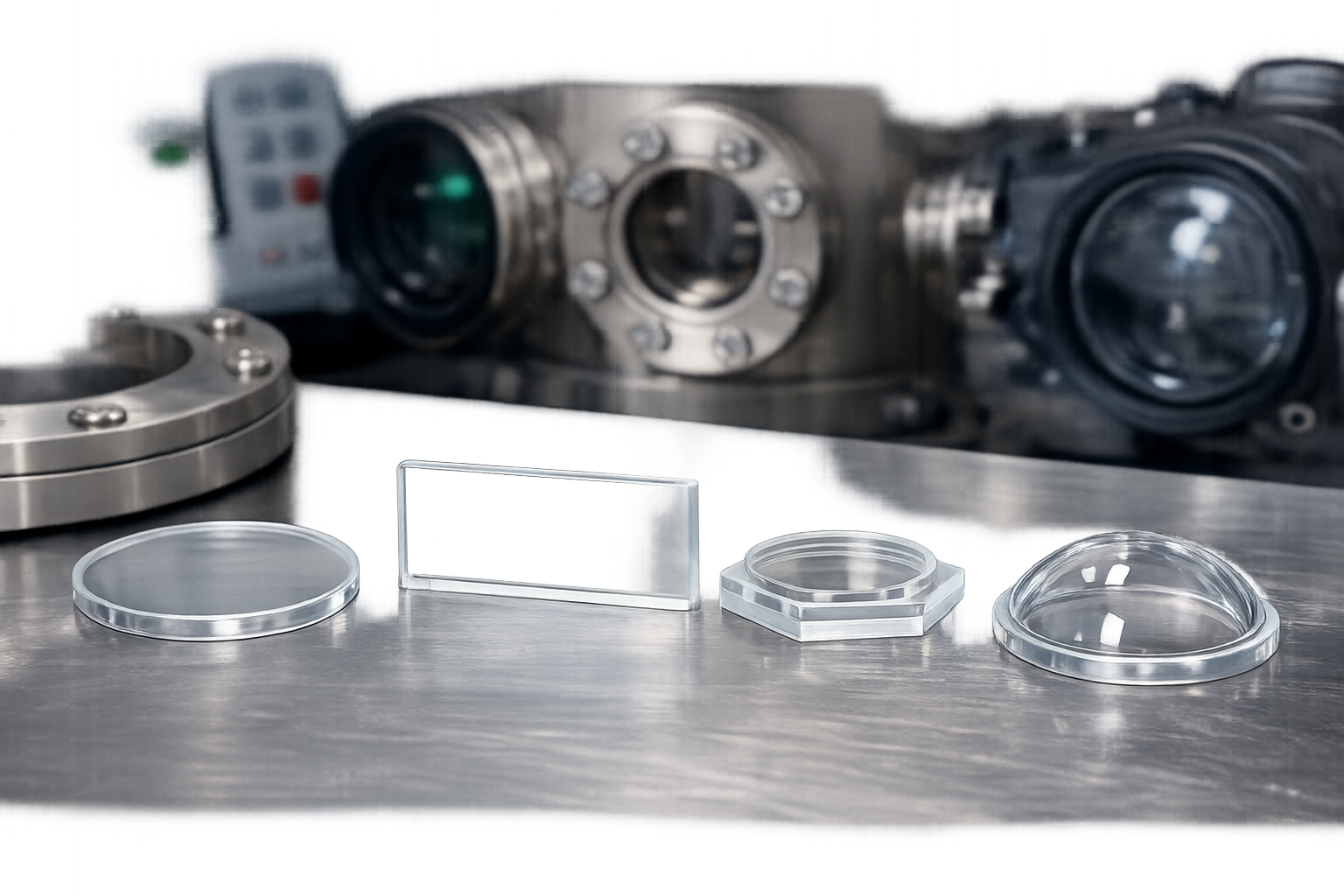
引言 光學窗是重要的功能元件,設計用來隔離惡劣的外部環境,例如灰塵、濕氣、高壓、腐蝕性化學品和極端溫度,同時允許光、雷射光束或視覺訊號以最小的失真通過。這些元件在各式各樣的觀測、感測、成像和通訊系統中扮演著重要的角色。

Sapphire (Al₂O₃) has emerged as one of the most reliable optical materials for industrial laser applications due to its exceptional hardness, chemical stability, and optical transparency across ultraviolet (UV), visible, and infrared (IR) wavelengths. However, not all sapphire windows are created equal. Choosing the right supplier can make the difference between consistent laser performance and
In high-precision optical and industrial equipment, the choice of window material plays a critical role in system performance, reliability, and longevity. Among the most commonly used materials are fused quartz and sapphire. Both materials exhibit excellent optical transparency, thermal stability, and chemical resistance, but they differ significantly in mechanical strength, cost, and application suitability. 1.

Optical windows are essential components in high-precision optical systems, protecting sensitive equipment while allowing electromagnetic radiation to pass with minimal distortion. Among the most widely used materials are sapphire (single-crystal Al₂O₃) and fused quartz (amorphous SiO₂). Both materials exhibit excellent transparency and chemical stability, making them suitable for applications in semiconductor processing, aerospace optics, laser

Sapphire windows, made from single-crystal aluminum oxide (Al₂O₃), are widely recognized for their exceptional hardness, chemical stability, and wide optical transmission range. These properties make sapphire windows indispensable in both scientific experiments and industrial testing environments where transparency, durability, and precision are required. This article explores the critical role of sapphire windows, their unique characteristics,

Sapphire windows are widely used in high-performance optical systems, semiconductor equipment, laser technology, and harsh industrial environments due to their exceptional hardness, chemical stability, and wide optical transmission range. While sapphire is a single material, the crystallographic orientation of the sapphire wafer can significantly affect its optical, mechanical, and thermal properties. The most common orientations

Sapphire windows are critical components in industrial laser systems, offering unmatched optical clarity, mechanical strength, and thermal stability. They are widely used in applications ranging from high-power laser processing to ultraviolet (UV) and infrared (IR) optical systems. The combination of high hardness, chemical inertness, and wide spectral transmission makes sapphire superior to conventional optical materials

High-precision instruments, ranging from scientific measurement devices to advanced imaging systems, demand materials that combine exceptional mechanical, thermal, and optical properties. Sapphire (Al₂O₃), a single-crystal form of aluminum oxide, has emerged as a preferred material for optical components in these high-precision instruments due to its unique combination of hardness, chemical stability, and optical clarity. This

1. Engineering Role of Sapphire Windows in High-Pressure Systems Sapphire windows are widely used in deep-sea exploration systems, high-pressure reactors, downhole oil and gas tools, and extreme-environment optical sensors. In these applications, a sapphire window is not merely an optical component but a structural pressure boundary. It must withstand significant differential pressure while maintaining optical