
Sapphire (Al₂O₃) is a single-crystal form of aluminum oxide renowned for its exceptional mechanical, thermal, and optical properties. Its use in aerospace applications, particularly as transparent windows for high-speed vehicles, spacecraft, and optical instruments, has grown substantially due to its ability to withstand extreme environments. Unlike conventional glass or fused silica, sapphire combines high hardness with excellent transparency across a broad spectrum, making it ideal for demanding aerospace applications.
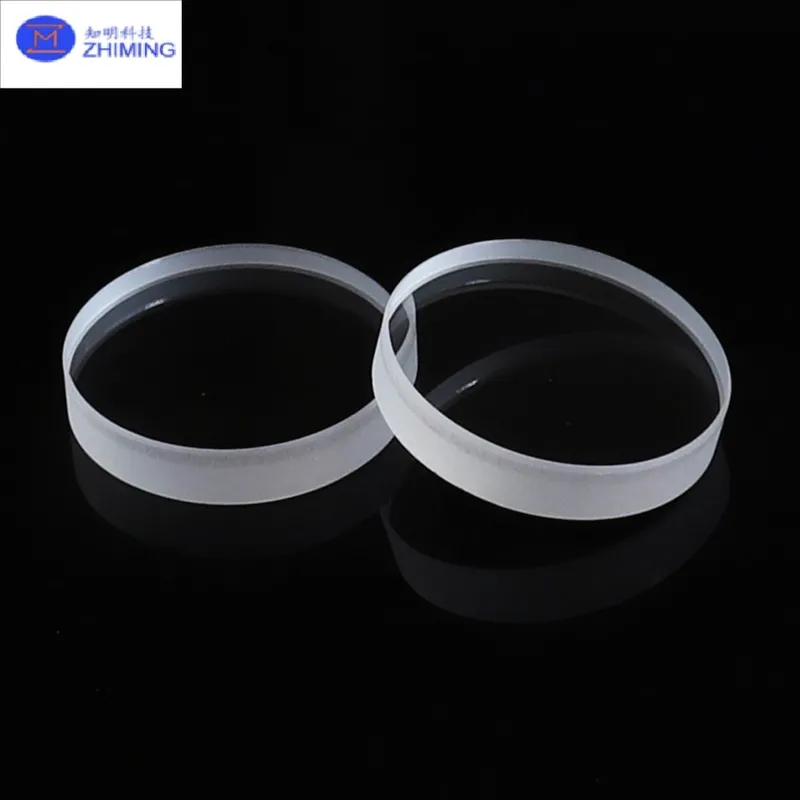
Material Properties of Sapphire
Sapphire exhibits a unique combination of physical characteristics that set it apart from other transparent materials:
- Hardness and Scratch Resistance: With a Mohs hardness of 9, sapphire is second only to diamond, providing outstanding resistance to abrasion and scratches. This makes it highly suitable for aerospace windows, which may be subjected to particle impacts at high velocities.
- Thermal Stability: Sapphire maintains structural integrity at temperatures exceeding 2000°C. Its low thermal expansion coefficient minimizes deformation under thermal cycling, a critical factor in aerospace missions that experience extreme temperature fluctuations.
- Optical Transparency: Sapphire is transparent from the ultraviolet (UV) region (~150 nm) to the mid-infrared (IR) region (~5 μm). This wide transmission range allows its use in sensors, cameras, and optical systems requiring minimal signal loss.
- Mechanical Strength: The high Young’s modulus (~430 GPa) and fracture toughness (~4 MPa·m^0.5) provide excellent resistance against mechanical stress, enabling sapphire windows to sustain high aerodynamic pressures and mechanical shocks during launch and re-entry.
Manufacturing Processes
Producing aerospace-grade sapphire windows requires precision crystal growth and shaping:
- Crystal Growth: The most common method is the Kyropoulos or Czochralski technique, which produces large, high-quality single crystals with minimal inclusions or defects. These methods allow for the growth of sapphire boules suitable for slicing into windows of various sizes and shapes.
- Cutting and Polishing: Precision slicing is followed by chemical-mechanical polishing to achieve optical-grade surface finishes. Polishing minimizes surface defects that could initiate cracks under stress.
- Coatings: Anti-reflective (AR) coatings are often applied to improve optical transmission, particularly in UV and IR ranges. Hard coatings can also enhance scratch resistance and reduce surface contamination.
Applications in Aerospace Windows
Sapphire windows are widely used in aerospace vehicles and instrumentation due to their combination of mechanical strength and optical clarity:
- Cockpit and Canopy Windows: High-speed aircraft, including supersonic jets, require windows that resist bird strikes, sand, and debris impacts. Sapphire’s hardness and toughness ensure pilot safety while maintaining clear visibility.
- Optical Sensors and Cameras: Many aerospace systems rely on cameras, lidar, or IR sensors. Sapphire windows provide minimal signal distortion and withstand temperature extremes without compromising optical performance.
- Spacecraft and Reentry Vehicles: Spacecraft windows face not only extreme temperatures but also cosmic radiation and micrometeoroid impacts. Sapphire’s thermal stability and hardness protect sensitive instruments while maintaining transparency.
- Laser and Communication Windows: Sapphire is compatible with high-power laser systems used in communication or targeting applications. Its low absorption in UV and IR spectra prevents overheating and distortion.
Advantages Over Other Materials
Compared to fused silica or borosilicate glass, sapphire offers several advantages:
- Superior Hardness: Minimizes scratches and surface wear.
- Wider Transmission Range: Enables UV to IR applications.
- Higher Thermal and Mechanical Resistance: Suitable for extreme environments encountered in aerospace missions.
- Radiation Resistance: Less susceptible to ionizing radiation damage, crucial for long-duration space missions.
However, sapphire is heavier and more expensive than alternatives. Manufacturing large, defect-free windows remains challenging, especially for complex geometries.
Future Trends
Advances in sapphire growth and machining technology continue to expand its use in aerospace:
- Larger Windows: Improved boule growth allows the production of larger windows, enabling broader coverage for aircraft and spacecraft instruments.
- Hybrid Designs: Combining sapphire with other materials or advanced coatings can optimize weight, thermal performance, and optical properties.
- Integration with Sensors: Sapphire windows are increasingly integrated with high-precision optical sensors, enabling real-time environmental monitoring and improved system reliability.
Conclusion
Sapphire materials have established themselves as indispensable in aerospace applications requiring transparent, durable, and thermally stable windows. Their unique combination of mechanical strength, optical clarity, and environmental resistance makes them superior to conventional glass in extreme operational conditions. With ongoing advances in crystal growth and surface engineering, sapphire windows are poised to meet the evolving demands of next-generation aerospace vehicles, from supersonic aircraft to deep-space exploration.