
1. Introduction
Sapphire glass (Al₂O₃) is a single-crystal material widely used in optical, aerospace, defense, and industrial applications due to its exceptional hardness, chemical stability, and optical transparency. Ranking 9 on the Mohs scale, sapphire is nearly as hard as diamond, providing outstanding scratch resistance. Additionally, it exhibits high thermal conductivity, chemical inertness, and transparency across a broad wavelength range (UV to IR).
One of the critical considerations in engineering sapphire glass components is their pressure tolerance, particularly in high-stress environments such as high-pressure vessels, vacuum chambers, and aerospace windows. Understanding the pressure limits of sapphire glass is essential for ensuring mechanical reliability, optical performance, and operational safety.
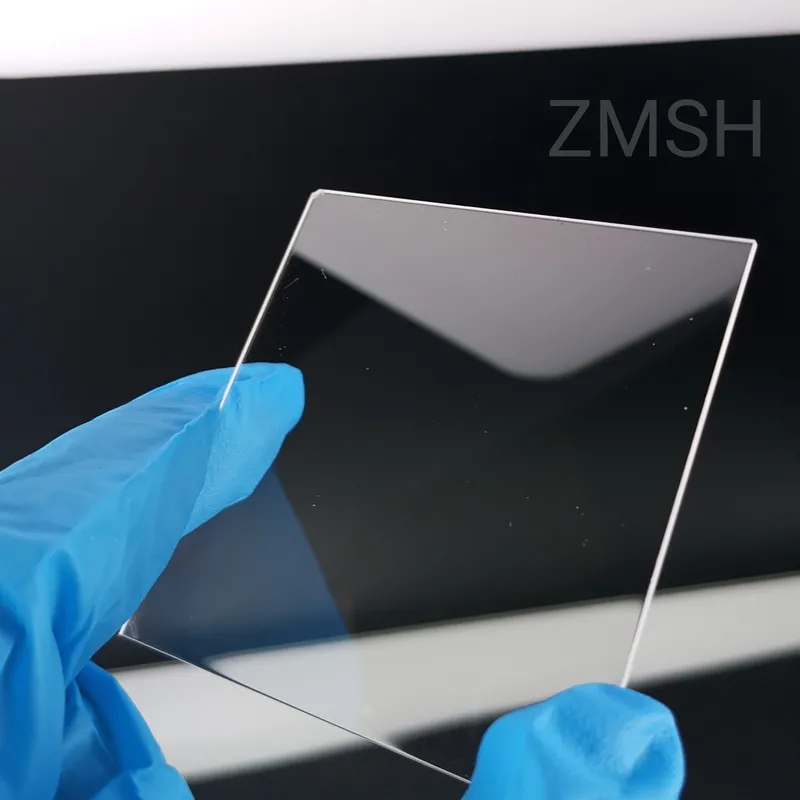
2. Mechanical Properties of Sapphire Glass
The pressure tolerance of sapphire glass is closely related to its intrinsic mechanical properties, including:
- Hardness: Mohs hardness of 9 ensures resistance to scratching and surface damage.
- Compressive Strength: Sapphire can withstand compressive stresses up to 2–2.5 GPa, making it highly resistant to crushing forces.
- Tensile Strength: Due to its brittleness, sapphire’s tensile strength is lower, generally in the range of 300–400 MPa, making it more susceptible to cracking under tensile or bending loads.
- Fracture Toughness: Sapphire exhibits limited fracture toughness (~3–4 MPa·m¹ᐟ²), which is a key factor in its failure under high pressure. Micro-cracks and surface defects can significantly reduce the actual pressure it can withstand.
These properties indicate that while sapphire is extremely durable under compression, careful design and handling are required to prevent tensile-induced failure.
3. Factors Affecting Pressure Limits
Several factors influence the maximum pressure sapphire glass can safely endure:
3.1 Geometry and Thickness
- Window Thickness: Thicker sapphire windows can withstand higher differential pressures due to the increased cross-sectional area resisting bending and tensile stresses.
- Shape and Aspect Ratio: Circular windows are preferred over rectangular shapes for high-pressure applications because stress is more evenly distributed. Sharp corners in rectangular windows can act as stress concentrators and reduce pressure tolerance.
3.2 Surface Quality and Defects
- Polishing and Surface Finish: Smooth, defect-free surfaces minimize stress concentration points, increasing the pressure limit.
- Subsurface Cracks: Even microscopic cracks can drastically reduce the effective tensile strength. High-quality optical polishing and inspection methods are critical for high-pressure applications.
3.3 Mounting and Edge Support
- Edge Clamping: Proper mechanical support around the window edges reduces bending stresses.
- O-Rings and Holders: Using compliant materials in holders can distribute stress and reduce localized tensile loading. Improper mounting can result in early fracture, even if the sapphire is inherently strong.
3.4 Environmental Factors
- Temperature: Elevated temperatures can slightly reduce the mechanical strength of sapphire due to thermal expansion mismatch with mounting structures.
- Chemical Exposure: Although sapphire is chemically inert to most acids and bases, prolonged exposure to highly aggressive environments can affect microscopic surface defects, reducing pressure tolerance.
4. Testing and Standards
Engineering sapphire glass for high-pressure applications requires rigorous mechanical testing:
- Hydrostatic Pressure Tests: Sapphire windows are subjected to gradually increasing water or inert fluid pressure until failure, allowing determination of safe operating limits.
- Finite Element Analysis (FEA): Modern engineering often uses FEA to simulate pressure-induced stress distribution, particularly for large or complex shapes.
- Fracture Analysis: Inspection under polarized light can reveal internal stress and defects to predict pressure limits accurately.
Many suppliers follow stringent standards for aerospace, defense, and industrial applications to ensure that sapphire windows meet operational pressure specifications reliably.
5. Practical Pressure Limits
For engineering purposes, the allowable pressure of sapphire glass windows is typically:
- Small circular windows (<50 mm diameter, thickness ~5 mm): Up to 50–100 MPa differential pressure.
- Large windows (>100 mm diameter, thickness >10 mm): Differential pressures are usually limited to 10–50 MPa, depending on shape and mounting.
- Ultra-high-pressure vessels: Specialized designs with edge support, convex curvature, or laminated sapphire layers can achieve pressures exceeding 100 MPa safely.
These values are conservative, incorporating safety factors to account for defects, handling errors, and unexpected stress concentrations.
6. Applications of High-Pressure Sapphire Windows
- Industrial Reactors and Furnaces: Sapphire windows allow optical monitoring of high-temperature and high-pressure reactions.
- Aerospace and Defense: Windows in pressure cabins, missile domes, and aircraft sensors require both optical transparency and high mechanical reliability.
- High-Power Laser Systems: Sapphire protects optics from laser-induced pressure and shock while maintaining optical clarity.
- Scientific Instruments: Diamond anvil cells, high-pressure spectroscopy, and vacuum chambers rely on sapphire for pressure-resilient optical access.
In all applications, understanding the pressure limits and applying conservative design principles is critical for safety and performance.
7. Conclusion
Sapphire glass is an extraordinary material combining optical transparency, hardness, chemical stability, and thermal robustness. Its ability to withstand high compressive pressures makes it ideal for optical windows in demanding industrial, aerospace, and scientific environments.
However, the pressure limits of sapphire glass are influenced by thickness, geometry, surface quality, mounting, and environmental conditions. Accurate design, rigorous testing, and conservative engineering practices are essential to ensure reliable performance under high-pressure conditions. By adhering to these principles, sapphire windows can safely provide durable and transparent optical access even in extreme applications.