
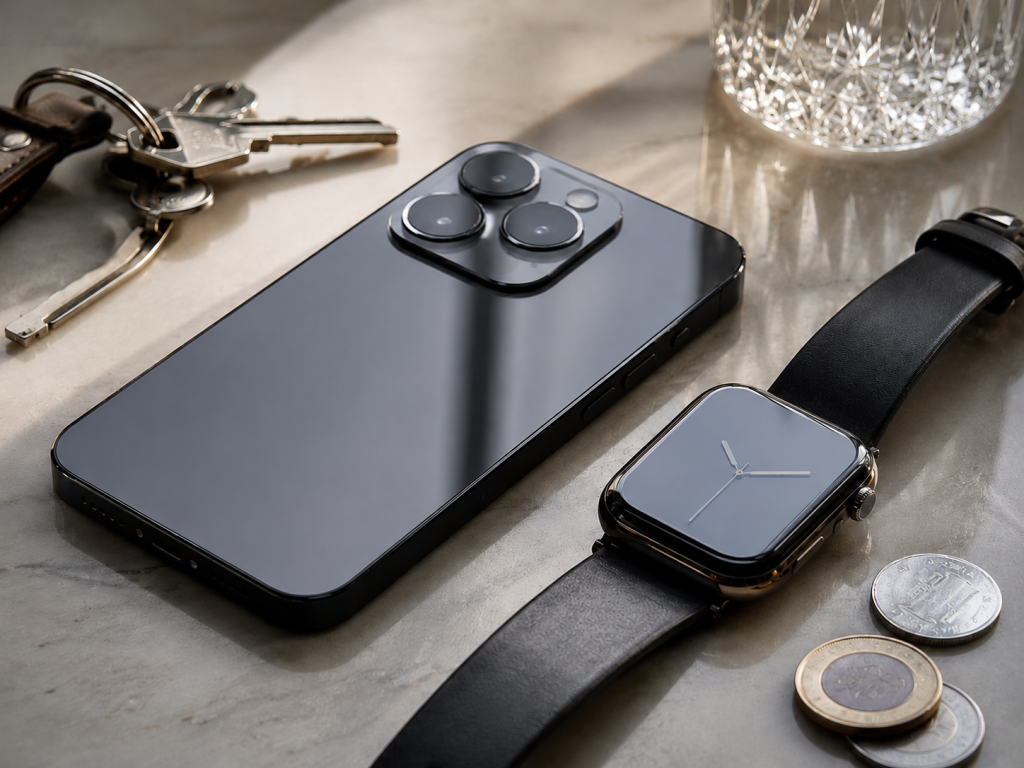
Sapphire glass lenses are widely recognized for their outstanding scratch resistance, long-term durability, chemical stability, and optical clarity. In many high-value applications, sapphire is used as a protective optical window, lens cover, sensor cover, display component, or transparent wear-resistant part. Typical applications include smartphone camera lens covers, smart watches, luxury watch crystals, barcode scanners, industrial cameras, semiconductor equipment, optical instruments, high-end smart home touch panels, automotive HUD systems, medical devices, and harsh-environment inspection systems.
However, although sapphire glass is often described as “extremely durable,” its durability has clear engineering boundaries. Sapphire performs exceptionally well in terms of hardness, wear resistance, chemical resistance, and thermal stability, but it is not unbreakable. In practical product design, the most important point is to understand the difference between hardness and toughness. Sapphire is highly resistant to scratching, but it can still crack or fracture under impact, edge loading, improper mounting stress, or sudden thermal shock.
This article explains the real performance boundaries of sapphire glass lenses from the perspectives of hardness, fracture toughness, impact resistance, thermal behavior, optical trade-offs, and application suitability.
1. Why Are Sapphire Glass Lenses Considered Durable?
Synthetic sapphire is a single-crystal form of aluminum oxide, also known as Al₂O₃. It has a Mohs hardness of about 9, making it one of the hardest transparent materials commonly used in engineering applications. Only a few materials, such as diamond, are harder.
This high hardness gives sapphire excellent resistance to surface scratching. In daily use and industrial environments, sapphire can resist abrasion from metal tools, keys, sand particles, steel contact, dust, and repeated cleaning. Compared with standard glass or many chemically strengthened glasses, sapphire is much more capable of maintaining a clear optical surface over a long period of time.
This is why sapphire is frequently selected for protective optical windows in demanding environments. For example, a camera cover used in an industrial vision system may be exposed to dust, metal particles, oil mist, cleaning solvents, and repeated contact. A standard glass cover may gradually lose optical clarity due to surface scratches, while a sapphire window can maintain a smoother and clearer surface for much longer.
In consumer electronics, sapphire is often used for small components such as camera lens covers, fingerprint sensor windows, and watch crystals. These parts are frequently exposed to friction, pocket debris, dust, and accidental contact with hard objects. Sapphire helps preserve the optical and visual quality of the product by reducing visible scratches.
2. The Key Misunderstanding: Hardness Does Not Mean Toughness
A common misunderstanding is that a harder material is always stronger or more impact-resistant. In materials engineering, hardness and toughness are different properties.
Hardness describes a material’s resistance to surface deformation, indentation, and scratching. Toughness describes a material’s ability to absorb energy and resist crack growth before fracture.
Sapphire has extremely high hardness, but its fracture toughness is relatively limited compared with some engineered glass systems, plastics, or laminated structures. This means sapphire glass lenses are highly scratch-resistant, but they are also relatively brittle. Under certain conditions, they may chip, crack, or break.
For example, a sapphire watch crystal may remain visually flawless after years of normal wear because the surface resists scratches very well. However, if the edge of the crystal hits a hard surface at a sharp angle, a crack may appear suddenly. The edge is often the most vulnerable area because stress concentration is higher there.
This is also why sapphire components require careful edge design, chamfering, polishing, and mounting. A well-designed sapphire window is not only about material selection. It also depends on geometry, thickness, edge treatment, installation method, support structure, and expected load conditions.
3. Impact Resistance: Where Sapphire Has Limits
Sapphire performs very well against abrasion but has limitations under impact. When a force is spread evenly across the surface, sapphire can often perform reliably. But when force is concentrated at a small point or at the edge, the risk of cracking increases.
Compared with chemically strengthened aluminosilicate glass or laminated optical glass, sapphire usually has much higher surface hardness but lower damage tolerance under some impact conditions. This is one of the reasons why many smartphone manufacturers use sapphire only for small protective windows, such as camera covers or fingerprint sensor windows, rather than for the entire front display.
A full-size smartphone display must survive drops, bending, twisting, and impact from different angles. Although sapphire would offer excellent scratch resistance, its brittleness and cost make full-screen use more challenging. In contrast, small sapphire lens covers are easier to protect through proper thickness, small size, edge support, and housing design.
In industrial applications, impact resistance must be evaluated based on the real working environment. A sapphire window used in a barcode scanner may mainly need scratch resistance and optical clarity. A sapphire window used in mining equipment may face flying debris, vibration, and mechanical shock. These two applications require different design strategies.
For impact-sensitive applications, engineers may need to increase thickness, use rounded or chamfered edges, avoid sharp internal corners, reduce mounting stress, apply protective housings, or consider alternative materials if the impact load is too severe.
4. Edge Strength and Stress Concentration
The edge of a sapphire lens or window is often more critical than the center surface. Even when the polished surface is extremely smooth and defect-free, micro-cracks or chips at the edge can become starting points for fracture.
Stress concentration occurs when mechanical force is focused in a small region. Sharp edges, corners, tight mounting structures, uneven clamping, and poor gasket design can all increase the risk of cracking. In many cases, sapphire failure is not caused by the material surface itself but by poor mechanical integration.
For this reason, high-quality sapphire components often require precision edge processing. Common design options include beveling, chamfering, rounding, laser cutting followed by polishing, and controlled edge grinding. These processes help reduce sharp stress points and improve reliability during assembly and use.
Mounting design is also very important. Sapphire should not be forced into a housing with excessive pressure. If the frame is too tight, thermal expansion or mechanical vibration may create hidden stress. Over time, this stress can lead to crack initiation and propagation.
A good sapphire lens design should allow stable positioning while avoiding excessive mechanical load. Elastic gaskets, proper clearance, controlled bonding, and uniform pressure distribution can significantly improve long-term reliability.
5. Thermal Performance and Environmental Limits
Sapphire has excellent thermal stability. It can withstand high temperatures, ultraviolet radiation, vacuum environments, and many corrosive chemicals better than most plastics and many types of glass. This makes sapphire highly suitable for semiconductor processing equipment, high-temperature inspection windows, UV optical systems, vacuum chambers, and chemical processing environments.
However, sapphire is not completely immune to thermal failure. Sudden temperature changes can create thermal stress. If one part of the sapphire window heats or cools faster than another part, internal stress may develop. When the stress exceeds the material’s fracture limit, cracks can occur.
Thermal shock risk depends on many factors, including component thickness, shape, surface quality, heating rate, cooling rate, mounting structure, and temperature gradient. A thin, well-supported sapphire window may perform well in one system, while a thicker or poorly mounted part may crack under rapid temperature cycling.
Mechanical stress and thermal stress can also interact. If a sapphire lens is already under mounting pressure, a sudden temperature change may increase the risk of failure. This is especially important in precision optical systems, semiconductor tools, laser equipment, and high-temperature sensors.
Repeated vibration is another factor to consider. Sapphire itself is stable, but if vibration causes continuous micro-movement at the edge or mounting point, tiny defects may gradually grow. Over long service periods, micro-crack propagation can reduce part reliability.
6. Coating and Surface Treatment Considerations
Sapphire’s optical and functional performance is often improved through coatings. Anti-reflective coatings can reduce reflection and improve transmission. Conductive coatings, metallization, filters, or protective films may also be used depending on the application.
However, coating performance is another potential limitation. Sapphire has a chemically stable surface, which is beneficial for corrosion resistance but can make coating adhesion more demanding. If the coating process is not optimized, adhesion problems may occur over time, especially under humidity, temperature cycling, cleaning chemicals, or abrasion.
For optical applications, coating failure can reduce transmission, increase glare, create haze, or affect measurement accuracy. Therefore, sapphire lens design should consider both the substrate and the coating system. Surface preparation, coating material selection, deposition method, and environmental testing are all important.
In many applications, the durability of the complete sapphire component depends not only on the sapphire itself but also on the durability of the coating, bonding material, seal, and housing.
7. Optical Performance Trade-Offs
Sapphire is a high-performance optical material, but it also involves certain trade-offs.
First, sapphire has a higher refractive index than many standard optical glasses. This means that uncoated sapphire surfaces may produce higher reflection. In applications that require maximum light transmission or low glare, anti-reflective coating is usually recommended.
Second, sapphire is harder to machine and polish than many glass materials. Its high hardness makes it more wear-resistant, but also increases processing difficulty. Precision cutting, grinding, polishing, drilling, and edge finishing require specialized equipment and process control. This often results in higher manufacturing costs.
Third, optical tolerances may be more demanding. If the sapphire window is used in imaging systems, laser systems, sensors, or high-precision optical instruments, parameters such as surface flatness, parallelism, roughness, transmitted wavefront error, and coating uniformity must be carefully controlled.
Fourth, sapphire can introduce design challenges in systems where cost, weight, impact resistance, or large-area coverage are more important than scratch resistance. In such cases, chemically strengthened glass, fused silica, borosilicate glass, polymer windows, or laminated structures may be more suitable.
Therefore, sapphire should not be selected simply because it is “the hardest transparent material.” It should be selected when its specific advantages match the real application requirements.
8. Suitable Applications for Sapphire Glass Lenses
Sapphire glass lenses and windows are most suitable for applications where long-term surface integrity is more important than extreme impact absorption. They are especially valuable in environments with abrasive particles, frequent cleaning, chemical exposure, high temperature, UV radiation, vacuum conditions, or strict optical clarity requirements.
Typical applications include industrial camera protection windows, barcode scanner windows, laser protection windows, medical endoscope covers, optical sensor windows, underwater imaging systems, aerospace optical components, semiconductor equipment windows, watch crystals, camera lens covers, and high-end touch or display covers.
In factory automation, sapphire windows help protect vision systems from dust, oil, and mechanical wear. In medical devices, sapphire can provide a hard, cleanable, chemically stable surface. In semiconductor equipment, sapphire can withstand demanding thermal, vacuum, and chemical environments. In consumer electronics, sapphire helps small exposed optical components remain clear and scratch-free.
The best applications for sapphire are those where scratching, abrasion, or chemical attack would quickly damage ordinary materials.
9. When Sapphire May Not Be the Best Choice
Despite its advantages, sapphire is not always the right solution. If the application involves large-area impact, severe drop shock, heavy bending, extreme mechanical abuse, or low-cost mass production, other materials may be more practical.
For example, a large display cover may require excellent drop resistance and flexibility. A laminated or chemically strengthened glass system may perform better in that situation. A protective window used in a high-impact environment may need a thicker laminated structure rather than a single sapphire plate. A low-cost consumer product may not justify sapphire’s higher manufacturing cost.
Sapphire is also not ideal when complex shapes, deep drilling, large curved surfaces, or very tight cost limits are required. Because sapphire is difficult to machine, complex custom components may require longer production time and higher cost.
The correct material choice should be based on a balance of hardness, toughness, optical requirements, thermal conditions, chemical exposure, size, thickness, assembly method, and budget.
10. Design Recommendations for Reliable Sapphire Components
To make sapphire glass lenses more reliable, engineers should consider the following design principles:
Use proper thickness based on the expected load and unsupported area. Avoid sharp corners and untreated edges. Choose chamfered or rounded edges when possible. Reduce point loading and uneven clamping. Use gaskets or bonding methods that distribute stress evenly. Avoid excessive assembly pressure. Consider thermal expansion differences between sapphire and the housing material. Apply suitable coatings when low reflection or specific optical performance is required. Test the final assembly under real working conditions, not only the sapphire material alone.
These design details can greatly affect performance. A well-designed sapphire window can provide long service life in harsh environments, while a poorly mounted sapphire window may fail even if the material itself is high quality.
Conclusion
The true durability boundary of sapphire glass lenses is not surface scratching, but fracture mechanics. Sapphire is one of the most wear-resistant, scratch-resistant, and chemically stable transparent materials available for optical and protective applications. However, it is not immune to edge impact, concentrated stress, brittle fracture, thermal shock, coating failure, or poor mechanical installation.
Its greatest advantage is the ability to maintain surface clarity and optical performance in harsh environments over a long period of time. It is not a material with unlimited mechanical toughness.
For applications involving abrasion, chemical exposure, frequent cleaning, high temperature, UV radiation, or demanding optical protection, sapphire glass lenses are an excellent choice. For applications involving severe impact, large-area bending, or extreme cost sensitivity, alternative materials should also be considered.
In successful sapphire component design, material selection is only the first step. Geometry, edge finishing, thickness, coating, mounting structure, and real-world operating conditions all determine the final performance. When these factors are properly controlled, sapphire glass lenses can deliver exceptional durability and long-term optical reliability in some of the most demanding environments.