

업계 뉴스
향후 전망: 사파이어 옵티컬 윈도우의 개발 동향
단결정 알루미늄 산화물(Al₂O₃)로 만든 사파이어 광학 윈도우는 뛰어난 경도, 열 안정성, 내화학성 및 광범위한 광학 투명성으로 인해 고성능 광학 시스템에서 중요한 재료로 자리 잡았습니다. 항공우주, 방위, 반도체 제조, 레이저 기술, 적외선 감지 등의 산업이 계속 발전함에 따라 더욱 내구성 있고 정밀하며 다기능적인 제품에 대한 수요가 증가하고 있습니다.
단결정 알루미늄 산화물(Al₂O₃)로 만든 사파이어 광학 윈도우는 뛰어난 경도, 열 안정성, 내화학성 및 광범위한 광학 투명성으로 인해 고성능 광학 시스템에서 중요한 재료로 자리 잡았습니다. 항공우주, 방위, 반도체 제조, 레이저 기술, 적외선 감지 등의 산업이 계속 발전함에 따라 더욱 내구성 있고 정밀하며 다기능적인 제품에 대한 수요가 증가하고 있습니다.

반도체 제조가 더 높은 온도, 더 까다로운 화학 물질, 더 엄격한 공정 제어로 발전함에 따라 제조 장비의 광학 액세스 부품에 대한 성능 요구 사항이 점점 더 까다로워지고 있습니다. 단결정 사파이어(Al₂O₃)는 뛰어난 열 안정성과 기계적 강도로 인해 공정 도구의 관찰 창, 뷰포트 및 광학 인터페이스에 중요한 재료로 부상했습니다,

개요 맞춤형 사파이어 윈도우는 극한의 열, 기계 및 화학 조건에서 작동하는 광학 시스템에서 널리 사용됩니다. 사파이어는 뛰어난 재료 특성을 제공하지만, 맞춤형 사파이어 윈도우의 성능은 시스템 요구 사항을 재료, 광학 및 제조 사양으로 얼마나 정확하게 변환하는지에 따라 크게 달라집니다. 이 문서에서는 엔지니어링 중심의 핵심 개요를 제공합니다.
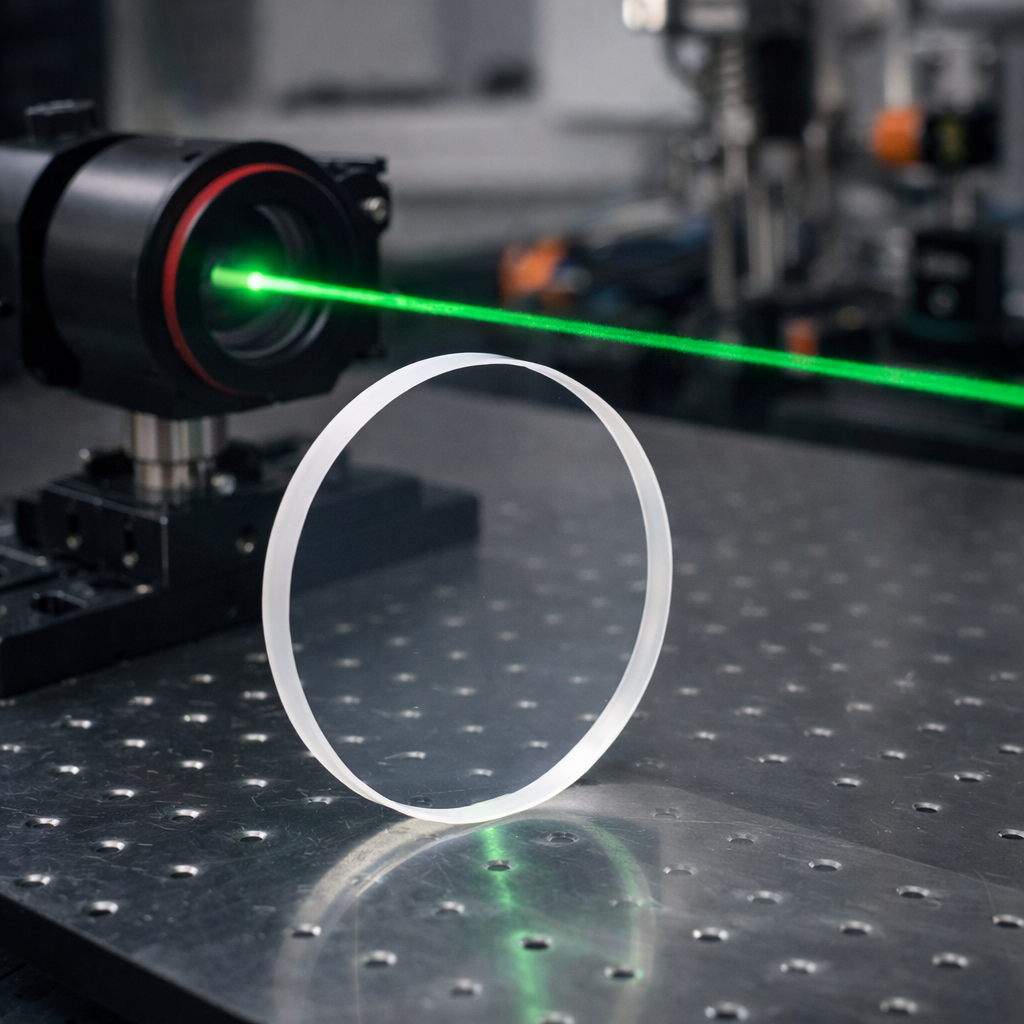
개요 레이저 시스템은 광학 창 재료에 가장 까다로운 요구 사항을 부과합니다. 높은 광 출력 밀도, 국부적인 가열, 빠른 열 순환, 엄격한 빔 품질 제약으로 인해 레이저 윈도우는 광학 물리학 및 재료 과학의 교차점에 놓이게 됩니다. 사파이어 윈도우는 다음과 같은 장점으로 인해 많은 레이저 애플리케이션에서 선호되는 솔루션으로 부상했습니다.
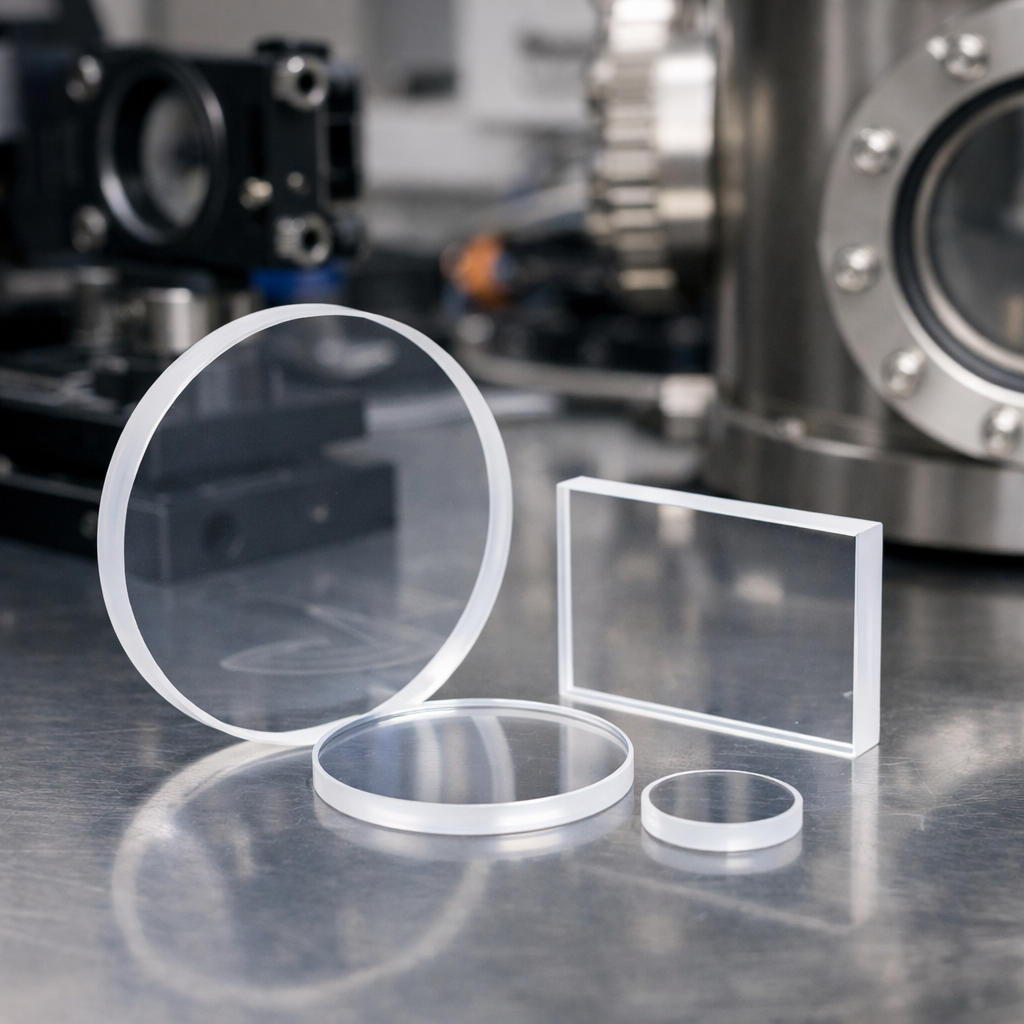
Abstract 사파이어 윈도우는 극한의 환경 안정성, 높은 광 투과율, 장기적인 신뢰성이 요구되는 현대 광학 및 광자 시스템에서 중요한 구성 요소로 자리 잡았습니다. 단결정 형태의 알루미늄 산화물(Al₂O₃)인 사파이어는 뛰어난 기계적 강도와 광범위한 스펙트럼 범위에서 뛰어난 광학적 투명성을 결합합니다. 이 문서에서는 과학적이면서도 애플리케이션 지향적인

Custom sapphire optical components are widely used in high-pressure viewports, harsh-environment sensors, aerospace instrumentation, and laser-based systems where conventional optical glass fails to meet mechanical or thermal requirements. Although sapphire is often regarded as a premium optical material, pricing differences between seemingly similar custom parts can be substantial. This article explains why. Rather than focusing
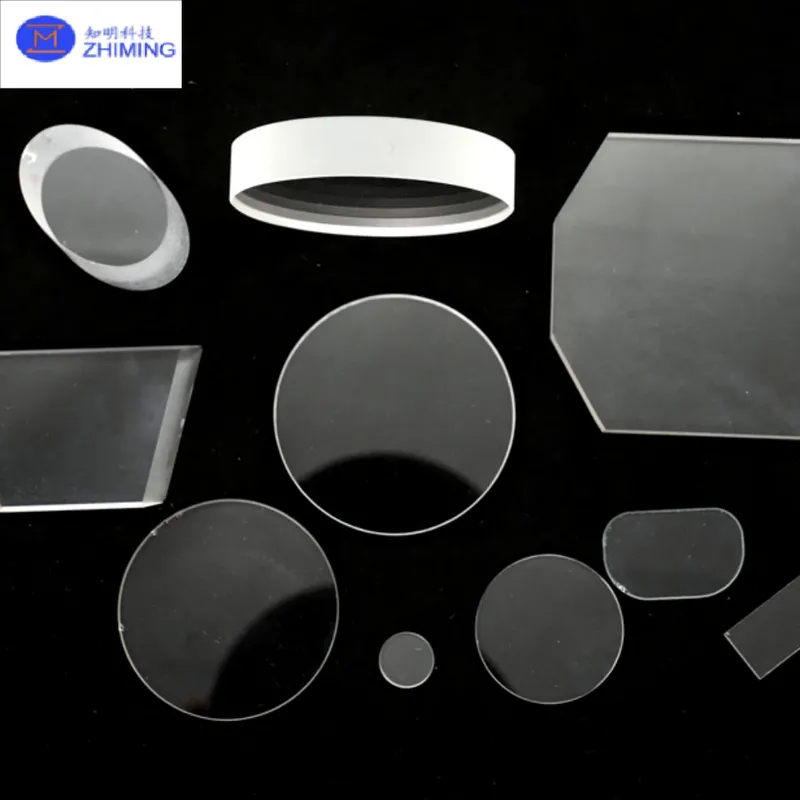
Why Material Selection Matters in Extreme Environments In high-pressure and high-temperature systems—such as pressure vessels, reactors, downhole tools, aerospace sensors, and industrial observation ports—the optical window is often the weakest yet most critical component.A failure at the window interface can lead not only to measurement errors, but also to catastrophic safety risks. Sapphire optical windows
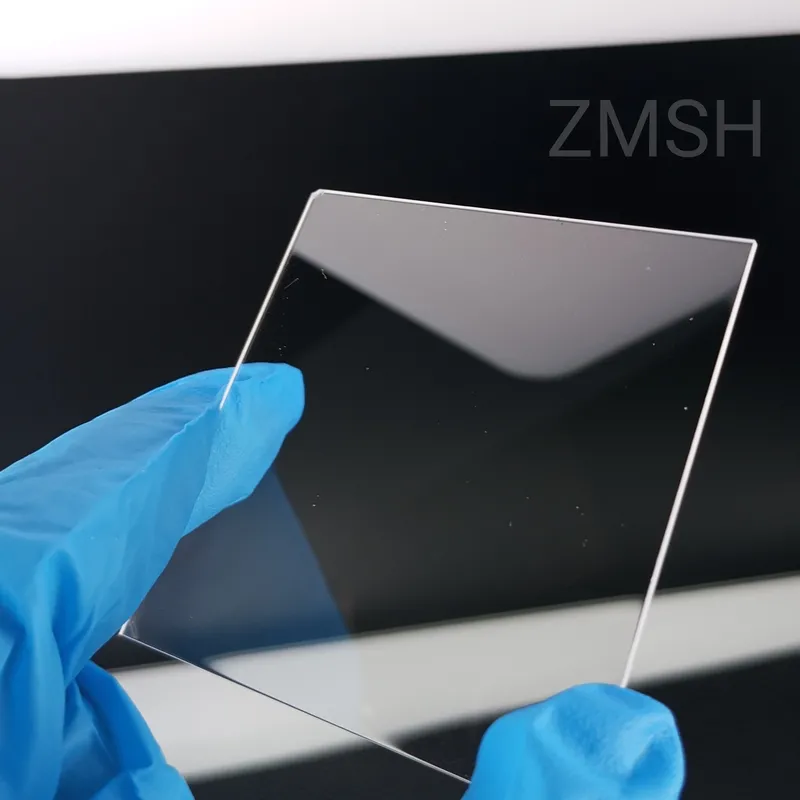
Sapphire windows, fabricated from single-crystal aluminum oxide (Al₂O₃), are high-performance optical components widely used in modern industrial and scientific applications. Due to their Mohs hardness of 9, broad optical transparency, excellent thermal stability, and chemical inertness, sapphire windows have become essential in semiconductor manufacturing, laser optics, aerospace and defense, high-power electronics, and precision optical measurements.

Sapphire windows, made from single-crystal aluminum oxide (Al₂O₃), are high-performance optical and protective components. Their exceptional combination of mechanical, thermal, chemical, and optical properties enables them to function in environments where conventional glass or optical materials would fail. This article explores the scientific principles behind sapphire windows and their wide-ranging applications across industry, defense, aerospace,

In optical and opto-mechanical system design, material selection for windows is a critical decision that directly affects optical performance, mechanical reliability, thermal stability, and long-term durability. While sapphire is widely regarded as a high-performance window material, it is not the only option available. Materials such as fused silica, borosilicate glass, silicon carbide, zinc selenide, and