
Le finestre ottiche utilizzate in ambienti estremi, come i sistemi aerospaziali, le camere ad alta pressione, le apparecchiature laser e l'imaging a infrarossi, devono mantenere elevate prestazioni ottiche e un'eccezionale durata meccanica. Tra i materiali avanzati, lo zaffiro e il diamante sono spesso considerati le opzioni di punta. Sebbene entrambi siano estremamente duri e chimicamente stabili, i loro comportamenti ottici e meccanici differiscono notevolmente nelle applicazioni ingegneristiche reali.
1. Panoramica dei materiali
Zaffiro (Al₂O₃ cristallo singolo)
Lo zaffiro è una forma cristallina di ossido di alluminio. È ampiamente utilizzato in finestre ottiche a causa della sua:
- Elevata durezza (Mohs 9)
- Eccellente stabilità termica
- Ampia gamma di trasmissione ottica
- Lavorazione industriale relativamente matura
Attualmente è uno dei materiali più utilizzati per le finestre ottiche ad alte prestazioni nei sistemi industriali e di difesa.
Diamante (C)
Il diamante è un cristallo a base di carbonio ed è il materiale naturale più duro conosciuto. Il diamante sintetico è sempre più utilizzato nelle applicazioni ottiche avanzate grazie alle sue caratteristiche:
- Durezza estrema (Mohs 10)
- Eccezionale conduttività termica
- Eccellente inerzia chimica
- Elevata resistenza all'abrasione e all'erosione
Tuttavia, il diamante di grado ottico è molto più costoso e difficile da produrre in grandi dimensioni.
2. Confronto delle prestazioni ottiche
Gamma di trasmissione
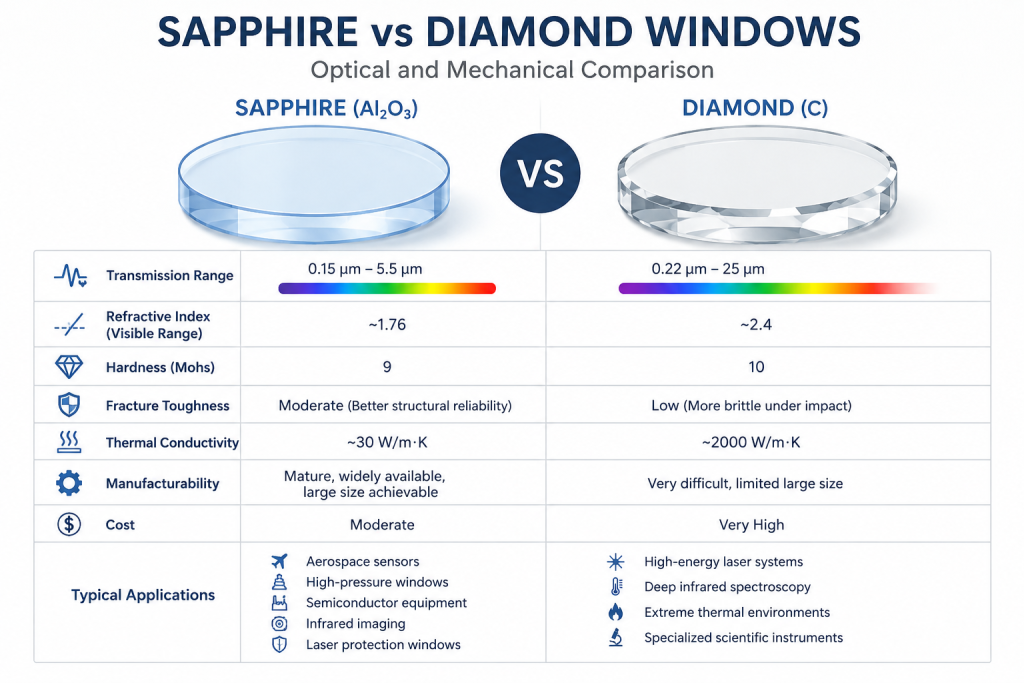
- Zaffiro: ~0,15 μm a 5,5 μm
- Diamante: da ~0,22 μm a 25 μm (gamma infrarossa molto ampia)
👉 L'intuizione chiave:
Il diamante ha un intervallo di trasmissione dell'infrarosso molto più ampio, che lo rende superiore per i sistemi di imaging termico e a infrarossi profondi.
Indice di rifrazione e riflessione
- Zaffiro: ~1,76 (gamma visibile)
- Diamante: ~2,4
L'indice di rifrazione più elevato nel diamante porta a:
- Perdite di riflessione Fresnel più elevate
- Maggiore necessità di rivestimenti antiriflesso
Lo zaffiro, pur non essendo perfetto, è più facile da ottimizzare per la chiarezza ottica nei sistemi pratici.
3. Confronto delle proprietà meccaniche
Durezza e resistenza all'usura
- Zaffiro: Estremamente duro, altamente resistente ai graffi
- Diamante: La più alta durezza di qualsiasi materiale conosciuto
👉 Per quanto riguarda la resistenza all'usura pura, il diamante è superiore. Tuttavia, lo zaffiro supera già la maggior parte dei requisiti industriali.
Durezza alla frattura (fattore tecnico critico)
- Zaffiro: Moderata fragilità, migliore affidabilità strutturale
- Diamante: Estremamente fragile in alcune direzioni cristallografiche.
👉 Principale intuizione ingegneristica:
Nonostante la sua durezza, il diamante può essere più fragile in condizioni di impatto o di sollecitazione dei bordi. Lo zaffiro è spesso più performante nelle applicazioni di finestre strutturali reali.
Conduttività termica
- Zaffiro: ~30 W/m-K
- Diamante: fino a ~2000 W/m-K
Il diamante non ha eguali nella dissipazione del calore, ed è quindi ideale per la realizzazione di impianti di riscaldamento:
- Sistemi laser ad alta potenza
- Finestre ad infrarossi
- Ambienti con flussi di calore estremi
4. Considerazioni sulla produzione e sui costi
| Fattore | Zaffiro | Diamante |
|---|---|---|
| Disponibilità | Alto (scala industriale) | Limitato (solo sintetico) |
| Lavorabilità | Rettifica/lucidatura CNC matura | Estremamente difficile |
| Disponibilità delle dimensioni | Fino a grandi diametri (compresi 8-12 pollici) | Grandi dimensioni molto limitate |
| Costo | Moderato | Estremamente alto |
👉 Lo zaffiro domina nella produzione industriale scalabile.
5. Differenze di applicazione
Le finestre ottiche Sapphire sono preferite in:
- Sensori aerospaziali
- Finestre di osservazione ad alta pressione
- Apparecchiature per semiconduttori
- Sistemi di imaging a infrarossi
- Finestre di protezione laser industriali
Le finestre ottiche Diamond sono utilizzate in:
- Ricerca sui laser ad alta energia
- Spettroscopia dell'infrarosso profondo
- Ambienti termici estremi
- Strumenti scientifici specializzati
6. Conclusione ingegneristica
Mentre il diamante offre una durezza e una conduttività termica ineguagliabili, lo zaffiro offre una combinazione più equilibrata di:
- Prestazioni ottiche
- Affidabilità meccanica
- Produttività
- Efficienza dei costi
👉 Per la maggior parte delle applicazioni di finestre ottiche industriali e aerospaziali, lo zaffiro rimane la scelta ingegneristica dominante, mentre il diamante è riservato ad ambienti estremi altamente specializzati.
Sintesi
- Diamante = prestazioni estreme, costo estremo, scalabilità limitata
- Zaffiro = standard industriale, prestazioni equilibrate, alta affidabilità
Nei sistemi ingegneristici pratici, la selezione del materiale non riguarda il “miglior materiale”, ma il miglior compromesso tra prestazioni, costi e producibilità.