
Flame detectors are critical components in modern fire safety systems, designed to identify combustion events through optical sensing of flame radiation. The reliability of these devices heavily depends on the performance of the optical window, which must operate under extreme environmental conditions. This article provides a scientific and engineering-focused overview of sapphire windows, highlighting their superior thermal stability, optical transmission, and durability. It further examines their role in enhancing detection accuracy and system reliability across industrial applications such as petrochemical plants, warehouses, and high-risk manufacturing environments.
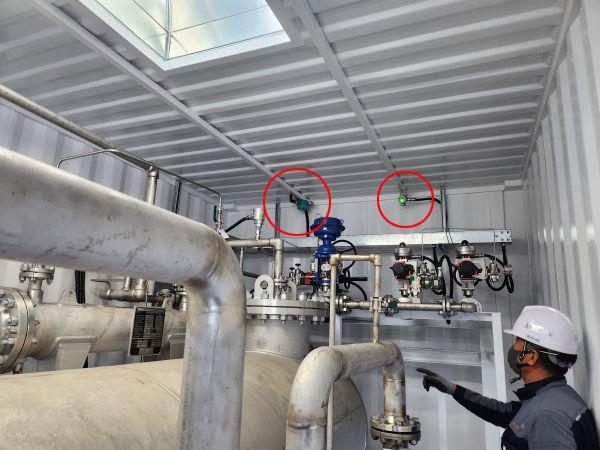
1. Introduction
Flame detectors, also known as optical fire detectors, function by sensing electromagnetic radiation emitted by flames, typically in the ultraviolet (UV), infrared (IR), or combined UV/IR spectral ranges. Unlike smoke or heat detectors, flame detectors can respond almost instantaneously, making them particularly valuable in high-risk environments where rapid fire detection is essential.
A key structural component of these detectors is the optical window, which serves as a protective barrier while allowing specific wavelengths of radiation to pass through to the sensor. The performance of this window directly influences detection sensitivity, response time, and long-term reliability.
However, fire scenarios impose extreme conditions: temperatures can exceed 1000°C within seconds, accompanied by thermal shock, soot, dust, and corrosive gases. Conventional optical materials such as standard glass or quartz may suffer from deformation, reduced transmission, or structural failure under such conditions. This creates a strong demand for advanced materials with superior physical and optical properties.
2. Material Properties of Sapphire
Sapphire, a single-crystal form of aluminum oxide (Al₂O₃), is widely recognized for its exceptional combination of mechanical, thermal, and optical properties. Synthetic sapphire is commonly produced using methods such as the Kyropoulos or Czochralski processes, enabling high purity and controlled crystal orientation.
2.1 Thermal Stability
Sapphire exhibits an extremely high melting point of approximately 2050°C, significantly exceeding that of conventional glass materials. More importantly, it maintains structural integrity and mechanical strength at elevated temperatures, making it suitable for direct exposure to flames and high-temperature radiation.
Its low thermal expansion coefficient and high thermal conductivity also contribute to excellent resistance against thermal shock. This ensures that rapid temperature fluctuations do not lead to cracking or catastrophic failure—an essential requirement in fire detection scenarios.
2.2 Mechanical Strength and Hardness
With a Mohs hardness of 9, sapphire is second only to diamond among naturally occurring materials. This exceptional hardness provides outstanding resistance to abrasion from dust, sand, or particulate matter commonly present in industrial environments.
In addition, sapphire exhibits high compressive strength and chemical inertness, allowing it to withstand corrosive gases and harsh chemical exposure without degradation.
2.3 Optical Transmission Properties
Sapphire offers a broad transmission range, typically from approximately 0.15 µm (UV) to 5.5 µm (mid-infrared), depending on crystal quality and thickness. This wide spectral window makes it highly suitable for multi-spectrum flame detection technologies.
Key optical advantages include:
- High transmittance in UV and IR bands
- Low absorption and scattering losses
- Excellent optical clarity and stability over time
These properties ensure that flame radiation signals are transmitted with minimal distortion, enabling accurate detection and signal processing.
3. Advantages of Sapphire Windows in Flame Detectors
3.1 High-Temperature Resistance in Fire Conditions
During a fire event, temperatures can rise rapidly to levels that compromise conventional materials. Sapphire windows act as a robust protective barrier, maintaining their structural and optical integrity even under direct flame exposure.
This ensures that internal photodetectors remain shielded while still receiving accurate optical signals, allowing continuous monitoring during critical early-stage fire development.
3.2 Enhanced Detection Accuracy
The high optical transmission of sapphire in UV and IR wavelengths significantly improves the signal-to-noise ratio of flame detectors. As a result:
- Detection sensitivity is increased
- Response time is reduced
- False alarms caused by background radiation are minimized
Compared to traditional glass windows, sapphire enables more precise discrimination between actual flame signatures and environmental interference.
3.3 Long-Term Reliability and Reduced Maintenance
Industrial environments often expose sensors to dust, oil vapors, and corrosive substances. Sapphire’s hardness and chemical resistance prevent surface degradation, scratching, or clouding over time.
This leads to:
- Longer service life of the detector
- Stable optical performance over extended periods
- Reduced maintenance and replacement costs
4. Application Scenarios
Sapphire-window-based flame detectors are widely used in environments where both fire risk and environmental severity are high:
4.1 Petrochemical and Oil & Gas Industry
These facilities involve flammable gases and liquids, where rapid ignition can occur. Sapphire windows ensure reliable detection even in high-temperature and corrosive atmospheres.
4.2 Large Warehouses and Logistics Centers
Fast detection is critical in large spaces with high-value inventory. Enhanced optical performance improves early fire identification and reduces false alarms.
4.3 Chemical Processing Plants
Exposure to aggressive chemicals requires materials with high corrosion resistance. Sapphire’s inert nature ensures consistent performance in such conditions.
4.4 Power Generation and Heavy Industry
In environments with high الحرارة and particulate matter, sapphire windows maintain clarity and durability, ensuring uninterrupted monitoring.
5. Conclusion
Sapphire windows represent a significant advancement in the design and performance of flame detectors. Their exceptional thermal resistance, mechanical durability, and superior optical transmission enable reliable operation under extreme conditions where conventional materials fail.
By improving detection accuracy, reducing maintenance requirements, and enhancing system longevity, sapphire windows contribute directly to safer industrial operations and more effective fire protection strategies. As industrial safety standards continue to evolve, the adoption of advanced materials like sapphire is expected to play an increasingly important role in next-generation fire detection technologies.