Category: Industry News

Wiadomości branżowe

Sapphire Window Design for High-Pressure and High-Temperature Applications

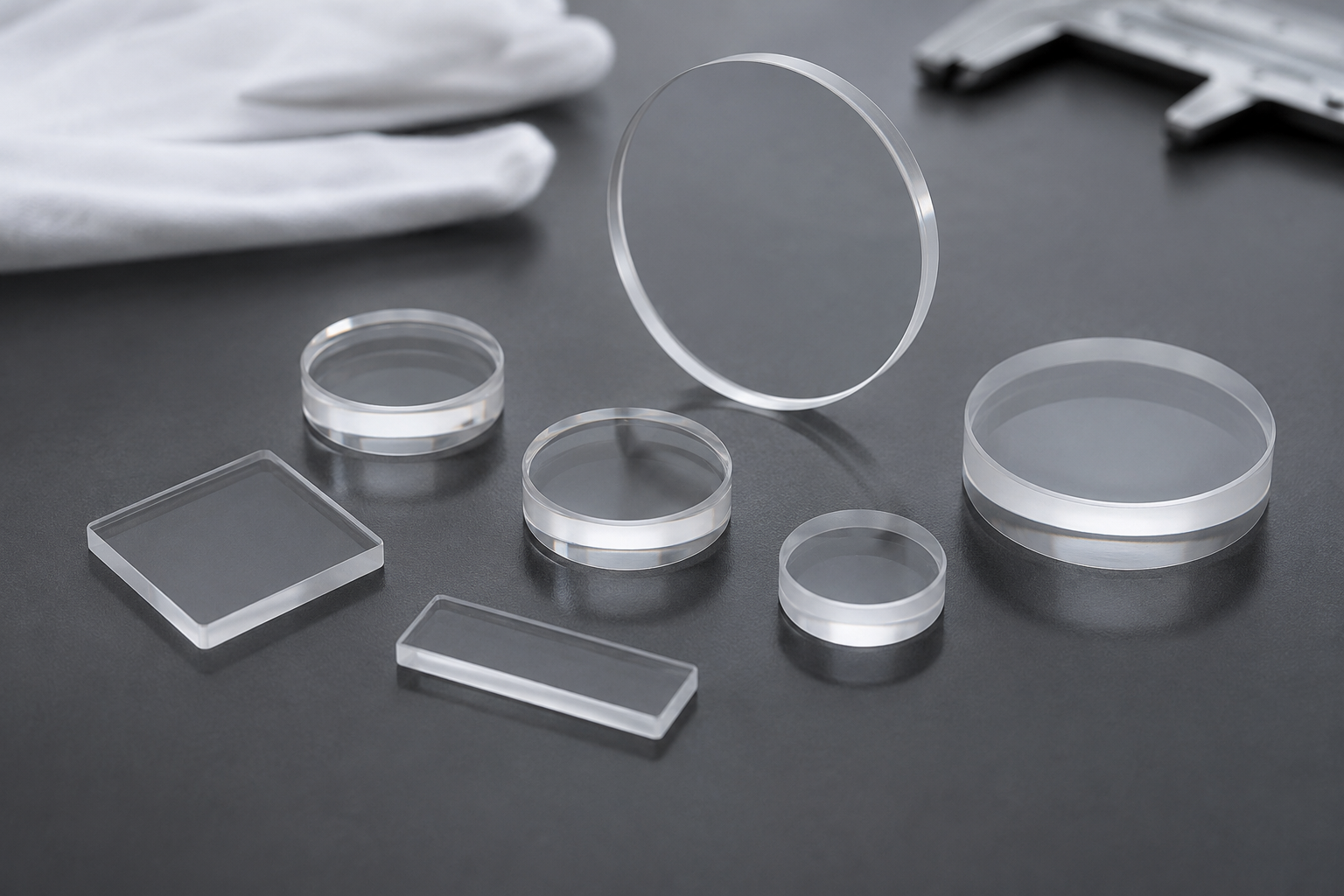
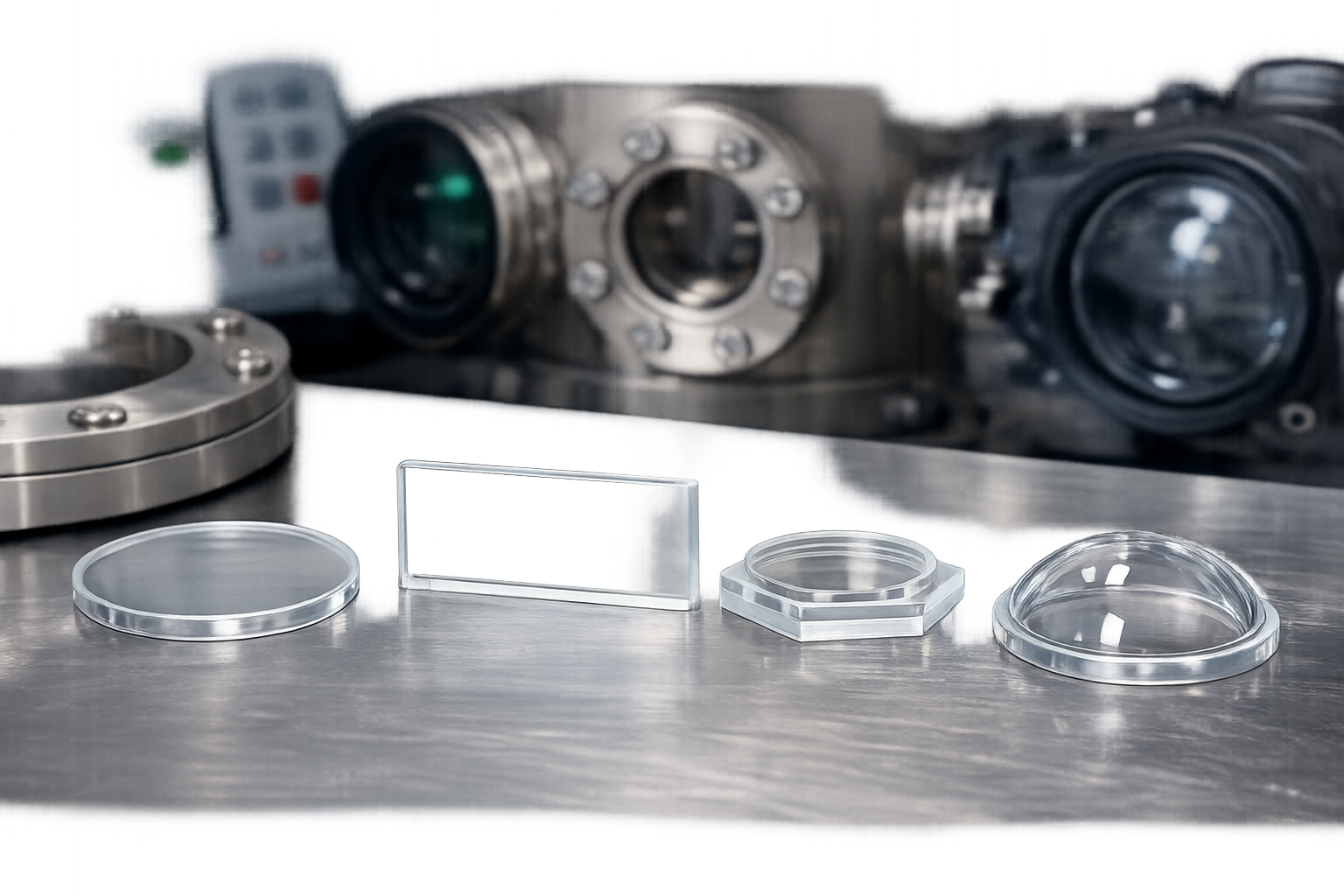
Sapphire windows are widely used in demanding industrial and scientific environments where both optical transparency and extreme mechanical strength are required. Typical applications include vacuum chambers, high-pressure reactors, furnace observation ports, and laser systems. Compared with conventional optical materials, sapphire (single-crystal Al₂O₃) offers exceptional hardness, high compressive strength, and broad spectral transmission, making it one

Wiadomości branżowe

Surface Flatness Requirements of Sapphire Windows in High-Precision Optical Interferometry Experiments

High-precision optical interferometry is a cornerstone technique in modern physics, metrology, and engineering, enabling measurements of distances, surface profiles, and refractive indices with sub-nanometer accuracy. The reliability and precision of these experiments strongly depend on the quality of the optical components used, particularly transparent windows that interface with laser beams or optical cavities. Among these,

Sapphire Optical Windows in Research Laboratories: Applications and Maintenance Strategies

Sapphire optical windows are widely recognized for their exceptional mechanical and optical properties, making them indispensable components in modern research laboratories. Their unique combination of hardness, chemical stability, high thermal resistance, and optical transparency across a wide spectrum allows scientists and engineers to conduct precise experiments under demanding conditions. This article explores the applications of

Wiadomości branżowe

Why Does Your Sapphire Window Crack? Common Failure Modes and Preventive Measures

Sapphire (Al₂O₃) is widely used in high-power laser systems, precision optics, deep-sea observation windows, and aerospace equipment due to its exceptional mechanical strength, high hardness, chemical stability, and broad optical transparency. Despite these superior properties, sapphire windows are not immune to cracking or fracture during operation. Cracks can compromise system performance and lead to costly

Wiadomości branżowe

Medical Laser Windows: Why Sapphire Is Preferred Over Quartz for High-Power Surgical Lasers

The optical window of a surgical laser serves as the interface between the laser source and the patient, directly influencing laser performance, operational safety, and device longevity. High-power surgical lasers (HPSLs) have become indispensable tools in modern medicine, with applications ranging from ophthalmology and otolaryngology to plastic surgery and minimally invasive oncology. While fused quartz

Wiadomości branżowe

Szafirowe okna kopułkowe dla systemów laserowych: Większa ochrona i precyzja

In modern laser systems, optical components are required not only to transmit energy efficiently but also to protect sensitive internal structures from environmental and mechanical damage. As laser technologies continue to evolve toward higher power, greater precision, and more demanding operating environments, the choice of protective optical materials becomes increasingly critical. Sapphire dome windows, manufactured

Wiadomości branżowe

Limity ciśnienia szkła szafirowego: Zrozumienie wytrzymałości mechanicznej i niezawodności zaawansowanych okien optycznych

1. Wprowadzenie Szkło szafirowe (Al₂O₃) jest materiałem monokrystalicznym szeroko stosowanym w optyce, lotnictwie, obronności i zastosowaniach przemysłowych ze względu na jego wyjątkową twardość, stabilność chemiczną i przezroczystość optyczną. Szafir, zajmujący 9. miejsce w skali Mohsa, jest prawie tak twardy jak diament, zapewniając wyjątkową odporność na zarysowania. Ponadto wykazuje wysoką przewodność cieplną, obojętność chemiczną i przezroczystość

Wiadomości branżowe

Dostawcy dużych okien szafirowych: Duże i niestandardowe okna szafirowe do zaawansowanych zastosowań

1. Wprowadzenie Szafir (Al₂O₃) jest materiałem jednokrystalicznym znanym ze swoich wyjątkowych właściwości mechanicznych, chemicznych i optycznych. Jego twardość wynosi 9 w skali Mohsa, co czyni go drugim po diamencie. Ponadto szafir oferuje wysoką przezroczystość w szerokim zakresie długości fal (od UV do IR), doskonałą przewodność cieplną i obojętność chemiczną. Właściwości te sprawiają, że szafir

Wiadomości branżowe

Materiały szafirowe w oknach lotniczych: Przegląd akademicki

Szafir (Al₂O₃) to jednokrystaliczna forma tlenku glinu znana z wyjątkowych właściwości mechanicznych, termicznych i optycznych. Jego zastosowanie w przemyśle lotniczym, w szczególności jako przezroczyste okna dla szybkich pojazdów, statków kosmicznych i instrumentów optycznych, znacznie wzrosło ze względu na jego odporność na ekstremalne warunki. W przeciwieństwie do konwencjonalnego szkła lub topionej krzemionki, szafir łączy w sobie wysoką twardość

Wiadomości branżowe

Duże i kwadratowe okna szafirowe: Niestandardowe kształty dla urządzeń przemysłowych

Okna szafirowe, wykonane z monokrystalicznego tlenku glinu (Al₂O₃), są powszechnie uznawane w zastosowaniach przemysłowych i naukowych ze względu na ich wyjątkowe właściwości mechaniczne, optyczne i termiczne. Podczas gdy standardowe okrągłe okna szafirowe są powszechne w systemach optycznych, pojawiło się rosnące zapotrzebowanie na duże i kwadratowe okna szafirowe, szczególnie w przypadku urządzeń przemysłowych wymagających precyzyjnego dostępu optycznego w ekstremalnych warunkach.