
Saphirfenster finden breite Anwendung in Hochdruckumgebungen, in denen herkömmliche optische Materialien wie Glas oder Quarz versagen können. Dank ihrer außergewöhnlichen mechanischen Festigkeit, hohen Härte, chemischen Beständigkeit und ihres breiten optischen Durchlässigkeitsbereichs sind Saphirfenster zur bevorzugten Wahl für anspruchsvolle Anwendungen in der Luft- und Raumfahrt, der Tiefseeforschung, der Halbleiterfertigung, der industriellen Überwachung und der wissenschaftlichen Messtechnik geworden.
Allerdings ist die Auswahl der geeigneten Saphirfenster Die Dicke ist einer der wichtigsten Konstruktionsfaktoren. Ein zu dünnes Fenster kann unter Druck brechen, während ein übermäßig dickes Fenster die Kosten, das Gewicht und die optische Verzerrung erhöhen kann.
Dieser Artikel befasst sich mit den wichtigsten Faktoren, die die Wahl der Dicke von Saphirfenstern beeinflussen, und bietet praktische Leitlinien für Ingenieure und Systementwickler.
Warum die Dicke eine Rolle spielt
Bei Hochdruckanwendungen dient das Saphirfenster als Barriere zwischen zwei Umgebungen und lässt gleichzeitig Licht, Laserstrahlen oder visuelle Informationen durch.
Das Fenster muss folgenden Belastungen standhalten:
- Äußerer Druck
- Innendruck
- Druckunterschiede
- Mechanischer Stoß
- Thermische Belastung
Mit steigendem Druck nimmt auch die mechanische Belastung des Fensters zu. Die Dicke hat direkten Einfluss auf die Biege- und Bruchfestigkeit des Fensters.
Ein fachgerecht konstruiertes Saphirfenster gewährleistet:
- Tragwerkssicherheit
- Optische Leistung
- Lange Lebensdauer
- Geringere Wartungskosten
Faktoren, die die Wahl der Dicke beeinflussen
Betriebsdruck
Der wichtigste Parameter ist die maximale Druckdifferenz, der das Fenster standhalten muss.
Typische Beispiele sind:
| Anwendung | Druckbereich |
|---|---|
| Überwachung industrieller Prozesse | 5–50 bar |
| Hochdruckreaktoren | 50–300 bar |
| Tiefseeausrüstung | 100–1000+ bar |
| Wissenschaftliche Druckkammern | 500–3000+ bar |
Höhere Drücke erfordern in der Regel dickere Saphirfenster.
Fensterdurchmesser
Der Durchmesser des Fensters hat oft einen größeren Einfluss auf die Festigkeit als der Druck allein.
Zum Beispiel:
- Ein Fenster mit einem Durchmesser von 10 mm kann bereits bei relativ geringer Dicke hohem Druck standhalten.
- Ein Fenster mit einem Durchmesser von 100 mm, das dem gleichen Druck ausgesetzt ist, erfordert möglicherweise eine um ein Vielfaches größere Dicke.
Mit zunehmendem Durchmesser steigt die Biegespannung deutlich an.
Ingenieure stellen oft fest, dass eine Verringerung der Öffnungsgröße wirksamer ist als eine drastische Erhöhung der Dicke.
Montagekonfiguration
Die Art und Weise, wie ein Saphirglasfenster befestigt wird, hat einen großen Einfluss auf seine Tragfähigkeit.
Zu den gängigen Befestigungsarten gehören:
- Geklemmte Fenster
- Lötbaugruppen
- Druckdicht verschlossene Ausführungen
- Fenster mit Metallrahmen und Verbundverglasung
Eine geeignete Kantenverstärkung verringert die Spannungskonzentration und ermöglicht schlankere Fensterkonstruktionen.
Sicherheitsfaktor
In der Konstruktionspraxis werden theoretische Versagensgrenzen nur selten herangezogen.
Typische Sicherheitsfaktoren liegen im Bereich von:
- 2× für kontrollierte Laborumgebungen
- 3×–4× für industrielle Anlagen
- 5× oder höher für kritische Anwendungen in der Luft- und Raumfahrt sowie in der Unterwassertechnik
Höhere Sicherheitsfaktoren führen oft zu höheren Anforderungen an die Dicke.
Temperaturbedingungen
Erhöhte Temperaturen können folgende Auswirkungen haben:
- Dichtungswerkstoffe
- Montagebelastungen
- Unterschiedliche Wärmeausdehnung
Obwohl Saphir auch bei hohen Temperaturen hervorragende mechanische Eigenschaften beibehält, muss bei der Festlegung der endgültigen Dicke dennoch die thermische Auslegung berücksichtigt werden.
Richtwerte für typische Dicken
Die folgende Tabelle enthält allgemeine technische Angaben zu runden Saphirfenstern.
| Durchmesser | Druckbereich | Typische Dicke |
| 10–20 mm | Bis zu 100 bar | 2–4 mm |
| 20–50 mm | Bis zu 300 bar | 5–10 mm |
| 50–75 mm | Bis zu 500 bar | 10–20 mm |
| 75–100 mm | Bis zu 1000 bar | 20–35 mm |
Diese Werte dienen lediglich als vorläufige Anhaltspunkte und sollten keine detaillierte mechanische Analyse ersetzen.
Die Rolle der Finite-Elemente-Analyse (FEA)
Bei der Konstruktion moderner Saphirfenster wird häufig auf die Finite-Elemente-Methode (FEA) zurückgegriffen.
Mithilfe der FEA können Ingenieure Folgendes bewerten:
- Spannungsverteilung
- Durchbiegungsverhalten
- Ausfallwahrscheinlichkeit
- Kantenkonzentration
- Thermisch-mechanische Wechselwirkungen
Durch Simulation lassen sich sowohl die Dicke als auch die Geometrie bereits vor Beginn der Fertigung optimieren.
Für anspruchsvolle Anwendungen wird die FEA dringend empfohlen.
Optische Überlegungen
Eine größere Dicke verbessert die mechanische Festigkeit, kann jedoch die optische Leistung beeinträchtigen.
Zu den möglichen Bedenken zählen:
- Erhöhte optische Absorption
- Höheres Systemgewicht
- Zusätzliche Reflexionsverluste
- Bildverzerrung in bestimmten optischen Systemen
Konstrukteure müssen einen Ausgleich zwischen mechanischer Sicherheit und optischen Anforderungen finden.
In Lasersystemen werden häufig Antireflexbeschichtungen auf dickere Saphirfenster aufgebracht, um die Durchlässigkeit aufrechtzuerhalten.
Saphir im Vergleich zu anderen optischen Materialien
Im Vergleich zu gängigen optischen Werkstoffen ermöglicht Saphir unter gleichen Druckbedingungen in der Regel dünnere Konstruktionen.
| Material | Relative Stärke | Druckbeständigkeit |
| Optisches Glas | Mäßig | Mäßig |
| Geschmolzener Quarz | Gut | Gut |
| Sapphire | Ausgezeichnet | Ausgezeichnet |
Die überragende Biegefestigkeit und Härte von Saphir machen ihn besonders attraktiv für kompakte optische Baugruppen, die hohen Drücken ausgesetzt sind.
Anwendungen, die dicke Saphirfenster erfordern
Hochdruck-Saphirfenster werden üblicherweise in folgenden Bereichen eingesetzt:
Tiefsee-Beobachtungssysteme
Unterwasserkameras und -sensoren können in Tiefen von mehreren tausend Metern unter dem Meeresspiegel eingesetzt werden, weshalb Saphirgläser erforderlich sind, die extremem hydrostatischem Druck standhalten können.
Hochdruck-Chemie-Reaktoren
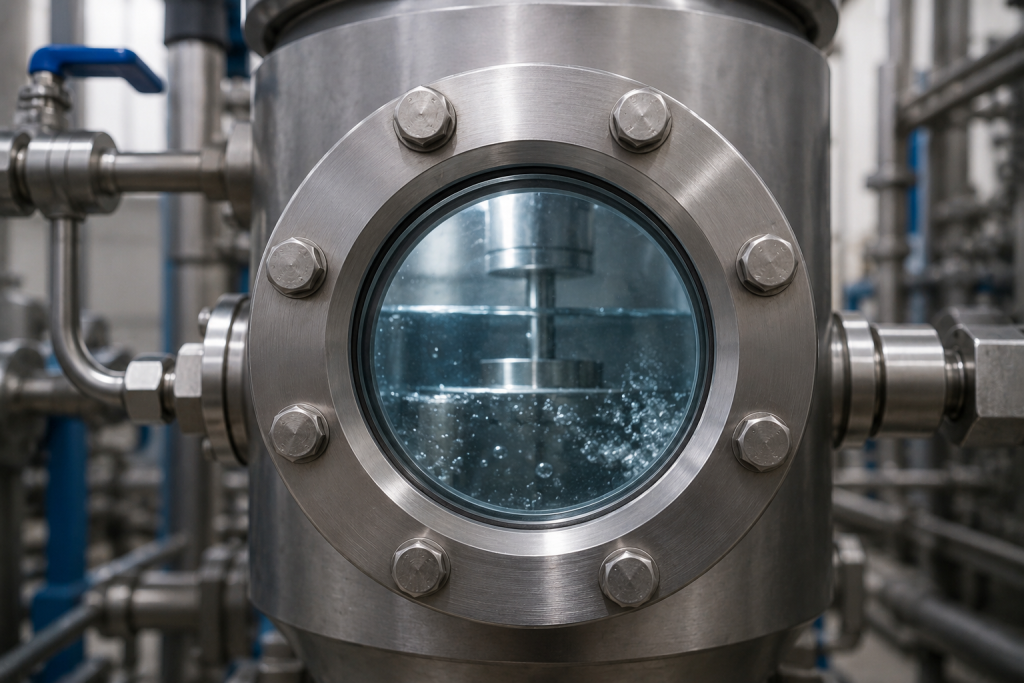
Saphir-Sichtfenster ermöglichen die visuelle Inspektion und optische Überwachung von Reaktionen, die unter erhöhtem Druck und bei erhöhten Temperaturen ablaufen.
Luft- und Raumfahrtsysteme
Druckfeste Saphirfenster kommen in Sensoren, Leitsystemen und Geräten zur Umweltüberwachung zum Einsatz.
Halbleiterfertigungsanlagen
In bestimmten Plasma- und Vakuumprozesskammern kommen Saphirfenster zum Einsatz, um den optischen Zugang zu gewährleisten und gleichzeitig die Prozessintegrität zu wahren.
Schlussfolgerung
Bei der Auswahl der richtigen Dicke für ein Hochdruck-Saphirfenster müssen Druckfestigkeit, optische Leistung, Fensterdurchmesser, Befestigungskonfiguration, Betriebstemperatur und Sicherheitsanforderungen gegeneinander abgewogen werden.
Zwar bieten dickere Fenster in der Regel eine höhere mechanische Festigkeit, doch kann eine Überdimensionierung die Kosten in die Höhe treiben und optische Probleme mit sich bringen. Der effektivste Ansatz kombiniert technische Berechnungen, angemessene Sicherheitsfaktoren und die Finite-Elemente-Analyse, um eine zuverlässige und kosteneffiziente Konstruktion zu erzielen.
Da die Anforderungen an den Druck in der Luft- und Raumfahrt, in der Tiefsee, in der Industrie sowie in wissenschaftlichen Anwendungen weiter steigen, bleibt Saphir eines der bewährtesten Materialien für transparente Hochdruck-Sicht- und optische Zugangs-Lösungen.