
Sapphire (single-crystal Al₂O₃) is widely used in optical, high-pressure, aerospace, and laser systems due to its exceptional hardness, thermal stability, and broad optical transmission range. One frequently asked engineering question is: how thin can a sapphire window be manufactured while still maintaining structural and optical performance?
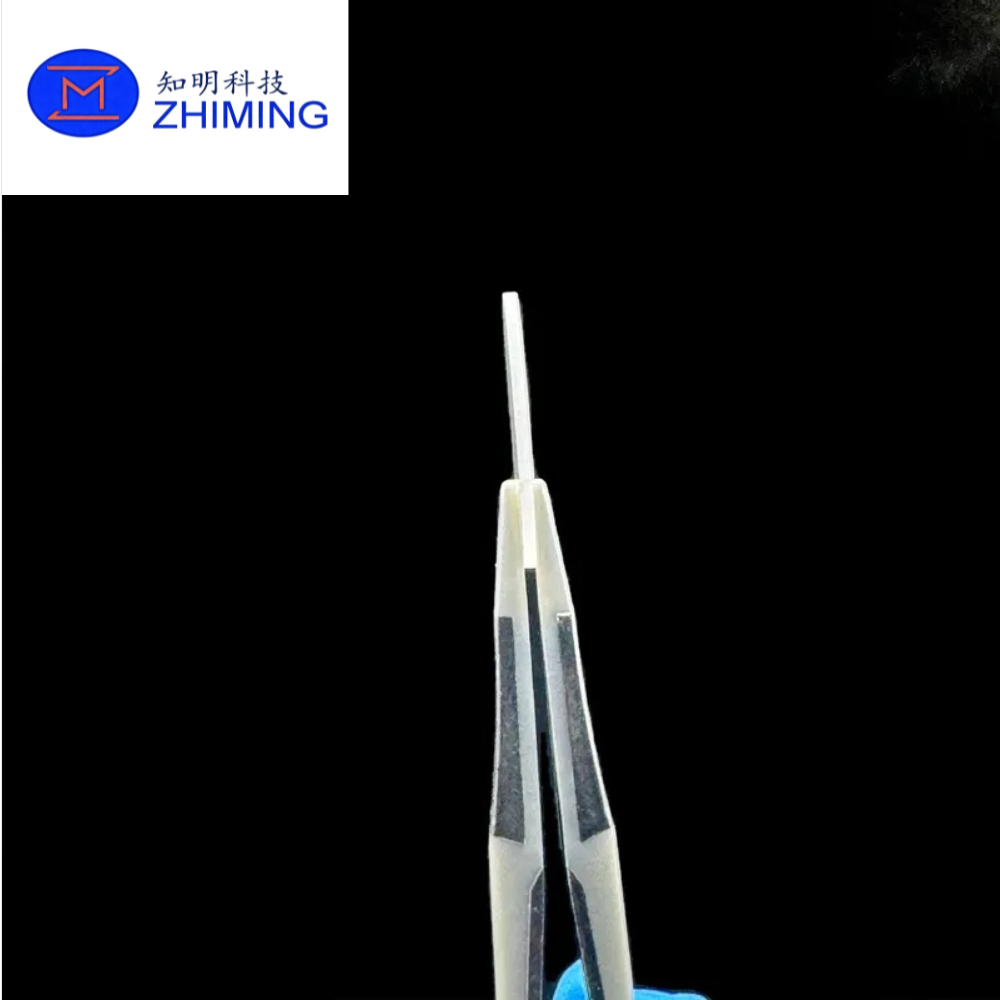
1. Material Background: Why Sapphire Enables Thin Windows
Sapphire is not glass but a single-crystal ceramic (Al₂O₃). Its properties directly determine how thin it can be made:
- Mohs hardness: 9 (second only to diamond)
- Young’s modulus: ~345 GPa
- High compressive strength (>2 GPa theoretical)
- Excellent thermal conductivity (25–35 W/m·K)
- Optical transmission: ~0.15 µm to 5.5 µm (UV–IR range)
These characteristics allow sapphire windows to be significantly thinner than conventional optical glass or fused silica while maintaining mechanical integrity.
2. Practical Thickness Range of Sapphire Windows
In industrial and research applications, sapphire windows are typically manufactured within the following ranges:
| Application Type | Typical Thickness |
|---|---|
| Micro-optics / sensors | 0.1 – 0.3 mm |
| Standard optical windows | 0.5 – 3 mm |
| High-pressure systems | 2 – 10 mm |
| Aerospace / extreme environments | 3 – 20 mm |
Key conclusion:
- The thinnest commercially feasible sapphire windows can be ~100 microns (0.1 mm).
- Ultra-thin wafers used in MEMS or research can go slightly below this range, but become extremely fragile and handling-sensitive.
3. Mechanical Constraints: What Limits Thickness?
The minimum thickness is not limited by optical performance, but by fracture mechanics.
3.1 Bending stress (primary failure mode)
A window behaves like a clamped circular plate under pressure. The thinner it becomes, the higher the stress:
- Stress ∝ pressure × diameter² / thickness²
This means:
- Reducing thickness by 50% increases stress by 4×.
3.2 Edge defects dominate failure
Sapphire’s theoretical strength is very high, but real-world failure is controlled by:
- Micro-cracks at edges
- Surface scratches
- Subsurface damage from polishing
Even a 1–5 µm defect can significantly reduce strength.
4. Optical Constraints: Does Thinness Affect Performance?
Interestingly, thinner sapphire does not reduce optical transmission significantly, because absorption is low across UV–IR bands.
However, thickness influences:
4.1 Wavefront distortion
- Thicker sapphire introduces more internal stress birefringence
- Thin windows reduce optical path distortion
4.2 Coating stability
- Ultra-thin sapphire is harder to coat uniformly (AR coatings, ALD layers)
5. Manufacturing Limitations
5.1 Crystal growth
Sapphire is grown via:
- Kyropoulos method
- Czochralski method
- Edge-defined film-fed growth (EFG)
Thin windows are not grown directly—they are:
- sliced from bulk crystals
- then lapped and polished
5.2 Thinning process
Typical steps:
- Wire sawing (initial slicing)
- Double-side lapping
- CMP polishing (chemical-mechanical polishing)
- Edge chamfering
- Stress-relief annealing
At ~100–300 µm thickness:
- yield decreases sharply
- breakage risk increases significantly
6. Engineering Trade-Off: Thickness vs Performance
| Majetek | Thinner Sapphire | Thicker Sapphire |
|---|---|---|
| Mechanical strength | Lower | Higher |
| Optical distortion | Lower | Higher (stress effects) |
| Weight | Lower | Higher |
| Pressure resistance | Lower | Higher |
| Handling risk | Higher | Lower |
👉 Engineering design always involves balancing these parameters.
7. Real-World Engineering Limits
In practical systems:
- 0.1–0.3 mm: research-grade micro-optics, fragile handling
- 0.5–1 mm: high-performance optical sensors (most common minimum industrial level)
- ≥2 mm: pressure vessels, aerospace, laser windows
Below ~100 µm:
- sapphire behaves more like a brittle MEMS membrane than a structural window
8. Key Scientific Insight
The minimum thickness of sapphire windows is not defined by optical physics, but by:
fracture toughness + defect control + mechanical design constraints
Even though sapphire is extremely strong, it remains a brittle crystal. Its usable thickness is therefore governed by statistical failure probability (Weibull distribution) rather than a single deterministic value.
9. Závěr
Sapphire windows can theoretically be made extremely thin, down to ~100 microns, but practical engineering limits usually keep them above 0.5 mm for reliability.
The real constraint is not the material itself, but:
- surface defect control
- edge finishing quality
- load conditions
- safety factor requirements
As manufacturing precision improves (CMP, ALD coatings, ultra-low defect polishing), thinner sapphire windows will continue to expand into advanced optics, MEMS, and extreme environment applications.