
Sapphire domes and optical components are widely used in advanced optical, aerospace, defense, and industrial systems where high durability, excellent optical transmission, and resistance to extreme environments are required. As one of the hardest known transparent materials, synthetic sapphire (single-crystal Al₂O₃) provides a unique combination of mechanical strength, chemical stability, and broad optical transparency ranging from ultraviolet (UV) to infrared (IR).
This article explains how sapphire domes are manufactured, their key optical properties, and how custom solutions are engineered for different applications.
What Are Sapphire Domes and Optical Components?
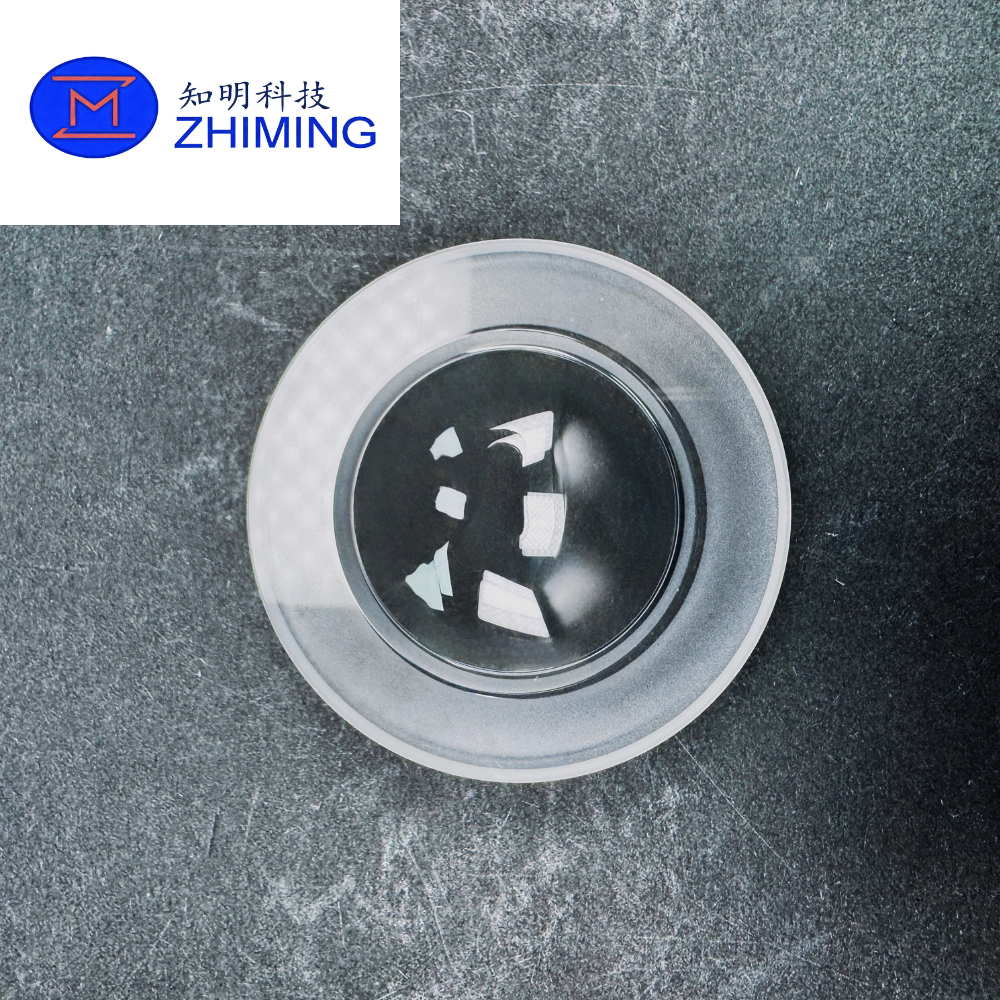
Sapphire domes are precision-engineered optical elements made from single-crystal sapphire. They are typically used as protective windows for sensors, cameras, and imaging systems operating in harsh conditions.
Optical components made from sapphire include:
- Optical windows
- Domes (hemispherical or hemispherical-like structures)
- Lenses
- IR transmission windows
- Custom-shaped optical parts
Due to sapphire’s extreme hardness (Mohs 9), these components are highly resistant to scratching, erosion, and pressure.
Key Properties of Sapphire for Optical Applications
Sapphire is chosen over traditional materials like quartz or glass due to its superior performance:
1. High Optical Transmission
Sapphire transmits light from approximately 0.15 μm (UV) to 5.5 μm (mid-IR), making it suitable for multi-spectrum optical systems.
2. Exceptional Hardness
With a hardness second only to diamond, sapphire provides excellent surface durability in abrasive or high-speed airflow environments.
3. High Thermal Stability
Sapphire maintains structural integrity at temperatures exceeding 1600°C, making it suitable for high-temperature optical systems.
4. Chemical Resistance
It is highly resistant to acids, alkalis, and corrosive gases, making it ideal for chemical processing or marine environments.
Sapphire Dome Manufacturing Process
The production of sapphire domes involves several high-precision steps:
1. Crystal Growth
High-purity aluminum oxide is grown into single-crystal sapphire using methods such as the Kyropoulos or Czochralski process.
2. Ingot Cutting
The sapphire crystal ingot is sliced into blanks using diamond wire sawing.
3. CNC Shaping
Advanced CNC grinding machines are used to form dome or custom geometries with tight dimensional tolerances.
4. Precision Polishing
Optical-grade polishing reduces surface roughness to nanometer levels to ensure high transmission and minimal scattering.
5. Inspection and Metrology
Each component undergoes strict inspection for:
- Surface flatness
- Transmission rate
- Birefringence
- Surface defects
Only components that meet optical-grade standards are approved for use.
Custom Sapphire Optical Solutions
Custom sapphire components are engineered based on application requirements such as:
- Diameter and thickness
- Dome curvature radius
- Surface coating (AR coating, IR coating)
- Optical wavelength range
- Mechanical load and pressure conditions
Customization Examples
- Large sapphire domes for UAV imaging systems
- Infrared sapphire windows for thermal sensing
- High-pressure sapphire windows for aerospace testing
- Precision optical windows for laser systems
Custom manufacturing ensures that each component meets both optical performance and mechanical reliability requirements.
Sapphire Domes vs Other Optical Materials
| Material | Hardness | Transmission Range | Durability | Cost |
|---|---|---|---|---|
| Sapphire | Very High | UV–IR | Excellent | High |
| Quartz | Medium | UV–IR | Medium | Medium |
| BK7 Glass | Low | Visible | Low | Low |
Sapphire clearly outperforms traditional optical materials in harsh environments where durability and long-term stability are critical.
Applications of Sapphire Domes and Optical Components
Sapphire optical components are widely used in:
Aerospace & Defense
- Missile guidance systems
- High-speed airborne sensors
- Space optical instruments
Industrial Systems
- High-temperature inspection windows
- Plasma processing equipment
- Laser machining systems
Scientific Instruments
- Spectroscopy systems
- Vacuum chamber observation windows
- High-energy physics experiments
Optical Imaging
- UAV and drone camera protection
- Underwater imaging systems
- Infrared detection systems
Quality Control and Engineering Standards
To ensure reliability, sapphire optical components are typically manufactured under strict quality systems, including:
- Optical surface inspection (scratch/dig standards)
- Transmission testing across UV–IR spectrum
- Mechanical stress testing
- Coating adhesion testing
High-end applications often require zero-defect or near-zero-defect optical surfaces.
Why Choose Custom Sapphire Manufacturing
Custom sapphire solutions provide significant advantages:
- Optimized optical performance for specific wavelengths
- Enhanced mechanical durability for harsh environments
- Reduced system failure risk
- Long service life with minimal degradation
Engineering collaboration between designers and manufacturers is essential to ensure the final optical component meets all performance requirements.
Conclusion
Sapphire domes and optical components are critical elements in modern high-performance optical systems. Their unmatched combination of optical clarity, mechanical strength, and environmental resistance makes them indispensable in aerospace, defense, industrial, and scientific applications.
With advanced manufacturing techniques and custom engineering capabilities, sapphire components can be tailored to meet the most demanding technical requirements.