
Sapphire windows are widely used in high-performance optical systems, semiconductor equipment, laser technology, and harsh industrial environments due to their exceptional hardness, chemical stability, and wide optical transmission range. While sapphire is a single material, the crystallographic orientation of the sapphire wafer can significantly affect its optical, mechanical, and thermal properties. The most common orientations for sapphire windows are C-plane, A-plane, and M-plane, each offering distinct characteristics suitable for different applications. Understanding these differences is critical for engineers, scientists, and designers who rely on sapphire in precision systems.
1. Crystallographic Orientation and Definitions
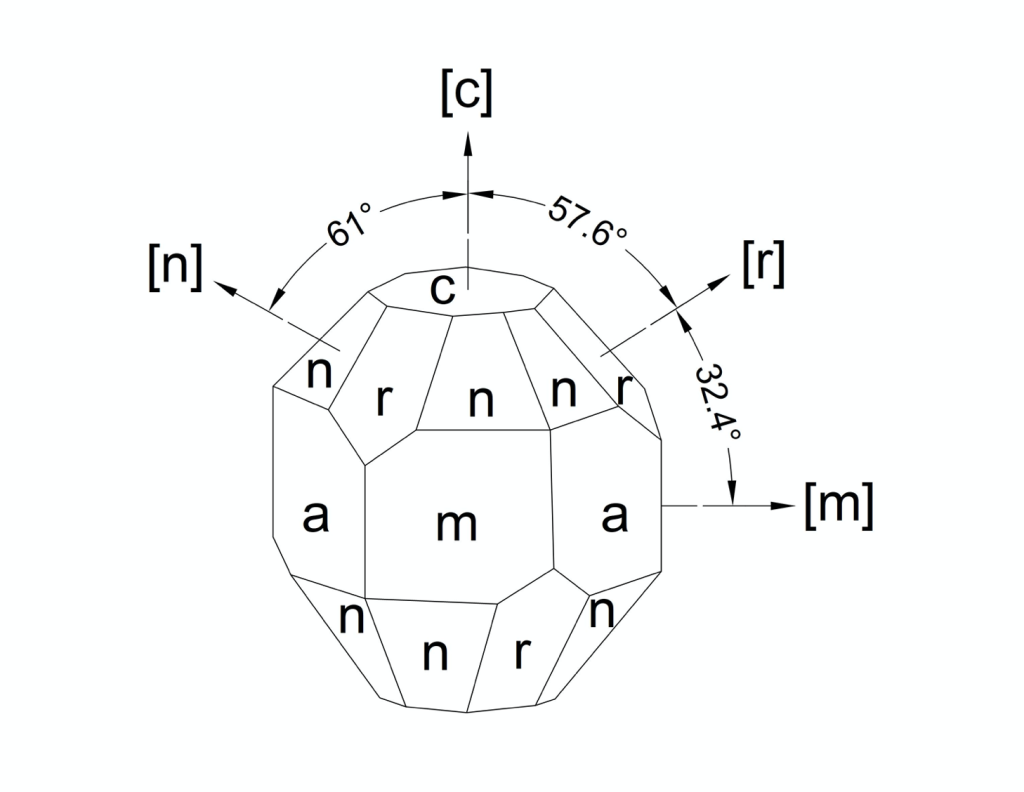
Sapphire (Al₂O₃) is a hexagonal crystal system. Its crystallographic planes define how the crystal is sliced and influence its optical and mechanical behavior:
- C-plane (0001): Also known as the polar plane, this orientation is perpendicular to the c-axis of the crystal. It is the most commonly used plane in optical and semiconductor applications.
- A-plane (11-20): Perpendicular to the a-axis, the A-plane exposes a non-polar surface.
- M-plane (10-10): Perpendicular to the m-axis, the M-plane is also non-polar and exhibits anisotropic properties distinct from the C-plane.
These planes are not interchangeable; selecting the correct orientation affects stress tolerance, birefringence, thermal expansion, and surface finish of the sapphire window.
2. Optical Properties
Sapphire is highly transparent across a wide wavelength range (approximately 200–5500 nm). However, the plane orientation affects optical uniformity and birefringence:
- C-plane: Offers excellent optical uniformity and low birefringence, making it ideal for laser windows, photodetector windows, and semiconductor inspection equipment.
- A-plane: Exhibits moderate birefringence due to the in-plane crystal anisotropy, which can influence polarization-dependent applications. It is often used in LED substrates and optical components where directional growth is beneficial.
- M-plane: Shows minimal surface defects and low dislocation density, with birefringence behavior between that of C- and A-plane. Common in high-power laser optics and precision optical windows.
Understanding birefringence and polarization effects is crucial for high-precision optical systems, as incorrect plane selection can reduce transmission efficiency or distort laser beams.
3. Mechanical and Thermal Behavior
Sapphire is renowned for its hardness and thermal stability. The orientation also impacts mechanical strength, fracture resistance, and thermal expansion:
- C-plane: Exhibits high hardness and isotropic behavior in surface processing. It is less prone to cleavage along the surface, making it ideal for high-stress optical windows.
- A-plane: Slightly lower hardness along certain directions; care is needed during machining to avoid micro-cracks. However, it offers better thermal expansion matching for some epitaxial growth applications.
- M-plane: Provides a compromise between hardness and thermal expansion uniformity. It is often preferred in applications requiring high-temperature operation and mechanical durability.
Selecting the appropriate plane is essential for laser windows, high-power optical devices, and industrial sensors, where thermal cycling and mechanical stress are significant.
4. Surface Processing and Fabrication Considerations
Sapphire windows must be polished to high optical quality. The crystallographic plane influences etching rates, polishing uniformity, and achievable surface finish:
- C-plane: Easiest to polish to optical-grade smoothness, widely available in large-diameter wafers.
- A-plane: Slightly more challenging due to directional anisotropy; requires careful lapping and polishing.
- M-plane: Intermediate difficulty; offers high-quality finish but may require specific tooling and control of polishing parameters.
Correct surface processing ensures that sapphire windows maintain optical clarity, flatness, and low scatter, critical for laser and photonic applications.
5. Application Guidance
- C-plane sapphire windows: Best suited for laser optics, UV/IR windows, semiconductor process chambers, and other applications requiring minimal birefringence.
- A-plane sapphire windows: Suitable for LED substrates, epitaxial growth platforms, and applications where crystal orientation impacts growth or stress distribution.
- M-plane sapphire windows: Optimal for high-power laser optics, harsh industrial sensors, and situations requiring high mechanical durability and thermal stability.
Choosing the correct orientation is essential for maximizing performance, reliability, and longevity of sapphire-based optical components.
6. Conclusion
C-plane, A-plane, and M-plane sapphire windows offer distinct optical, mechanical, and thermal properties. The C-plane is the most common choice for high-precision optics, while A-plane and M-plane provide alternatives for specialized applications, including LED growth and high-power laser systems. Proper understanding of crystallographic orientation ensures that sapphire windows deliver optimal performance in industrial, scientific, and optical applications, making them a versatile and reliable material for modern technology.