
Sapphire protective windows are widely used in industrial cameras, machine vision systems, optical sensors and inspection equipment that operate in harsh production environments. In many factories, the camera or sensor must work near dust, metal particles, cutting fluid, chemicals, high temperature, cleaning processes or moving mechanical parts. A normal glass cover may become scratched, contaminated or broken, causing image quality problems and frequent maintenance. Sapphire provides a durable optical protection solution for these demanding applications.
As a single-crystal aluminum oxide material, sapphire has high hardness, good optical transmission, excellent wear resistance and strong chemical stability. When used as a protective window, it helps shield the camera lens or sensor while keeping the optical path clear. For machine vision systems that require stable image capture, accurate measurement or long-term operation, sapphire windows can reduce downtime and improve system reliability.
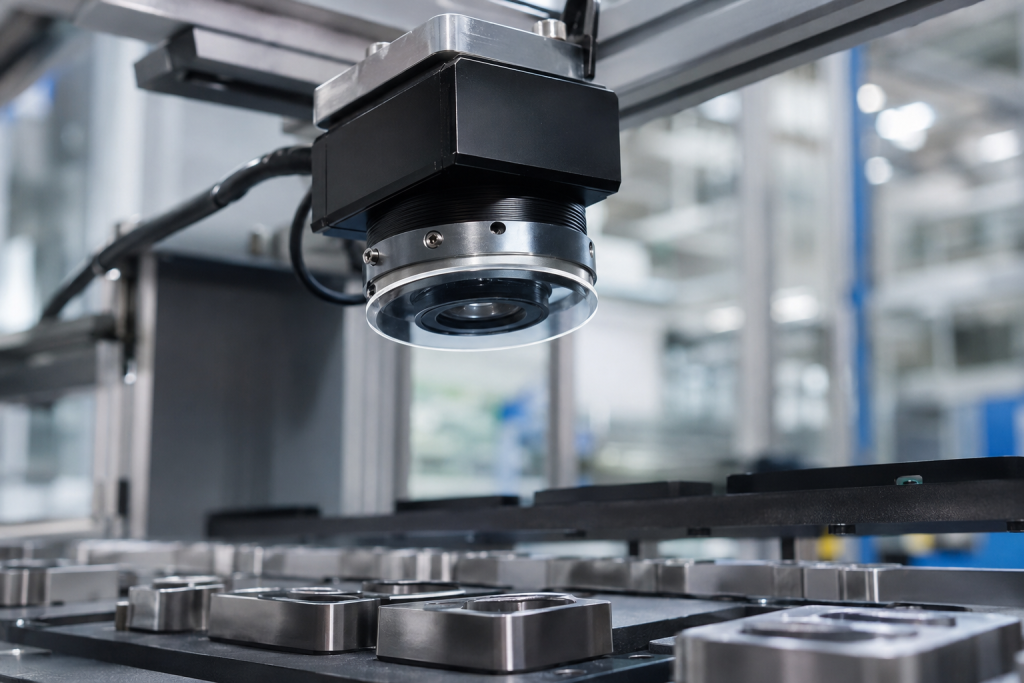
Why Industrial Cameras Need Protective Windows
Industrial cameras are often installed in environments that are very different from clean laboratory conditions. They may be used beside CNC machines, welding lines, semiconductor equipment, laser systems, food processing machines, chemical production equipment, glass manufacturing lines or automated inspection stations.
Common risks include:
- Dust and abrasive particles
- Oil mist and cutting fluid
- Chemical splashes
- High temperature airflow
- Mechanical impact
- Frequent cleaning
- Vibration
- Laser or strong light exposure
- Moisture and corrosion
If the camera lens is directly exposed, the front optical surface can quickly degrade. Scratches, stains or small chips may reduce image contrast, create glare or affect measurement accuracy. Replacing lenses or cameras can be expensive and may interrupt production. A sapphire protective window acts as a replaceable or integrated front barrier to protect the optical system.
Advantages of Sapphire Protective Windows
High Scratch Resistance
Sapphire is much harder than common optical glass. This makes it suitable for environments where particles or tools may touch the window surface. In machine vision systems, even small scratches can affect image quality, especially when the camera is used for precision measurement or defect detection.
A sapphire window can maintain a clear optical surface for a longer time, reducing the need for frequent replacement.
Good Optical Transmission
Sapphire has good transmission in visible and near-infrared wavelength ranges. This allows it to be used with many industrial cameras, inspection lights and optical sensors. For applications that require specific wavelengths, the window thickness, surface quality and coating can be customized.
If reflection control is needed, anti-reflective coating can be applied to improve transmission and reduce glare.
Химическая стойкость
Industrial vision systems may be exposed to solvents, coolants, acids, alkalis or cleaning agents. Sapphire has excellent chemical stability and can resist many harsh chemicals better than common glass or plastic covers.
This is especially useful in chemical processing, medical device manufacturing, food equipment, battery production and semiconductor-related systems.
Стабильность при высоких температурах
Some camera systems operate near furnaces, welding areas, laser processing equipment or heated chambers. Sapphire can maintain good stability under high temperature conditions, making it suitable for thermal inspection and high-temperature observation windows.
Long Service Life
Although sapphire is usually more expensive than standard glass, it can reduce replacement frequency in harsh environments. For automated production lines, fewer interruptions can mean lower maintenance cost and better production stability.
Key Specifications for Camera Protection
When ordering sapphire protective windows for industrial cameras, the following specifications should be confirmed.
1. Shape and Size
Common shapes include round, square and rectangular windows. The size should match the camera housing, lens cover, sensor module or mounting structure.
Important dimensions include:
- Outer diameter or length and width
- Толщина
- Clear aperture
- Edge shape
- Mounting tolerance
- Chamfer size
If the window is installed inside a camera housing, the tolerance must be suitable for assembly. If it is used as an external protective cover, the design should consider sealing and replacement convenience.
2. Thickness
Thickness affects strength, weight, cost and optical performance. A thicker sapphire window may offer better mechanical protection, but it can increase reflection, optical path length and material cost.
For camera applications, the thickness should be selected according to:
- Window size
- Impact risk
- Pressure or sealing requirement
- Lens working distance
- Optical distortion limit
- Mounting space
If the camera requires high image accuracy, the window should not introduce obvious distortion or unwanted reflection.
3. Surface Quality
Surface quality is important for image clarity. Scratches, pits, chips or polishing defects may affect camera performance.
Common surface requirements may include:
- Scratch-dig specification
- Surface roughness
- Плоскость
- Параллелизм
- Cleanliness
- Coating quality
For general protection, standard optical polishing may be enough. For high-resolution machine vision, laser inspection or measurement systems, tighter optical requirements are recommended.
4. Parallelism and Wedge
If the two surfaces of the sapphire window are not parallel, the image path may shift slightly. For basic observation, this may not matter. For precision imaging, measurement or alignment systems, parallelism and wedge should be controlled.
Customers should provide the optical accuracy requirement if the camera is used for measurement rather than simple monitoring.
5. Edge Finish
Sapphire is very hard but also brittle. Poor edge finishing can create chips or stress points. For camera windows, chamfered or beveled edges are commonly used to improve handling safety and assembly reliability.
Edge options include:
- Fine ground edge
- Polished edge
- Chamfered edge
- Beveled edge
- Rounded edge
If the window needs to be sealed with an O-ring or adhesive, the edge and sealing surface design should be confirmed before production.
Варианты покрытия
Sapphire protective windows can be supplied with or without coating. Coating selection depends on the optical system and working wavelength.
Common options include:
- Anti-reflective coating
- Broadband AR coating
- Infrared coating
- Protective coating
- Hydrophobic or oleophobic coating
- Custom wavelength coating
For industrial cameras, AR coating can help reduce reflection and improve image contrast. If the environment involves oil, water or dust, additional surface treatment may be considered. However, coating durability should be reviewed carefully because some harsh environments may damage coating layers faster than the sapphire substrate.
Application Examples
Machine Vision Inspection
Sapphire windows can protect cameras used for defect detection, dimension measurement, alignment inspection and automated quality control. They are useful when the camera is close to moving products, dust or cleaning operations.
CNC and Metal Processing
In CNC machining, grinding and cutting environments, metal chips, coolant and abrasive dust can damage normal glass covers. Sapphire provides better scratch resistance and longer service life.
Semiconductor and Electronics Manufacturing
Sapphire windows can be used in inspection modules, process monitoring systems, optical sensors and vacuum or cleanroom equipment. Clean surface quality and stable optical performance are important in these applications.
Food and Medical Equipment
For food and medical device production lines, camera windows may need frequent cleaning. Sapphire provides good chemical resistance and can support a cleaner, more durable protective design.
Laser and Welding Monitoring
High-temperature and high-light environments can be challenging for standard camera covers. Sapphire windows can be used as protective optics in monitoring systems, depending on wavelength, coating and heat load.
Design Tips for Better Performance
To improve reliability, engineers should consider the complete assembly instead of only the sapphire part.
Useful design tips include:
- Avoid direct hard contact between sapphire and metal edges
- Use suitable gasket or flexible support when needed
- Add chamfer to reduce edge chipping
- Confirm clear aperture before finalizing holder design
- Choose coating according to actual wavelength
- Keep the window easy to clean or replace
- Avoid unnecessary tight tolerances that increase cost
- Provide drawings for custom parts
- Define inspection standards before production
For high-volume camera systems, it is recommended to test prototype samples first. This allows engineers to confirm image quality, mounting fit, cleaning performance and long-term durability before mass production.
RFQ Checklist
When requesting a quotation for sapphire protective windows, provide the following information:
- Shape: round, square, rectangular or custom
- Size and thickness
- Количество
- Drawing or sample
- Clear aperture
- Surface quality requirement
- Flatness and parallelism
- Edge finish
- Coating requirement
- Working wavelength
- Operating environment
- Диапазон температур
- Cleaning method
- Sealing or mounting method
- Packaging requirement
- Inspection report requirement
If the exact specification is not confirmed, you can provide the camera model, installation space, working environment and expected protection function. The supplier can help recommend a practical sapphire window design.
Заключение
Sapphire protective windows are an effective solution for industrial cameras and vision systems used in harsh environments. They provide high scratch resistance, good optical transmission, chemical stability and long service life. Compared with ordinary glass covers, sapphire can better protect lenses and sensors from particles, impact, cleaning chemicals and demanding production conditions.
For custom camera protection projects, the key is to define the optical requirements and mechanical design at the same time. Size, thickness, surface quality, parallelism, edge finish and coating should all match the camera system and working environment. With a clear RFQ and proper design, sapphire windows can help improve image stability, reduce maintenance and extend the service life of industrial vision equipment.