
High-precision optical interferometry is a cornerstone technique in modern physics, metrology, and engineering, enabling measurements of distances, surface profiles, and refractive indices with sub-nanometer accuracy. The reliability and precision of these experiments strongly depend on the quality of the optical components used, particularly transparent windows that interface with laser beams or optical cavities. Among these, saffieren ramen (Al₂O₃) are widely adopted due to their exceptional mechanical, thermal, and optical properties. However, their performance in interferometric setups is highly sensitive to surface flatness.
Why Surface Flatness Matters
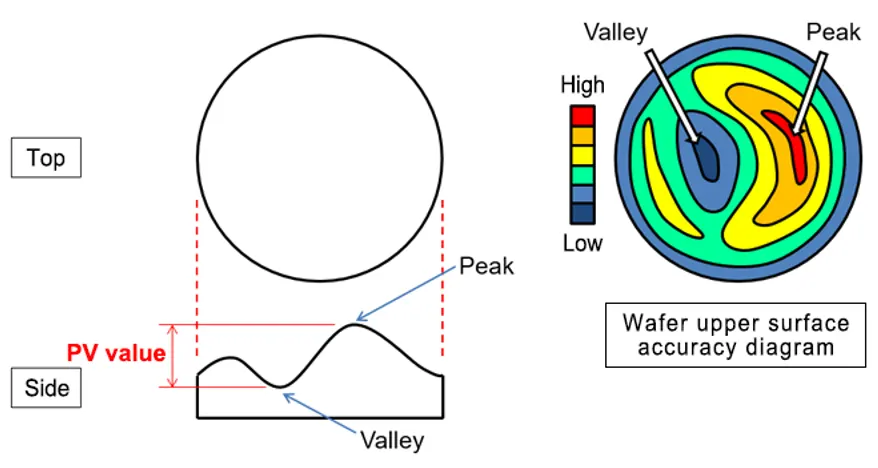
Surface flatness refers to the deviation of a window’s surface from an ideal plane over its entire aperture. In optical interferometry, any deviation—commonly expressed in fractions of the wavelength of light (λ)—can induce phase distortions, wavefront errors, or fringe pattern irregularities. Even minor surface deviations of tens of nanometers can degrade the interferometric contrast and reduce measurement accuracy.
For instance, in a typical Michelson interferometer using visible light (λ ≈ 632.8 nm from a He-Ne laser), a λ/10 surface flatness corresponds to approximately 63 nm peak-to-valley (P-V) deviation. Such precision ensures minimal distortion in the interference pattern, allowing for reliable measurements of optical path differences. Conversely, using a sapphire window with λ/4 flatness (≈158 nm P-V) may introduce measurable phase errors that compromise experimental results.
Sapphire as an Optical Window Material
Sapphire is a crystalline form of aluminum oxide with unique properties that make it suitable for high-precision optical applications:
- Mechanische sterkte: Sapphire has a Mohs hardness of 9, enabling it to resist scratches and maintain surface quality during handling and cleaning.
- Thermische stabiliteit: With a high melting point (~2030°C) and low thermal expansion coefficient (~5.3×10⁻⁶/K), sapphire minimizes distortion under temperature fluctuations.
- Optische transparantie: Sapphire is transparent across a wide wavelength range (from 150 nm UV to 5 µm IR), providing versatility for interferometry across multiple spectral regions.
- Chemische weerstand: It resists corrosion from acids and other laboratory chemicals, ensuring long-term surface integrity.
Despite these advantages, sapphire’s crystalline structure requires careful polishing techniques to achieve the extreme surface flatness necessary for interferometry.
Surface Flatness Specifications for Interferometry
The required flatness depends on the interferometric method and desired measurement accuracy:
- High-Precision Interferometry (λ/20 – λ/10): For sub-nanometer resolution measurements, surfaces must be polished to λ/20–λ/10 flatness (≈32–63 nm P-V for visible light). This standard is typical for applications such as wavefront testing of lenses, surface metrology, and precision optical alignment.
- General Interferometric Alignment (λ/4): Less demanding setups, such as coarse alignment or laboratory demonstrations, may tolerate λ/4 flatness (≈158 nm P-V).
Flatness is usually verified using optical interferometers (Fizeau or Twyman-Green configurations) that produce fringe patterns to quantify deviations from an ideal plane. Advanced methods, such as phase-shifting interferometry, can measure surface errors down to a few nanometers.
Manufacturing and Polishing Considerations
Achieving high flatness on sapphire windows requires precision manufacturing:
- Lapping and Polishing: Progressive lapping with diamond abrasives followed by chemical-mechanical polishing (CMP) reduces surface roughness and ensures uniform flatness.
- Substrate Preparation: Careful control of crystalline orientation and pre-polishing stress relief minimizes birefringence and surface warping.
- Coating Impact: Anti-reflection coatings or protective layers must be applied uniformly; uneven coatings can degrade flatness and introduce optical path distortions.
- Quality Control: Post-polishing inspection using interferometry ensures compliance with specified flatness tolerances.
Practical Implications in Interferometry
Even slight deviations from flatness can cause:
- Fringe Pattern Distortion: Non-uniform phase shifts across the beam lead to bent or uneven fringes, complicating data interpretation.
- Wavefront Aberrations: Errors in transmitted wavefronts reduce measurement precision in high-resolution metrology.
- Systematic Measurement Bias: Surface imperfections can introduce repeatable but incorrect optical path differences, affecting calibration.
Therefore, experimentalists must select sapphire windows with surface flatness suited to their measurement goals. Over-specification increases cost without measurable benefits, while under-specification risks compromising the experiment.
Conclusie
In high-precision optical interferometry, the surface flatness of sapphire windows is a critical factor that directly affects measurement accuracy, wavefront quality, and overall experimental reliability. For sub-nanometer resolution, surface flatness should ideally be in the λ/20–λ/10 range, verified using interferometric techniques. Careful selection, polishing, and quality control ensure sapphire windows meet these stringent requirements, enabling researchers and engineers to conduct precise and reproducible optical measurements.