
In advanced optical and industrial systems, 사파이어 창 are widely used because of their exceptional hardness, optical clarity, and resistance to extreme conditions. However, in many real-world applications, the performance of a sapphire window does not depend only on the sapphire material itself—but also on how well it is sealed into its housing.
여기에서 hermetic sealing becomes critical.
In harsh environments such as aerospace, semiconductor processing, defense systems, and high-pressure instrumentation, hermetic sealing ensures that sapphire windows maintain long-term stability, reliability, and performance.
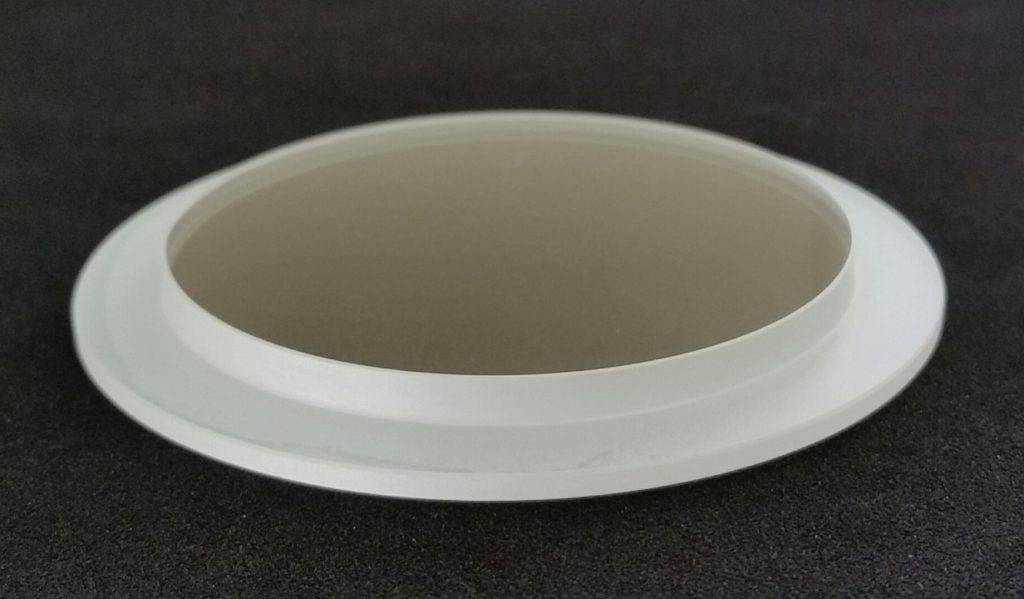
What Is a Sapphire Window?
A sapphire window is an optical component made from single-crystal aluminum oxide (Al₂O₃). It is used to transmit light while protecting internal systems from external environments.
Key properties include:
- 매우 높은 경도(모스 9)
- Excellent optical transmission (UV to IR range)
- 고온 내성
- Strong chemical corrosion resistance
- High pressure tolerance
Because of these properties, sapphire windows are commonly used in:
- 항공우주 센서
- High-pressure observation systems
- 반도체 장비
- Defense and infrared optics
- Industrial laser systems
What Is Hermetic Sealing?
Hermetic sealing refers to a completely airtight and gas-tight sealing method that prevents:
- Gas leakage
- Moisture ingress
- Contamination penetration
- Pressure imbalance
In sapphire window assemblies, hermetic sealing typically involves:
- Metal-to-ceramic bonding
- Glass-to-metal sealing
- Active brazing techniques
- Precision sealing gaskets (in some designs)
The goal is simple: create a permanently sealed optical barrier between two environments.
Why Hermetic Sealing Is Critical for Sapphire Windows
Sapphire itself is extremely durable—but without proper sealing, system failure can still occur.
1. Protection Against Moisture and Corrosion
In humid or chemically aggressive environments:
- Moisture can enter the system
- Internal components may corrode
- Optical surfaces may degrade over time
Hermetic sealing eliminates environmental ingress, ensuring long-term stability.
2. Stability in High-Pressure Systems
In applications such as:
- Subsea equipment
- Pressure vessels
- Gas monitoring systems
Pressure differences between inside and outside can damage unsealed assemblies.
Hermetic sealing ensures:
- Structural integrity
- Pressure equalization resistance
- Long-term mechanical stability
3. Thermal Cycling Resistance
Harsh environments often involve repeated temperature changes.
Without hermetic sealing:
- Micro-leaks may develop
- Thermal expansion mismatch may cause stress
- Optical alignment can shift over time
Proper sealing design helps maintain stability under:
- Rapid heating
- Cryogenic conditions
- Continuous thermal cycling
4. Contamination Control in Sensitive Systems
In semiconductor, optical, and aerospace systems, even microscopic contamination can cause failure.
Hermetic sealing prevents:
- Dust particles
- Outgassing contaminants
- Chemical vapors
- Process residue ingress
This is especially important in vacuum and cleanroom environments.
5. Long-Term Optical Performance Stability
Sapphire windows are often expected to perform for years without maintenance.
Hermetic sealing ensures:
- No internal fogging
- No interface degradation
- Stable optical transmission
- Consistent refractive performance
Common Hermetic Sealing Methods for Sapphire Windows
Metal-to-Ceramic Sealing
- Uses alloys matched to sapphire expansion behavior
- Provides strong mechanical bonding
- Common in aerospace and defense systems
Active Brazing
- Uses reactive filler metals (e.g., Ti-based alloys)
- Forms chemical bonds with sapphire surface
- High reliability under extreme conditions
Glass-to-Metal Seals (in hybrid designs)
- Combines optical isolation with mechanical support
- Often used in sensor housings
Challenges in Hermetic Sealing Sapphire
Despite its benefits, sealing sapphire is technically challenging due to:
- Thermal expansion mismatch with metals
- Brittleness of ceramic material
- High precision alignment requirements
- High-temperature processing constraints
This is why high-quality sapphire window assemblies require advanced manufacturing expertise.
Applications Where Hermetic Sealing Is Essential
Hermetically sealed sapphire windows are widely used in:
- Aerospace optical sensors
- 고압 시청 포트
- Semiconductor plasma chambers
- Military infrared imaging systems
- Deep-sea observation equipment
- 고출력 레이저 시스템
In all these cases, system failure due to leakage is not acceptable.
Final Thoughts
Sapphire windows already provide outstanding optical and mechanical performance. However, without hermetic sealing, even the best sapphire component can fail in real-world harsh environments.
A properly engineered hermetic seal ensures:
- Long-term reliability
- Environmental isolation
- 압력 저항
- Stable optical performance
In high-end industrial and scientific applications, hermetic sealing is not just an enhancement—it is a requirement.
자주 묻는 질문
Why is hermetic sealing important for sapphire windows?
Because it prevents moisture, gas, and contaminants from entering the system, ensuring long-term optical and mechanical stability in harsh environments.
Can sapphire windows work without hermetic sealing?
Yes, but only in less demanding environments. In high-pressure, vacuum, or corrosive conditions, lack of sealing can lead to failure or performance degradation.
What is the most common sealing method for sapphire windows?
Metal-to-ceramic sealing and active brazing are the most widely used methods due to their strong bonding performance and reliability under extreme conditions.