
High-precision measurement instruments are at the core of modern scientific research and industrial applications. From laser interferometers to spectroscopic analyzers, these instruments demand components that can withstand extreme conditions while maintaining optical clarity and dimensional stability. Among these critical components, sapphire windows play a pivotal role, offering unparalleled performance in environments where ordinary glass or polymer windows would fail.
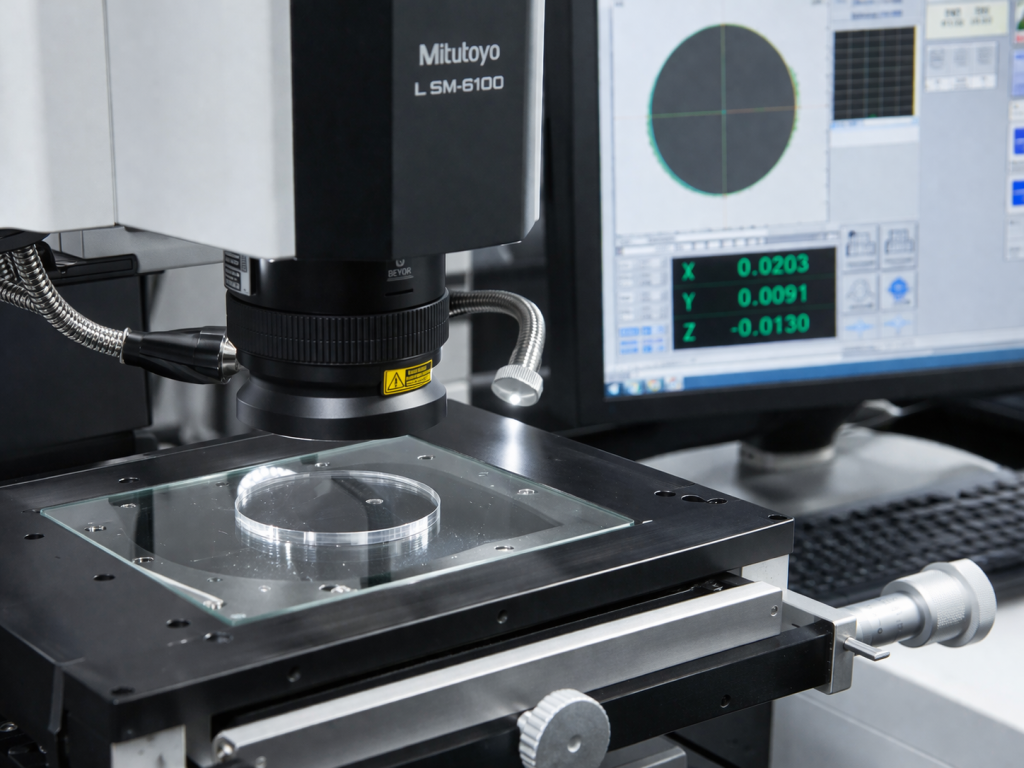
1. Material Properties That Define Sapphire Windows
Sapphire (Al₂O₃) is a single-crystal form of aluminum oxide known for its extraordinary hardness, chemical inertness, and high thermal conductivity. With a Mohs hardness of 9, sapphire is second only to diamond, which allows it to resist scratches and surface wear even in demanding industrial environments. Its chemical resistance enables it to endure exposure to acids, bases, and solvents without degradation. Moreover, sapphire can withstand temperatures exceeding 1,000°C, making it suitable for high-temperature measurement applications where glass or fused silica would deform or crack.
Optically, sapphire offers excellent transparency across a wide spectral range, from ultraviolet (UV, ~200 nm) to mid-infrared (IR, ~5 µm), with low absorption and minimal scattering. This broad transmission range ensures accurate signal detection in high-precision instruments, where even minor optical distortions could introduce measurement errors.
2. Applications in High-Precision Measurement Instruments
2.1 Laser Interferometry
In laser interferometers, which are used for nanometer-scale distance measurements and surface profiling, サファイア・ウィンドウ provide a stable optical interface. The material’s mechanical rigidity minimizes deflection and vibration-induced errors, while its low thermal expansion ensures that measurements remain accurate even under fluctuating temperatures. This makes sapphire essential in applications such as semiconductor wafer inspection, precision machining, and metrology laboratories.
2.2 Spectroscopic Analysis
High-resolution spectrometers, including Raman and UV-visible instruments, require windows that do not absorb or scatter light within the operating wavelength range. Sapphire’s optical clarity and wide transparency range allow for precise light transmission, enabling reliable detection of spectral signals. Furthermore, its chemical inertness permits the analysis of corrosive or reactive samples without compromising the integrity of the window.
2.3 Harsh Environment Sensors
In industrial sensors operating under high pressure, temperature, or corrosive conditions, sapphire windows protect sensitive optical components while allowing light to pass through. Examples include high-pressure flow cells, combustion monitoring devices, and plasma diagnostic instruments. The combination of mechanical strength and optical transparency ensures long-term reliability in conditions where conventional glass would fail.
3. Engineering Considerations for Instrument Design
When integrating sapphire windows into high-precision instruments, engineers consider several critical factors:
- Thickness and Size: Thicker windows improve mechanical strength but may introduce optical aberrations. The design must balance durability with optical performance.
- 表面品質: Polishing to optical-grade flatness minimizes scattering and ensures accurate measurements. Surface roughness is typically controlled to sub-nanometer levels.
- コーティング: Anti-reflective (AR) coatings are often applied to enhance transmission and reduce reflection losses, especially in laser-based systems.
- Thermal and Mechanical Mounting: Stress-free mounting techniques prevent warping or cracking under thermal cycling or mechanical load.
4. Advantages Over Alternative Materials
Compared to fused silica, borosilicate glass, or polymer windows, sapphire provides superior hardness, thermal stability, and chemical resistance. While fused silica offers excellent optical properties, it cannot match sapphire’s mechanical robustness in harsh or high-pressure environments. Polymers may be lightweight but are prone to scratching, yellowing, and thermal deformation. In applications where both optical precision and durability are critical, sapphire windows remain the material of choice.
5. Future Trends and Developments
Advances in crystal growth and polishing techniques have made larger-diameter sapphire windows more accessible, supporting the development of next-generation high-precision instruments. Emerging applications include quantum sensing, extreme ultraviolet (EUV) lithography, and high-power laser systems, where the combination of optical clarity and mechanical strength is indispensable. Additionally, innovations in anti-reflective and protective coatings continue to enhance sapphire window performance, expanding their applicability in demanding measurement environments.
結論
Sapphire windows are more than just protective barriers; they are integral components that enable high-precision measurement instruments to achieve exceptional accuracy and reliability. Their unique combination of hardness, chemical resistance, thermal stability, and optical transparency makes them indispensable across scientific, industrial, and aerospace applications. As measurement technologies evolve and demand ever-greater precision, sapphire windows will continue to play a central role in pushing the boundaries of optical and mechanical performance.