
Sapphire optical windows are used in a wide range of industries, including aerospace, defense, semiconductor manufacturing, medical devices, laser systems, and industrial inspection equipment. While material properties such as optical transmission, hardness, and chemical resistance are often the primary focus, the shape of the sapphire window can be equally important.
Engineers frequently face a common question during system design:
Should a sapphire window be round, square, or rectangular?
The answer depends on factors such as pressure resistance, optical performance, manufacturing complexity, mounting requirements, and overall system design.
This article examines the advantages and limitations of each geometry to help designers select the most suitable sapphire window configuration.
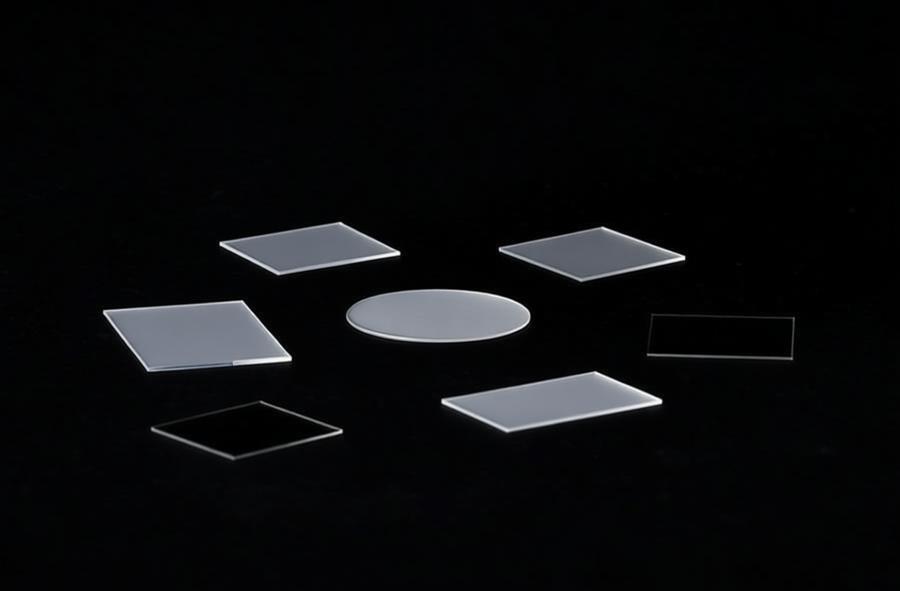
Why Window Shape Matters
The shape of a ventana de zafiro affects several critical characteristics:
- Resistencia mecánica
- Resistencia a la presión
- Stress distribution
- Optical aperture utilization
- Coste de fabricación
- Mounting complexity
- Weight and material usage
Choosing the wrong geometry can lead to increased costs, reduced reliability, or unnecessary design constraints.
Round Sapphire Windows
Ventajas
Round sapphire windows are the most commonly used design in high-performance optical systems.
Their circular geometry allows mechanical stress to distribute evenly across the surface.
Key benefits include:
- Superior pressure resistance
- Uniform stress distribution
- Reduced risk of cracking
- Easier sealing with O-rings
- Ideal for high-pressure environments
Because there are no corners, stress concentration is minimized.
Aplicaciones típicas
Round sapphire windows are widely used in:
- High-pressure sight glasses
- Deep-sea observation systems
- Laser optics
- Cámaras de vacío
- Equipos de procesamiento de semiconductores
- Sensores aeroespaciales
Limitaciones
The primary drawback is space utilization.
When integrated into square or rectangular equipment housings, circular windows may leave unused areas around the optical aperture.
Square Sapphire Windows
Ventajas
Square sapphire windows provide a larger usable viewing area compared with circular windows of similar dimensions.
Los beneficios incluyen:
- Efficient use of available space
- Larger optical aperture
- Easier integration into electronic assemblies
- Symmetrical appearance
Square windows are often selected when maximizing viewing area is important.
Aplicaciones típicas
Common uses include:
- Imaging systems
- Display protection
- Sensores ópticos
- Instrumentos científicos
- Camera cover windows
Limitaciones
The corners of a square window introduce localized stress concentration.
Under pressure loading, corners experience higher stress than the center regions.
As a result:
- Pressure resistance is generally lower than circular designs
- Thicker windows may be required
- Mounting design becomes more critical
Rectangular Sapphire Windows
Ventajas
Rectangular sapphire windows are ideal when the optical system itself has a rectangular field of view.
They maximize usable area and align naturally with many modern optical devices.
Los beneficios incluyen:
- Excellent area utilization
- Compatibility with cameras and sensors
- Flexible custom dimensions
- Efficient integration into industrial equipment
Aplicaciones típicas
Rectangular sapphire windows are commonly found in:
- Sistemas de visión artificial
- Barcode scanners
- Industrial inspection equipment
- Optical monitoring systems
- Dispositivos médicos de diagnóstico por imagen
Limitaciones
Rectangular windows exhibit the highest degree of stress concentration among the three geometries.
Longer spans can increase bending under pressure.
Engineers often compensate by:
- Increasing thickness
- Adding support structures
- Using reinforced mounting frames
Pressure Resistance Comparison
For windows with similar thickness and surface area, pressure resistance generally follows:
| Forma | Resistencia a la presión |
|---|---|
| Redondo | Excelente |
| Square | Bien |
| Rectangular | Moderado |
This is primarily due to differences in stress distribution.
Round windows allow loads to spread uniformly, while corners in square and rectangular designs create regions of elevated stress.
For high-pressure applications, circular sapphire windows are usually preferred.
Optical Efficiency Comparison
When maximizing viewing area is the primary objective, rectangular and square windows often provide advantages.
| Forma | Aperture Utilization |
| Redondo | Moderado |
| Square | Alta |
| Rectangular | Muy alta |
Camera systems, image sensors, and displays naturally favor rectangular geometries because they match the shape of the detector.
Manufacturing Considerations
Round Windows
Generally easier to machine and polish.
Advantages include:
- Simpler edge finishing
- Lower machining complexity
- Better yield for standard sizes
Square Windows
Require additional edge processing and corner finishing.
Manufacturing complexity increases slightly compared with circular parts.
Rectangular Windows
Often require the most customization.
Complex dimensions, tighter tolerances, and specialized edge treatments may increase production cost.
Cost Comparison
Although pricing depends on size and specifications, the general trend is:
| Forma | Coste relativo |
| Redondo | Lowest |
| Square | Moderado |
| Rectangular | Highest |
Custom rectangular sapphire windows often involve more machining time and lower material utilization.
Which Design Works Best?
The optimal choice depends on the application requirements.
Choose Round Sapphire Windows When:
- High pressure is involved
- Mechanical reliability is critical
- Vacuum environments are present
- Laser applications require minimal stress
Choose Square Sapphire Windows When:
- A larger viewing area is desired
- Space utilization is important
- Moderate pressure conditions exist
- Symmetrical optical layouts are preferred
Choose Rectangular Sapphire Windows When:
- Imaging systems are used
- Cameras or sensors have rectangular formats
- Maximum viewing area is required
- Equipment design dictates rectangular geometry
Tendencias futuras
As sapphire processing technology advances, manufacturers are increasingly producing:
- Large-format rectangular sapphire windows
- Complex custom geometries
- Ultra-thin precision windows
- Multi-aperture sapphire components
These developments allow engineers greater design flexibility while maintaining sapphire’s exceptional durability and optical performance.
Conclusión
There is no universal “best” sapphire window shape. The ideal geometry depends on the balance between mechanical strength, optical requirements, available installation space, and manufacturing cost.
For pressure-intensive applications, round sapphire windows remain the preferred solution due to their superior stress distribution. For imaging and sensor systems, square and rectangular designs often provide better optical efficiency and system integration.
By carefully matching window geometry to application requirements, designers can achieve optimal performance, reliability, and cost-effectiveness in demanding optical environments.