
Sapphire windows, fabricated from single-crystal aluminum oxide (Al₂O₃), are high-performance optical components widely used in modern industrial and scientific applications. Due to their Mohs hardness of 9, broad optical transparency, excellent thermal stability, and chemical inertness, sapphire windows have become essential in semiconductor manufacturing, laser optics, aerospace and defense, high-power electronics, and precision optical measurements.
When selecting sapphire windows, procurement decisions must consider not only the fundamental material properties but also dimensions, thickness, surface quality, cost, and compatibility with the intended application environment. Improper selection can compromise optical system performance, reduce equipment lifespan, or even introduce safety risks. This guide provides a systematic approach to sapphire window selection from the perspectives of materials science, engineering applications, and economic analysis, offering actionable guidance for engineers and procurement specialists.
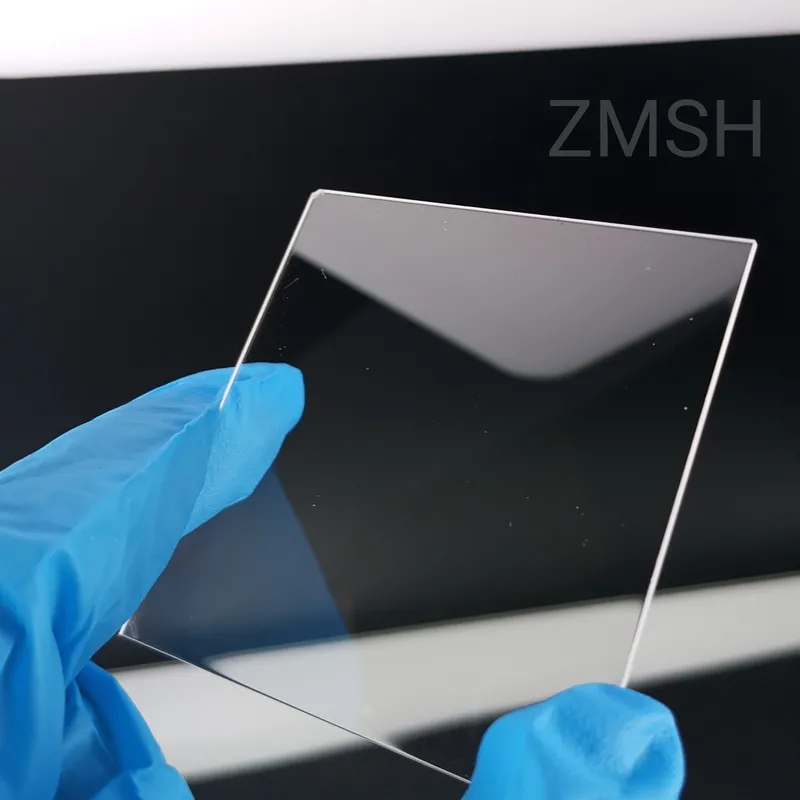
1. Core Properties and Scientific Principles of Sapphire Windows
The superior performance of sapphire windows stems from their single-crystal structure and chemical stability. As α-Al₂O₃, sapphire exhibits a trigonal crystal system with densely packed atomic arrangements, providing extreme hardness and wear resistance while ensuring minimal light scattering within the crystal.
Mechanical Properties
- Tvrdost: Mohs hardness of 9, second only to diamond, ensures long-term wear resistance in industrial environments.
- Impact Resistance & Strength: High elastic modulus and fracture toughness allow sapphire windows to withstand high-speed particle impacts and mechanical vibrations without failure.
Thermal Properties
- Low Thermal Expansion: Coefficient of thermal expansion ~5–6 ×10⁻⁶/K, providing dimensional stability in high-temperature or rapid thermal cycling environments, preventing stress fractures or optical misalignment.
- High Thermal Conductivity: ~30 W/m·K enables efficient heat dissipation, critical for high-power laser applications.
Optical Properties
- Spectral Transparency: 0.15–5.5 μm, covering ultraviolet (UV) to far-infrared (IR) wavelengths, suitable for most laser and optical measurement systems.
- Vysoká propustnost: Up to 85–90%, ensuring optical efficiency and high signal-to-noise ratios in precision systems.
- Minimal Light Scattering: Low refractive index inhomogeneity and surface roughness prevent optical aberrations and distortion in high-precision applications.
Chemical and Environmental Stability
- Highly resistant to most acids and bases (except hydrofluoric acid), enabling long-term use in corrosive atmospheres, strong UV radiation, and high-temperature chemical environments.
2. Scientific Comparison with Other Optical Materials
For rational procurement, sapphire windows should be compared with other common optical materials to evaluate performance, cost, and suitability:
| Materiál | Hardness (Mohs) | Optical Transmission Range | Thermal Stability | Chemická odolnost | Cost | Typické aplikace |
|---|---|---|---|---|---|---|
| Sapphire (Al₂O₃) | 9 | UV–IR | High | High | High | Laser systems, semiconductor wafer carriers, aerospace windows |
| Fused Silica (SiO₂) | 6.5–7 | UV–NIR | Medium-High | Medium | Medium | Precision optics, UV light sources, low-expansion environments |
| Borosilicate Glass | 5–6 | VIS–NIR | Medium | Medium | Low | Laboratory optics, low-cost windows |
| Silicon Carbide (SiC) | 9 | VIS–IR | High | High | High | High-temperature electronics, laser protection windows |
| Zinc Selenide (ZnSe) | 3–4 | IR | Medium | Low-Medium | High | CO₂ laser windows, IR optical systems |
Analysis:
- Sapphire stands out for hardness, chemical resistance, and wide spectral transparency, making it ideal for extreme environments and high-precision optics.
- Its higher cost necessitates careful consideration of performance requirements and budget.
- Compared with SiC and ZnSe, sapphire remains superior for UV and visible light applications, making it a preferred choice for broad-spectrum high-power optical systems.
3. Application Matching and Procurement Strategy
3.1 Selecting Materials by Application Environment
| Application | Recommended Material | Rationale |
|---|---|---|
| High-Power Laser Systems | Sapphire / ZnSe | High transmittance, thermal resistance, minimal thermal distortion |
| Semiconductor Wafer Packaging | Sapphire | High hardness and chemical resistance ensure stability of ultra-thin wafers |
| Aerospace & Defense Windows | Sapphire | Performance stability under extreme temperature, mechanical shock, and radiation |
| General Laboratory Optics | Fused Silica / Borosilicate | Cost-effective while meeting optical precision requirements |
| High-Temperature Electronic Protection | Sapphire / SiC | High thermal resistance and mechanical strength protect critical devices |
3.2 Dimensions, Thickness, and Surface Quality
- Thickness: 0.5–20 mm depending on mechanical and optical requirements. Thinner windows improve transmittance but reduce strength.
- Size Limitations: Crystal growth methods constrain large-diameter windows, increasing cost with size.
- Surface Quality: Optical-grade windows require surface roughness < 10 Å, while industrial-grade windows can tolerate 50–100 Å, depending on system precision.
- Tolerances: ±0.01 mm tolerances are typical for high-precision laser and semiconductor applications.
3.3 Cost Optimization Strategies
- Align Performance with Application: Avoid paying for extreme specifications when not needed.
- Optimize Size and Thickness: Reducing diameter or thickness significantly lowers costs while maintaining necessary performance.
- Bulk Procurement: Large orders enable substantial cost advantages.
- Consider Alternative Materials: In non-extreme conditions, fused silica or borosilicate glass can provide cost-effective substitutes.
4. Procurement Considerations and Supply Chain Management
- Material Certification: Ensure suppliers provide single-crystal Al₂O₃ certification and optical performance testing (transmittance, wavefront distortion, refractive index uniformity).
- Surface Treatment and Coatings: Choose polishing quality and coatings (anti-reflection, transmission enhancement) based on application needs.
- Supplier Reliability: Prioritize suppliers with extensive experience in sapphire window manufacturing to ensure batch consistency.
- Packaging and Transportation: Sapphire is brittle; professional cushioning and shock-resistant shipping are mandatory.
- Warranty and After-Sales Support: Quality suppliers typically provide guarantees for optical performance and structural integrity, reducing procurement risk.
Conclusion
Sapphire windows combine mechanical strength, optical performance, and chemical stability, making them indispensable for high-precision optics, semiconductor wafer handling, and extreme environment applications. However, their higher cost and size limitations require procurement decisions that carefully balance performance, environmental conditions, and budget.
By scientifically comparing material properties, evaluating application compatibility, optimizing dimensions and surface treatment, and selecting reputable suppliers, procurement decisions can achieve both technical reliability and economic efficiency. Sapphire window selection is thus not merely a material choice but a system-level engineering and cost optimization decision, with direct impact on device performance, lifespan, and safety.