

Product Overview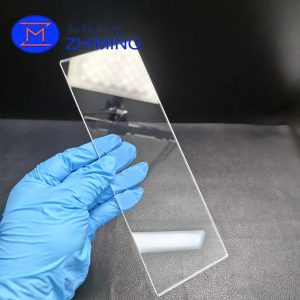
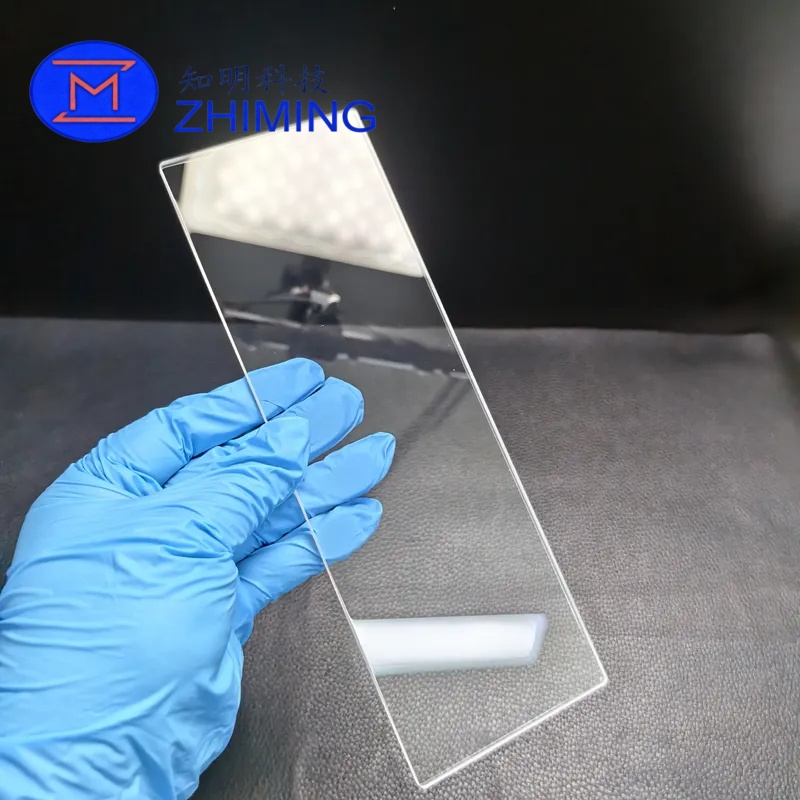
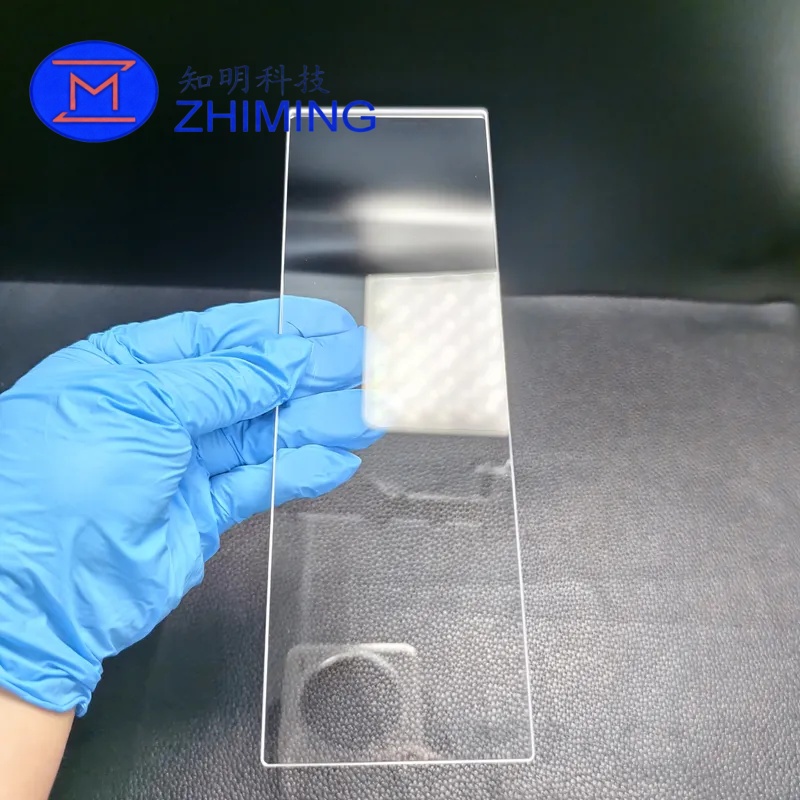
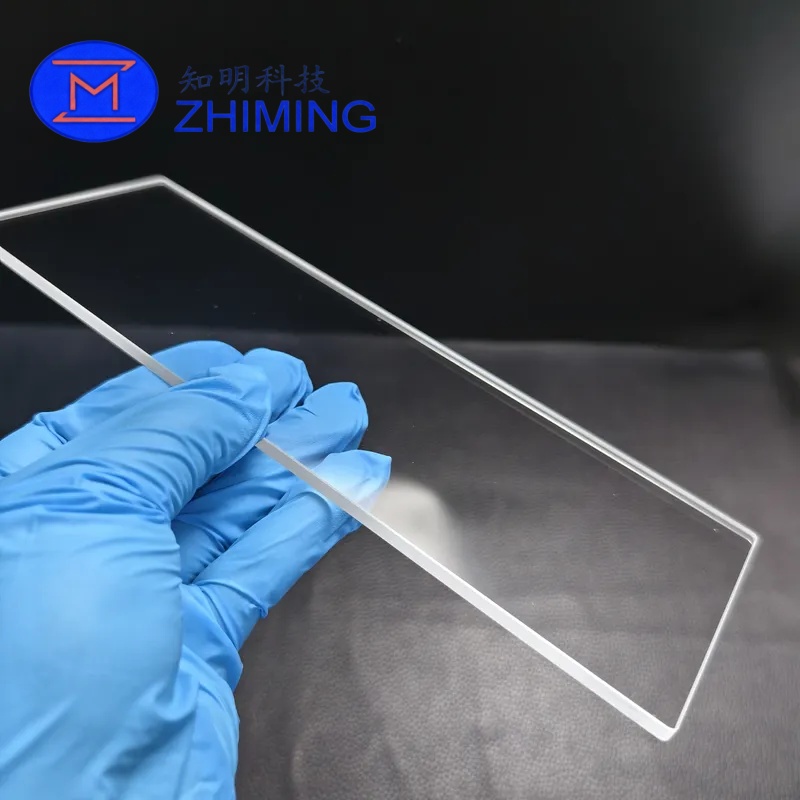
The Custom Sapphire Optical Window (222mm×74mm×4mm) is precision-fabricated from single-crystal α-Al₂O₃ (sapphire). Unlike natural gemstones, this optical-grade sapphire is a synthetic single crystal, offering exceptional hardness (Mohs 9), wear resistance, thermal stability, and chemical inertness.
Designed for infrared (IR) and ultraviolet (UV) optical systems, these windows protect sensitive components in high-temperature, high-pressure, and chemically aggressive environments. Sapphire’s broad spectral transmission (170–5500 nm) ensures minimal signal loss for lasers, sensors, and optical instruments.
This product combines mechanical robustness with superior optical clarity, making it ideal for semiconductor manufacturing, industrial sensing, aerospace, defense, and scientific research.
Technical Specifications
| Parameter | Specification |
|---|---|
| Material | Optical-grade Sapphire Single Crystal (α-Al₂O₃) |
| Size | 222mm × 74mm × 4mm |
| Thickness Tolerance | ±0.1 mm |
| Clear Aperture | >90% |
| Surface Roughness (Ra) | ≤0.2 nm |
| Transmission Range | 170 – 5500 nm (UV to mid-IR) |
| Hardness | Mohs 9 (second only to diamond) |
| Thermal Expansion Coefficient | 8.8 × 10⁻⁶ /°C |
| Elastic Modulus | 435 GPa |
| Thermal Resistance | Up to ~2030°C |
| Chemical Resistance | Highly resistant to acids, alkalis, and water |
| Surface Finish | Double-sided polished, optical-grade |
| Certification | RoHS compliant |
| Packaging | Cleanroom (Class 100) |
Key Features
-
Ultra-High Hardness & Wear Resistance
Mohs hardness 9 ensures resistance to scratches, abrasion, and mechanical stress. -
Broad Spectral Transmission
Effective UV to mid-IR transmission (170–5500 nm) suitable for lasers and IR optical instruments. -
Extreme Thermal Stability
Maintains structure and optical performance at temperatures exceeding 1900°C. -
Chemical Inertness
Resists corrosion from water, acids, and alkalis for long-term durability in harsh environments. -
Mechanical Robustness
Approximately five times stronger than standard glass, capable of withstanding high-pressure and impact conditions.
Typical Applications
-
Semiconductor Manufacturing: Furnace observation ports, chemical-resistant windows.
-
Optical Instruments: IR/UV protective windows, laser optics, spectrometer apertures, barcode scanner optics.
-
Industrial Sensing: High-pressure reactor viewports, flowmeter measurement windows, sensor protective covers.
-
Scientific Research & Defense: High-voltage chamber optics, synchrotron beamlines, aerospace FLIR systems.
-
Consumer Electronics: Watch crystals, smartphone camera protective lenses.
FAQ
Q1: Where are sapphire optical windows commonly used?
A: They are widely used in high-temperature environments, laser systems, aerospace, defense equipment, and industrial instruments, where durability, thermal stability, and chemical resistance are critical.
Q2: What makes sapphire better than glass?
A: Sapphire provides superior hardness (Mohs 9), chemical resistance, thermal tolerance up to 2030°C, and broad optical transmission (UV to mid-IR), making it ideal for harsh conditions where glass would degrade.
Q3: Can these windows be customized?
A: Yes. Dimensions, thickness, surface finish, and tolerances can be tailored to specific optical or industrial requirements.


Reviews
There are no reviews yet.