
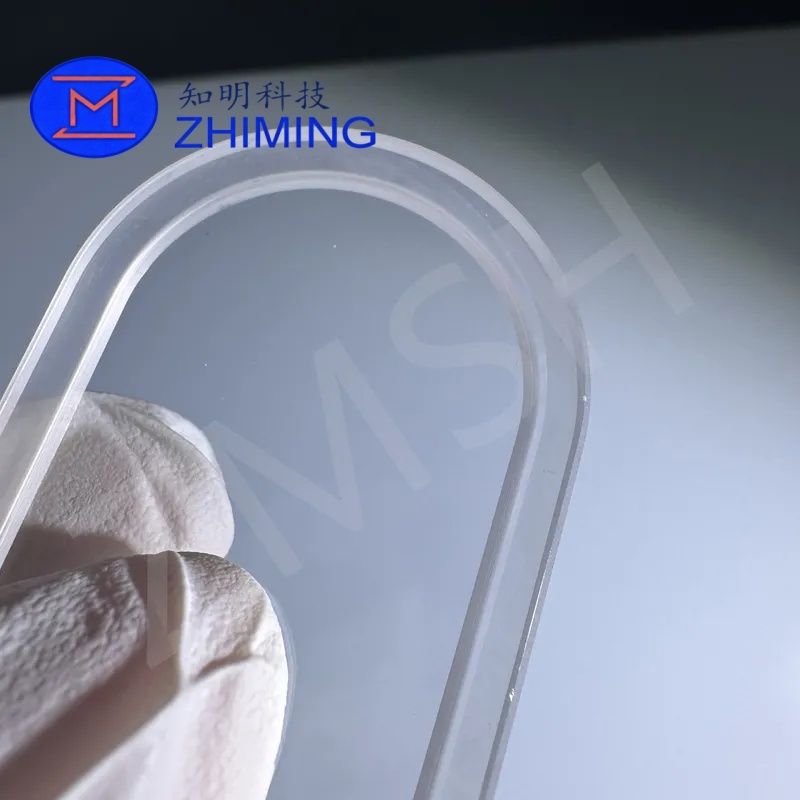
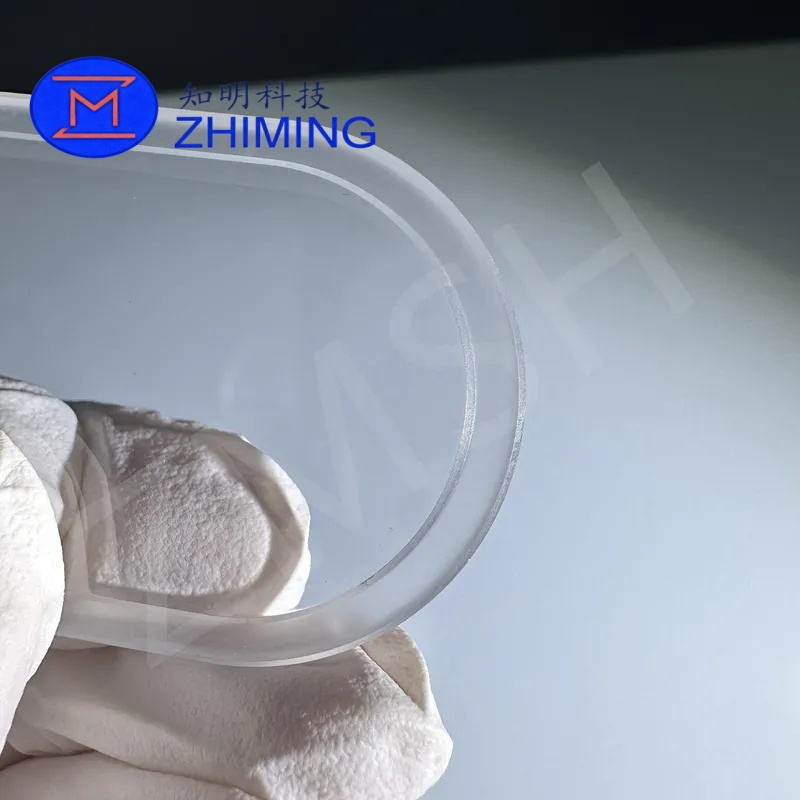
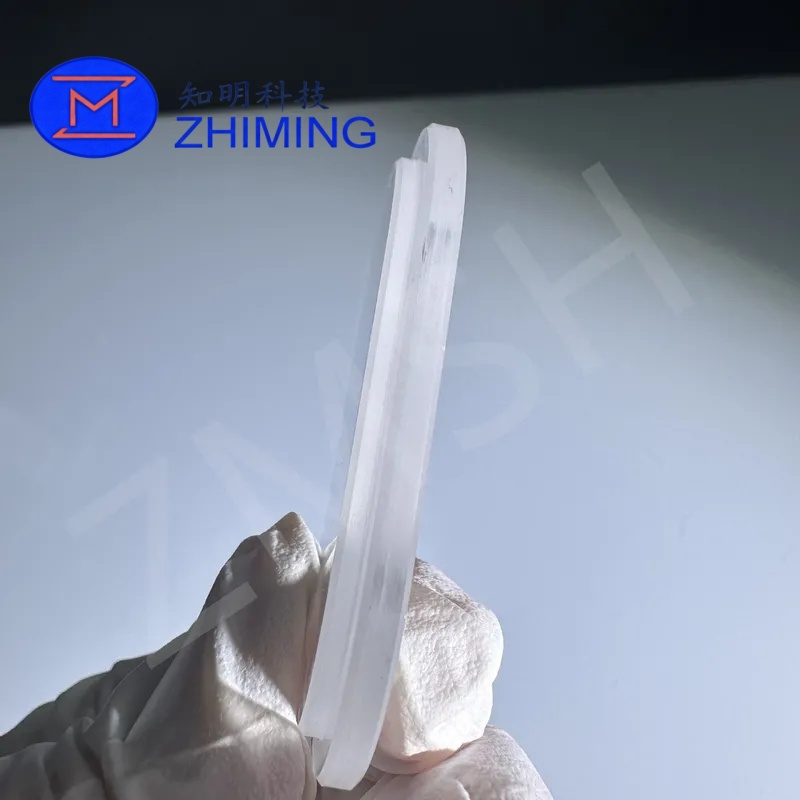
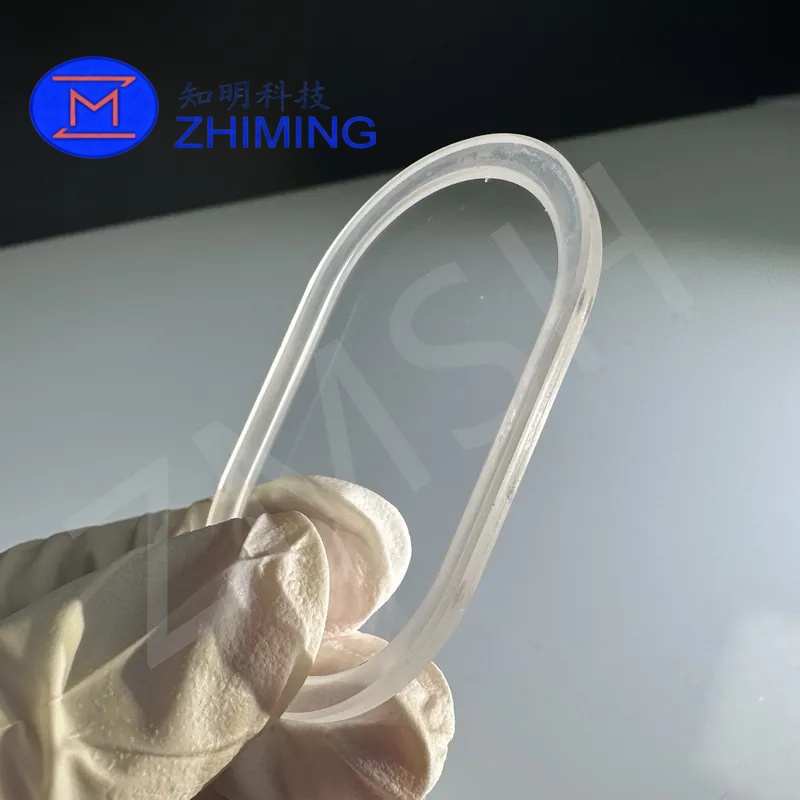
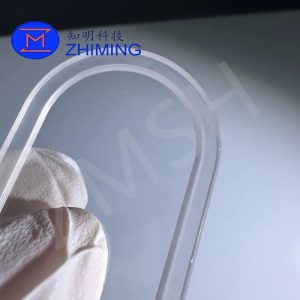
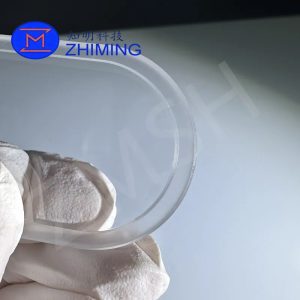
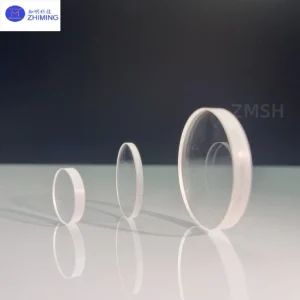
 Sapphire optical windows are high-performance transparent components manufactured from monocrystalline aluminum oxide (Al₂O₃). Produced using advanced crystal growth methods such as the Kyropoulos (KY) process, these windows offer exceptional mechanical strength, optical clarity, and environmental stability.
With a hardness second only to diamond, sapphire is an ideal material for demanding optical and protective applications where conventional glass cannot meet durability or thermal requirements.
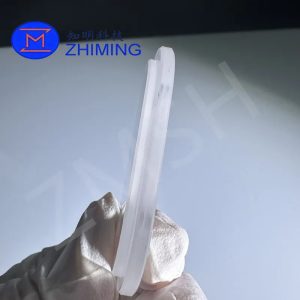 Temel Özellikler
- Ultra-High Purity Material
Synthetic sapphire with purity up to 99.999% Al₂O₃, ensuring stable optical performance and minimal impurities. - Outstanding Hardness & Wear Resistance
Mohs hardness of 9.0, providing excellent scratch resistance and long service life. - Geniş Optik İletim Aralığı
High transmission from UV to IR spectrum (approx. 200 nm – 5.5 μm), suitable for multi-wavelength optical systems. - Excellent Thermal Stability
Melting point ~2050°C, maintaining performance in extreme environments. - Superior Chemical Resistance
Resistant to acids, alkalis, and harsh chemicals, ideal for corrosive environments. - Precision Surface Quality
Optical-grade polishing ensures low scattering and high imaging clarity. - Customizable Design
Available in customized shapes, sizes, thicknesses, and coatings based on application requirements.
Teknik Özellikler
| Parametre | Değer |
|---|---|
| Malzeme | Monocrystalline Al₂O₃ (Sapphire) |
| Purity | ≥ 99.999% |
| Yoğunluk | 3,98 g/cm³ |
| Sertlik | Mohs 9 |
| Optical Transmission | ~85% (visible range, depends on thickness & coating) |
| Çap | 3–25 mm (customizable) |
| Thickness | 2–25 mm |
| Diameter Tolerance | +0.0 / -0.1 mm |
| Kalınlık Toleransı | ±0.2 mm |
| Surface Quality | 40/20 (Scratch/Dig) |
| Surface Flatness | λ/4 @ 633 nm |
| Parallelism | < 30 arcsec |
| Edge Treatment | Bevel 0.2–0.5 mm × 45° |
| Growth Method | KY (Kyropoulos) |
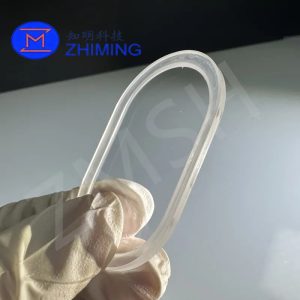 Uygulamalar
Sapphire optical windows are widely used in high-demand industries:
- Optical Instruments (lenses, protective windows)
- Laser Systems (high-power laser protection windows)
- Yarı İletken Ekipman
- Aerospace & Defense (harsh environment optics)
- Medical Devices
- Consumer Electronics (camera covers, watch crystals)
- Industrial Sensors & Inspection Systems
Why Choose Sapphire Over Conventional Glass?
| Mülkiyet | Sapphire (Al₂O₃) | Conventional Glass |
|---|---|---|
| Sertlik | 9 (Mohs) | ~5–6 |
| Scratch Resistance | Excellent | Moderate |
| Termal Direnç | Very High | Limited |
| Chemical Stability | Excellent | Moderate |
| Cost | Higher | Lower |
Sapphire is preferred in high-reliability and harsh environments, where durability and long-term stability outweigh cost considerations.
Customization Capabilities
We support full customization based on your application:
- Custom diameters and thicknesses
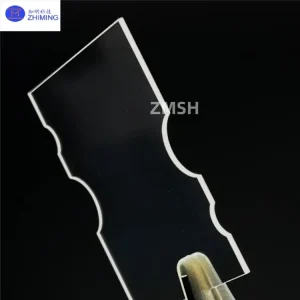
- Complex shapes (round, square, special geometry)
- Double-side or single-side polishing
- Optical coatings (AR, IR, UV coatings)
- Tight tolerance machining
Support & Services
- Technical Consultation: Material selection and design optimization
- Sample Support: Prototype development available
- Quality Assurance: Strict inspection standards for optical performance
- After-Sales Support: Ongoing technical assistance and application guidance
SSS
1. What is the difference between sapphire glass and regular glass?
Sapphire glass is made from single-crystal Al₂O₃ and offers significantly higher hardness, scratch resistance, and thermal stability compared to conventional silica-based glass.
2. What are alternatives to sapphire windows?
Common alternatives include tempered glass and chemically strengthened glass (e.g., aluminosilicate glass). While more cost-effective, they cannot match sapphire in extreme environments.


Değerlendirmeler
Henüz değerlendirme yapılmadı.