
Sapphire windows have long been recognized as one of the most durable and high-performance optical materials available. With unmatched hardness, chemical resistance, and optical clarity, sapphire (Al₂O₃) has become the preferred choice for a wide range of industrial, aerospace, semiconductor, and scientific applications. In this article, we explore the properties, applications, and technological advantages of sapphire windows, highlighting why they are critical in high-stakes environments.
Understanding the Unique Properties of Sapphire Windows
Sapphire is a single-crystal form of aluminum oxide. Its physical and chemical properties make it exceptionally suited for demanding applications:
- Extreme Hardness: Sapphire ranks 9 on the Mohs scale, making it second only to diamond. This hardness provides excellent scratch resistance, ensuring long-term durability in abrasive or high-contact environments.
- Thermal Stability: Sapphire can withstand temperatures exceeding 1,000°C without deforming or losing optical clarity, making it ideal for high-temperature equipment such as vacuum furnaces and semiconductor processing chambers.
- ความต้านทานต่อสารเคมี: Sapphire is inert to most acids and alkalis, providing unmatched corrosion resistance in harsh chemical environments.
- Optical Transparency: Sapphire windows transmit light across a broad spectrum, from ultraviolet (UV) to infrared (IR), with minimal absorption or scattering. This makes them highly effective in laser systems, spectroscopic instruments, and optical sensors.
These properties collectively enable sapphire windows to deliver superior performance where conventional glass or quartz would fail, particularly in high-temperature, high-pressure, or chemically aggressive conditions.
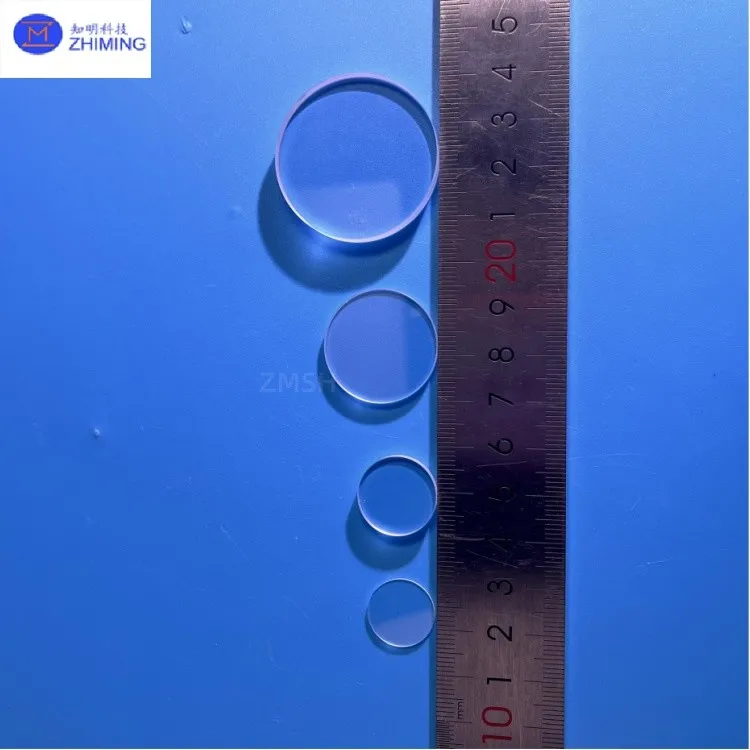
Industrial Applications of Sapphire Windows
High-Temperature Processing Equipment
In industries such as semiconductor manufacturing, sapphire windows are used as observation ports or protective layers for high-temperature reactors. Their thermal stability ensures consistent transparency under extreme heat, allowing operators to monitor processes without compromising safety. Additionally, sapphire’s mechanical strength protects sensitive equipment from thermal shock or mechanical stress.
Laser and Optical Systems
Sapphire windows are widely employed in laser systems, including cutting, welding, and precision measurement applications. Their high optical clarity and scratch resistance minimize signal loss and maximize laser accuracy. Anti-reflective coatings on sapphire windows further enhance performance, reducing reflection and improving overall transmission efficiency.
Chemical and Corrosive Environments
In chemical processing, sapphire windows serve as observation and optical ports where exposure to acids, alkalis, or reactive gases is unavoidable. Unlike conventional glass, sapphire resists etching or clouding, ensuring reliable long-term operation. This chemical resilience extends their service life and reduces maintenance costs.
Aerospace and Defense Applications
Sapphire windows are increasingly used in aerospace, military optics, and satellite systems. They maintain structural integrity under high pressures, rapid temperature changes, and high-velocity particle impact. Additionally, sapphire’s transparency across UV and IR ranges makes it ideal for advanced sensors, imaging systems, and thermal cameras used in defense and aviation.
Emerging Applications in Consumer and Scientific Devices
- AR/VR Devices: Sapphire windows are being adopted in optical waveguides for augmented reality (AR) and virtual reality (VR) devices. Their thermal conductivity and optical clarity prevent heat accumulation and color distortion, improving user experience.
- Robotics: In industrial robots, sapphire windows protect sensitive optical sensors and vision systems from dust, chemicals, and mechanical stress.
Customization and Technological Enhancements
Modern sapphire windows are highly customizable. They can be manufactured in a wide range of sizes, shapes, and thicknesses, and can be coated with specialized anti-reflective (AR) or protective coatings to optimize optical performance.
For example, high-precision laser systems require sapphire windows with flatness tolerances below a few microns to minimize optical distortion. Similarly, semiconductor equipment may require large-diameter sapphire windows to allow process monitoring without compromising mechanical strength.
The recent advancement in 12-inch sapphire wafer production has significantly improved the scalability of large sapphire windows, enabling broader industrial adoption while gradually reducing material costs.
Economic and Technical Considerations
While sapphire windows offer unmatched performance, their production is more complex and costly compared to traditional glass or quartz. The crystal growth process, precision cutting, and polishing demand high-end equipment and skilled labor.
However, the long-term benefits outweigh the initial costs:
- Extended service life reduces replacement and maintenance expenses.
- High resistance to thermal, chemical, and mechanical stress ensures consistent performance in critical applications.
- Enhanced optical clarity improves process efficiency and accuracy, especially in laser and semiconductor applications.
From an EEAT perspective, understanding the cost-performance balance is critical. Professionals and engineers must consider both technical specifications and economic factors when selecting sapphire windows for high-performance systems.
The Future of Sapphire Windows
As industries continue to push for higher efficiency, durability, and precision, the demand for sapphire windows is expected to grow. Key trends include:
- Larger Wafer Sizes: The shift to 12-inch wafers enables production of larger windows, reducing seams and improving uniformity in optical systems.
- Advanced Coatings: Anti-reflective and protective coatings continue to enhance transmission, durability, and system integration.
- Integration into Emerging Technologies: Sapphire windows will play a critical role in AR/VR devices, robotics, advanced laser systems, and space technologies.
- Sustainability: Their durability and long lifespan support cost-efficient and sustainable manufacturing in high-performance industrial environments.
Despite higher upfront costs, sapphire windows remain a strategic investment for high-stakes applications, where material failure can lead to significant operational losses.
Conclusion
Sapphire windows are more than just optical components—they are high-performance enablers for next-generation industrial, aerospace, and scientific applications. With superior hardness, thermal stability, chemical resistance, and optical transparency, sapphire windows deliver reliability and precision where conventional materials cannot.
From high-temperature processing and laser systems to aerospace sensors and AR devices, sapphire windows are critical for industries seeking efficiency, durability, and performance. While cost considerations remain, the long-term advantages of sapphire—especially with the advent of 12-inch wafer production—make it a cornerstone material for the future of high-performance optical systems.
In summary, sapphire windows combine technical excellence with practical resilience, making them a vital component in cutting-edge technologies and a trustworthy choice for engineers and researchers worldwide.