
หน้าต่างแซฟไฟร์, composed of single-crystal aluminum oxide (Al₂O₃), are widely used in aerospace, defense, semiconductor equipment, laser systems, and infrared optics due to their excellent hardness, optical transparency, thermal stability, and chemical resistance. While the intrinsic properties of sapphire make it a highly reliable optical material, the surface quality critically determines its performance. Surface processing and polishing are essential steps to achieve optical clarity, high laser damage thresholds, and long-term durability. This article explores the methods, challenges, and future trends in sapphire window surface processing.
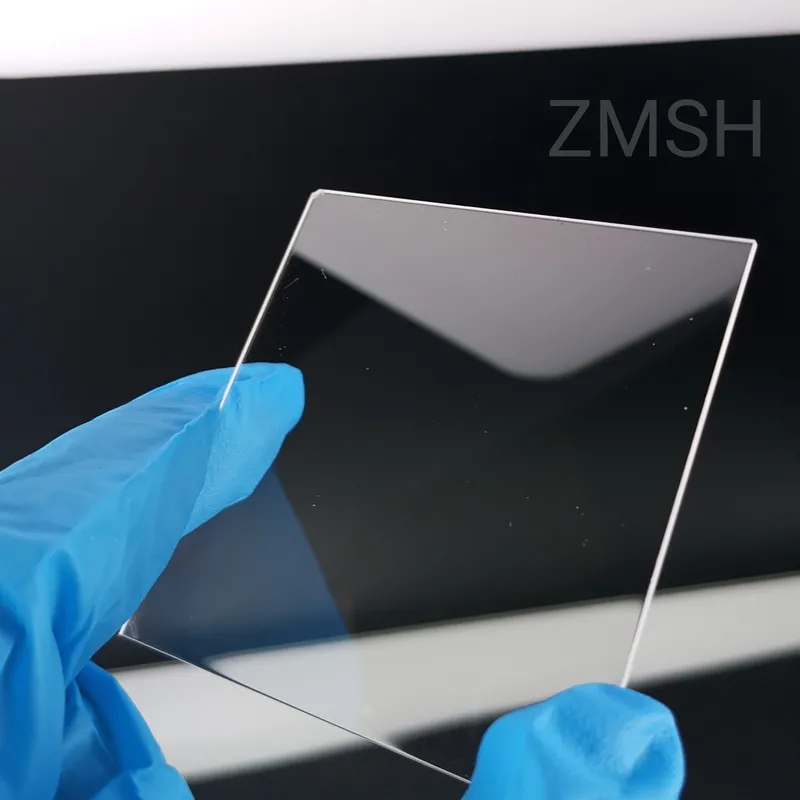
Introduction
The performance of sapphire windows is influenced not only by the bulk material properties but also by the quality of the optical surface. Imperfections such as scratches, subsurface damage, and surface roughness can significantly degrade light transmission, increase scattering, and reduce resistance to laser-induced damage. Therefore, precise surface processing and polishing techniques are vital to meet the high standards required in advanced optical applications.
Mechanical Grinding and Initial Surface Preparation
Mechanical grinding is usually the first step in shaping sapphire windows. Diamond abrasives are commonly used to remove surface irregularities and achieve the desired geometry. Key considerations include:
- Selection of abrasive particle size for controlled material removal
- Minimization of subsurface cracks and mechanical stress
- Maintaining flatness and parallelism of optical surfaces
Mechanical grinding sets the foundation for subsequent ultra-precision polishing.
Smoothing Techniques Using Lapping
Lapping is an intermediate process aimed at smoothing the rough surface generated by grinding. It uses a combination of loose abrasive slurry (often diamond or cerium oxide) and a rotating plate to gradually reduce surface roughness. Lapping helps:
- Reduce macroscopic surface irregularities
- Improve surface flatness
- Prepare the window for ultra-fine polishing
Achieving Ultra-Smooth Surfaces with Polishing
Chemical-Mechanical Polishing for Precision Finishing
CMP is widely used for achieving sub-nanometer surface roughness. This technique combines chemical etching and mechanical abrasion:
- Chemical action: selectively softens or reacts with the sapphire surface
- Mechanical action: removes softened material, creating a smooth surface
Advantages of CMP include minimal subsurface damage and highly uniform optical surfaces, which are critical for laser and high-precision optical applications.
Plasma-Assisted Polishing for Advanced Applications
PAP is an emerging method that enhances traditional polishing with plasma chemistry:
- Plasma selectively modifies the sapphire surface
- Mechanical polishing removes modified material without inducing cracks
- Achieves atomic-level smoothness suitable for high-power laser windows
PAP reduces residual stress and extends the lifespan of sapphire windows in extreme conditions.
Surface Quality Evaluation and Standards
Evaluating surface quality is essential to ensure performance standards:
- Surface Roughness (Ra, RMS): typically less than 1 nm for high-performance applications
- Flatness: measured in microns over the full aperture
- Scratch/Dig Specification: ISO 10110 standards commonly applied
- Optical Transmission and Scatter: confirms minimal light loss
High-quality surface processing ensures that sapphire windows maintain high transparency, laser resistance, and durability in harsh environments.
Challenges and Future Development
Despite advancements, surface processing of sapphire remains challenging due to:
- Extreme hardness (9 Mohs scale), which limits material removal rates
- Risk of subsurface cracking and birefringence
- Need for large-diameter windows with uniform optical properties
Future trends include:
- Automated ultra-precision polishing systems for large-diameter sapphire windows
- Integration of smart coatings during polishing for multifunctional surfaces
- Plasma-assisted and hybrid polishing methods to reduce stress and surface defects
- Green and low-waste polishing processes
These innovations aim to reduce cost while improving quality and consistency.
สรุป
Surface processing and polishing of sapphire windows are critical for achieving their full optical and mechanical potential. With the combination of mechanical grinding, lapping, CMP, and emerging plasma-assisted methods, sapphire windows can achieve exceptional flatness, smoothness, and durability. As technology advances, future methods will further enhance performance, reduce production costs, and expand the applications of sapphire windows in high-demand industries such as aerospace, defense, and high-power photonics.