
Sapphire windows are widely recognized for their exceptional optical clarity, mechanical strength, thermal stability, and chemical resistance. These properties make them ideal for applications in aerospace, semiconductor manufacturing, high-power laser systems, medical instruments, and harsh industrial environments. While standard sapphire windows are available in common sizes and shapes, many applications demand customized designs tailored to specific operational requirements. Understanding the considerations for customizing sapphire windows is essential for engineers, designers, and procurement specialists.
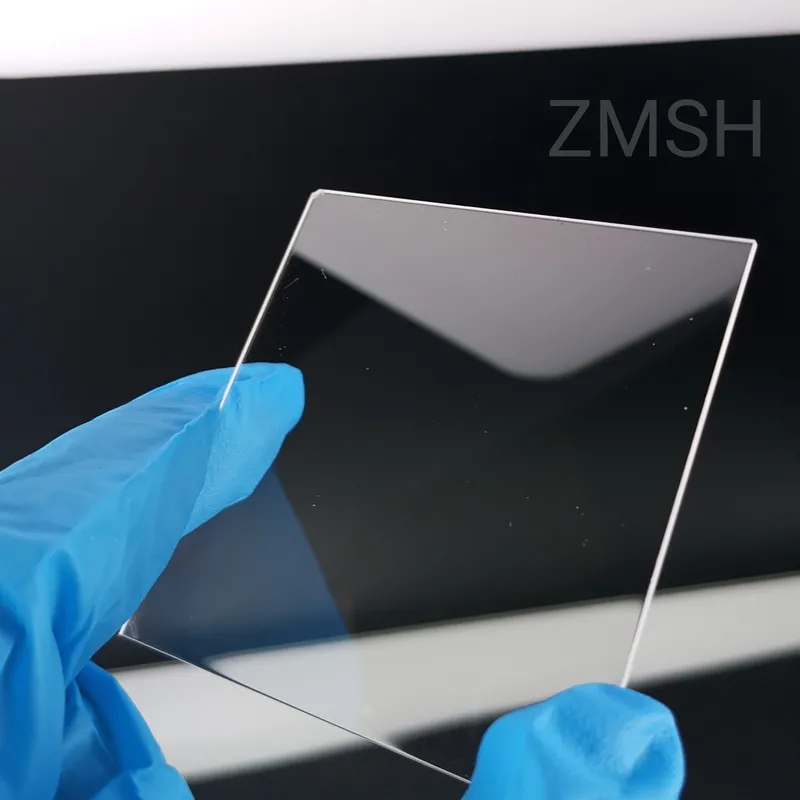
1. Shapes of Fenêtres saphir
Sapphire windows can be manufactured in various shapes to meet optical and mechanical integration needs. Common shapes include:
- Circular: Most widely used due to ease of fabrication and suitability for standard optical mounts. Circular sapphire windows are commonly applied in laser systems, pressure sensors, and vacuum chambers.
- Rectangular or Square: Preferred when large-area coverage or integration with rectangular optical devices is required, such as in imaging sensors or display systems.
- Complex or Irregular Shapes: Advanced laser cutting and precision grinding allow the fabrication of custom profiles to fit non-standard housings or optical paths, supporting specialized industrial or scientific instruments.
The selection of shape often balances optical performance, ease of installation, and mechanical stability. For high-precision optical applications, maintaining dimensional tolerances during shaping is critical to prevent stress concentrations and preserve optical clarity.
2. Sizes of Sapphire Windows
Sapphire windows are available in a wide range of diameters and dimensions, from a few millimeters to several hundred millimeters, depending on the application. The choice of size is influenced by:
- Optical Aperture Requirements: Larger windows allow greater light transmission and wider fields of view but increase material costs and fabrication complexity.
- Mechanical Integration: The window must fit securely within the housing or mount while maintaining sufficient mechanical support to withstand pressure or thermal stress.
- Thermal Considerations: Larger windows can experience greater thermal gradients, so appropriate thickness and mounting design are critical to avoid cracking under temperature changes.
Advancements in sapphire crystal growth technology now allow the production of larger wafers and boules, enabling the manufacture of sapphire windows with diameters exceeding 200 mm. This expansion in size capability supports both industrial-scale and precision optical applications.
3. Thickness Options
Sapphire windows can be fabricated with a range of thicknesses, from sub-millimeter thin films to several centimeters. Thickness selection depends on the following factors:
- Mechanical Strength: Thicker windows provide higher resistance to pressure, impact, and bending. Applications such as high-pressure chambers or protective laser windows benefit from increased thickness.
- Optical Transmission: While sapphire is highly transparent across the visible and ultraviolet spectrum, excessive thickness can lead to minor optical distortions or internal reflections, which must be considered in high-precision optical systems.
- Thermal Management: In high-power laser or microelectronics applications, window thickness influences heat dissipation. Optimizing thickness ensures sufficient thermal conduction without compromising optical performance.
4. Surface Quality and Edge Considerations
Customization also extends to surface finish, flatness, parallelism, and edge treatments. High-quality polishing minimizes surface defects, reduces optical scattering, and enhances durability. Chamfered or beveled edges can reduce stress concentration and prevent chipping during handling or assembly. For applications requiring anti-reflective coatings or specialized optical coatings, precise surface preparation is essential.
5. Applications of Custom Sapphire Windows
Custom sapphire windows are increasingly used in demanding environments where standard components cannot meet performance requirements. Examples include:
- High-power laser systems requiring large-diameter, thick windows with precise optical flatness.
- Vacuum or high-pressure chambers needing strong windows to withstand differential pressure.
- Aerospace and defense optical systems requiring lightweight yet mechanically robust windows with complex geometries.
- Semiconductor and LED manufacturing tools demanding large-area windows with minimal defects for high process yields.
Conclusion
The ability to customize sapphire windows in terms of shape, size, and thickness is critical for optimizing performance in demanding optical and industrial applications. By selecting appropriate design parameters, engineers can achieve a balance between mechanical strength, optical quality, and thermal management, ensuring reliable operation under extreme conditions. Advances in crystal growth, precision cutting, and polishing technologies continue to expand the possibilities for custom sapphire window design, making it an essential component for next-generation optical and industrial systems.