
In modern laser systems, optical components are required not only to transmit energy efficiently but also to protect sensitive internal structures from environmental and mechanical damage. As laser technologies continue to evolve toward higher power, greater precision, and more demanding operating environments, the choice of protective optical materials becomes increasingly critical.
Sapphire dome windows, manufactured from monocrystalline aluminum oxide (Al₂O₃), have emerged as a preferred solution in advanced laser systems. Their unique combination of mechanical durability, thermal stability, and broad optical transmission makes them particularly suitable for applications where both protection and precision are essential.
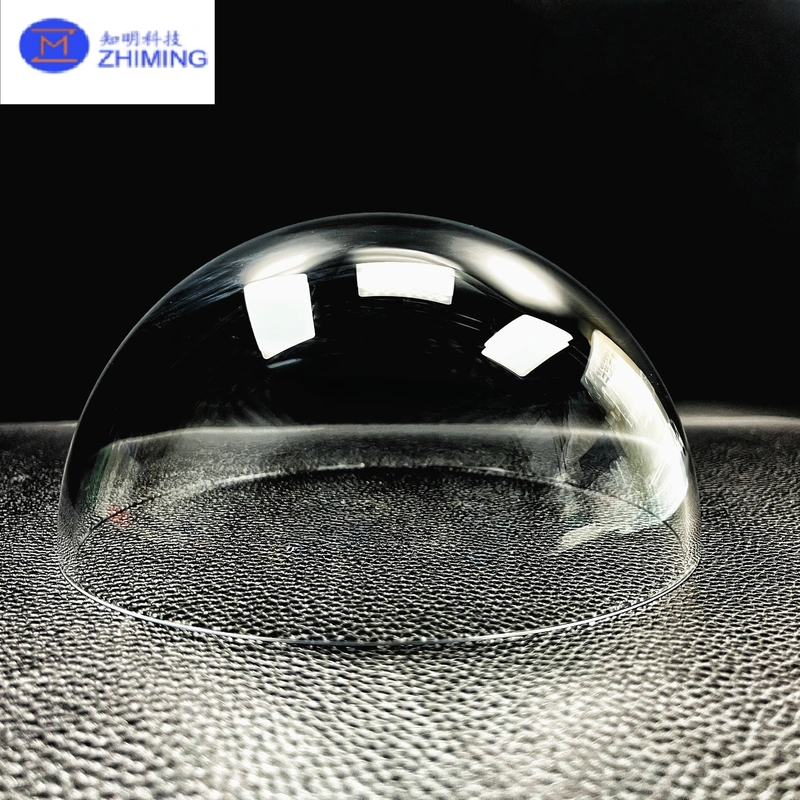
الخواص المادية للياقوت الأزرق
Sapphire is widely recognized for its exceptional hardness, ranking 9 on the Mohs scale, second only to diamond. This property provides outstanding resistance to scratches, abrasion, and high-velocity particle impact, which is especially important in environments where optical surfaces are exposed to contaminants or debris.
In addition to its mechanical strength, sapphire exhibits excellent thermal stability. It can withstand extremely high temperatures without deformation or degradation, maintaining structural integrity in environments where conventional optical materials would fail. This makes sapphire dome windows ideal for high-power laser systems that generate significant thermal loads.
Chemically, sapphire is highly inert and resistant to most acids and alkalis. This ensures long-term reliability in corrosive environments, such as industrial processing or chemical laser applications.
Optical Performance in Laser Systems
One of the most important characteristics of sapphire dome windows is their broad spectral transmission range. Sapphire transmits light efficiently from the ultraviolet region (approximately 170 nm) to the mid-infrared region (around 5 µm), covering a wide range of laser wavelengths used in industrial and scientific applications.
The material can be polished to extremely smooth surface finishes, typically below 10 Å RMS, which minimizes scattering and ensures high optical clarity. This is crucial in laser systems where even minor surface imperfections can lead to beam distortion, energy loss, or reduced accuracy.
Furthermore, sapphire has a relatively stable refractive index, which contributes to predictable optical behavior and facilitates system design. When combined with anti-reflective coatings, sapphire dome windows can achieve even higher transmission efficiency and reduced reflection losses.
Advantages of Dome Geometry
The dome shape provides significant advantages over flat optical windows, particularly in demanding laser environments. The curved geometry distributes mechanical stress more evenly across the surface, enhancing the overall strength and resistance to pressure differentials.
In addition, dome structures can help reduce the impact of external forces such as airflow, shock, and vibration. This is especially relevant in mobile or airborne laser systems, where components are subject to dynamic conditions.
From an optical perspective, a properly designed dome can minimize distortion and maintain beam quality, especially when aligned with the optical axis. This makes sapphire dome windows suitable for precision laser applications where beam integrity is critical.
Applications in Laser Systems
Sapphire dome windows are widely used in various types of laser systems due to their combined protective and optical advantages.
In high-power industrial laser systems, they serve as protective barriers that shield internal optics from heat, dust, and mechanical damage. In defense-related laser systems, sapphire domes are used to protect targeting and tracking sensors while maintaining high transmission efficiency.
They are also applied in scientific research equipment, including spectroscopy and high-energy laser experiments, where optical precision and environmental resistance are equally important. In harsh industrial environments, such as laser cutting or welding systems, sapphire dome windows ensure consistent performance and extended service life.
Engineering Considerations
When selecting sapphire dome windows for laser applications, several engineering factors must be considered. These include the dome diameter, wall thickness, curvature radius, and surface quality, all of which influence both mechanical performance and optical behavior.
Coating selection is another critical aspect. Anti-reflective coatings can be tailored to specific laser wavelengths to improve transmission and reduce energy loss. In some cases, additional protective coatings may be applied to enhance durability or environmental resistance.
Manufacturing precision is also essential. High-quality polishing and strict tolerance control are required to ensure that the dome meets the performance requirements of advanced laser systems.
الخاتمة
Sapphire dome windows represent a highly effective solution for enhancing both protection and precision in modern laser systems. Their exceptional mechanical strength, wide optical transmission range, and ability to withstand extreme environments make them superior to many conventional optical materials.
As laser technologies continue to advance, the demand for reliable and high-performance optical components will only increase. Sapphire dome windows are well positioned to meet these challenges, providing a robust and precise interface between sensitive laser systems and the external environment.
In high-performance laser applications, the integration of sapphire dome windows is not only a material choice, but a critical factor in achieving long-term stability and optimal system performance.